This is an HTML version of an article that ran in Real Estate Forum. To see the story in its original format, click here.
When it comes to commercial real estate, everybody wants in. Deal velocity and pricing were up across the board in 2015, pointing to an increasingly competitive sales environment. A portion of the deal volume stemmed from cross-border capital flow that exceeded the levels seen in 2007—and resulted in a handful of enormous portfolio or entity-level acquisitions—but domestic buyers were out in force, as well. Partly on account of a broadening economic recovery that opened up opportunities beyond the gateway cities and partly on account of the search for yield, investors increasingly ventured into secondary and tertiary markets.
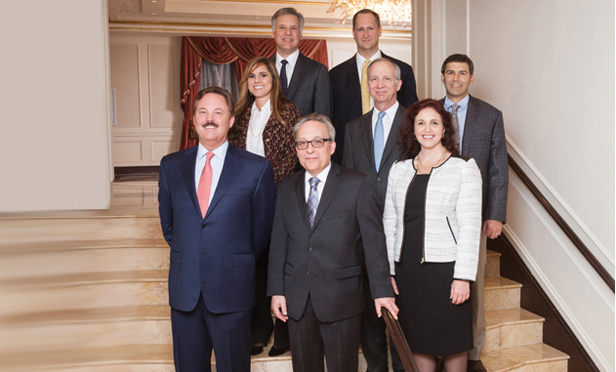
Against this backdrop, senior-level executives from six of the nation's largest institutions-—accounting for a collective $276 billion-plus in real estate assets under management globally—gathered last month at the New York Palace Hotel as part of the 11th annual Capital Markets Symposium. The session, hosted by Transwestern and Real Estate Forum, covered a variety of topics ranging from conditions in property sectors and markets across the US to strategic planning for 2016.
From their insights, it became clear that despite global uncertainty, these heavyweights have more than enough faith in US real estate fundamentals, and in their own investment strategies, to keep moving forward.—Sule Aygoren
PARTICIPANTS
Paul Boneham is an Executive Vice President with Bentall Kennedy in Seattle. He oversees some $11 billion in US real estate assets for the firm, which has an aggregate $42 billion in real estate AUM in North America.
Cristen Conkling is a Director and serves as a portfolio manager for AEW Capital Management. The Boston-based company has $50 billion in real estate assets under management globally, approximately half of which is in the United States.
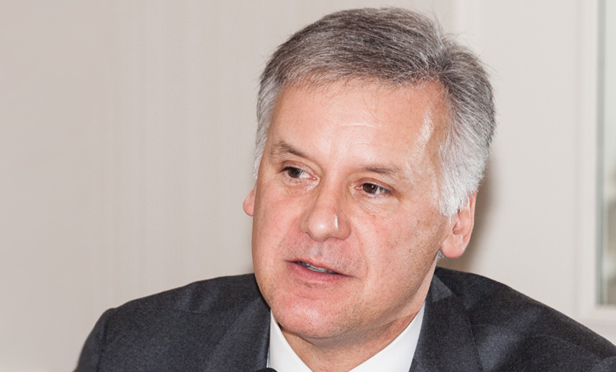
Richard Coppola is a Managing Director and Head of Real Estate Transactions for TIAA-CREF, overseeing some $50 billion in US debt and equity. The New York City-based organization has an overall $86 billion in global real estate assets under management.
Michael Desiato (moderator) is Vice President & Group Publisher for ALM Real Estate Media in New York City.
Based in Atlanta, Tuba Malinowski serves as Portfolio Manager for Stockbridge Capital's $1.5-billion core fund. The $10-billion firm manages three opportunity fund series, two value funds and separate account clients, primarily on behalf of public pension funds.
Steve Pumper (moderator) serves as executive managing partner of Transwestern's Capital Markets and Asset Strategies Group in Dallas.
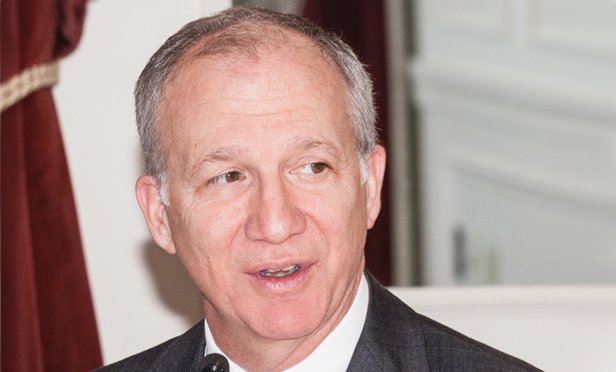
As Deputy CIO of Americas Real Estate, Global Real Assets, Doug Schwartz oversees all asset management and acquisitions activity for JP Morgan Asset Management. The New York City-based firm manages over $50 billion in real estate assets in the US, through 15 different fund formats.
Brian Watkins is a Managing Director and Acquisitions Officer for Clarion Partners. He co-leads a New York City-based team that operates in the Northeast, Midwest and Texas for the firm, which has $38 billion assets under management.
STEVE PUMPER: Investment activity in 2015 is up significantly from the prior year, thanks to a number of portfolio and entity-level transactions. Given that, it's a very competitive environment for commercial real estate. How are you differentiating yourselves when you're trying to place equity and debt capital?
BRIAN WATKINS: It's a standard procedure, really—trying to make sure we have a strong reputation as a buyer in the marketplace, doing what you say you're going to do. When you outline a timeline for due diligence in closing in a very competitive market, it's critical that you maintain those timeframes. We also close many of our transactions all cash, which is another way to differentiate yourself from the buyer pool. If we use financing, which is very low leverage usually, we put financing in place post closing. Additionally, we try to source off-market transactions to differentiate ourselves and identify strong relationships with individual sponsors, developers, etc.
CRISTEN CONKLING: Ours is a similar story; we bring to the table that certainty of closing. We're comfortable if we are not the first one selected with the top pricing, but we're there, ready and willing with the certainty of close, if a seller needs to shift gears. We value our joint venture relationships and many times they bring us deals to recapitalize.
RICHARD COPPOLA: The best source of business is through my equity team because of the competitive deal environment. If we can't invest on the equity side we can often get in with debt although, leads rarely work in the inverse, of course. What's a little bit different this year is we've been very active in mezzanine debt again. It's kind of a core space. We've been active in that 50% to 60% slice of the capital stack behind large, single asset deals in places like New York, Boston and San Francisco. That's been a great relative value play. This year, in particular, we far exceeded our expectations in what we wanted to place in that space.
Most of that is from the general account. But we've also raised some capital in Korea to invest alongside us in that space. When you get the sovereign wealth fund money, they don't come with $25 million; they come with $500 million. The value proposition there is pretty good, for us, as we grow our asset management business.
We opened an online bank a few years ago, TIAA Direct FSB. We're a financial services company with a large pension business and a lot of our constituents are hitting retirement age. We want to keep their funds within the system and, to do that, you want to be a full-service provider for all financial products.
While everybody else is selling their banks, we're actually opening a bank. So, we're a little contrarian. The bank is another source of capital seeking mortgage loan investments. We actually went out and built a team that's been very successful this year in placing capital; we did over $300 million in $5-million to $20-million deals.
PAUL BONEHAM: There are two primary components to my answer. One is having a real, thought-out focus on what you want to do, and then clearly communicating it to the team and, ultimately, to the market. We're primarily focused on about 15 large markets. We've elected to focus most of our efforts there and less on secondary markets. Secondly, we have always embraced a build-to-core approach. Historically, that's accounted for 40% to 50% of our investment activity in a typical year.
There are pros and cons to that strategy. The costs of construction and land have become very high, so we have to look at a lot of opportunities to pick the ones that make the most sense. We're developing urban apartments, not suburban. We're developing industrial in New York, Northern New Jersey, Oakland and the Bay Area. We actually invested, on a structured basis, in an office building development in Hollywood, and we took down a large parcel of land in San Jose, CA for which we're designing an office product to match the unique Silicon Valley market demands.

TUBA MALINOWSKI: We have both a core and value-add strategy, though our core fund can do some value as well. Since we launched the core fund, we've been a little contrarian. We invested in markets like San Diego, Charlotte and Raleigh, NC early, and that's worked out very well. We also purchased small-bay industrial early in the recovery, in San Francisco and Charlotte, and that's also played very well and we believe will continue to perform.
On the joint-venture side, our value fund is definitely more active than our core fund. Our JV partners have to bring something to the table—an off market asset, or certain skills we may not have for a development or rehabilitation.
Our competitive advantage is that as a smaller organization, we really don't have a very bureaucratic way of running our acquisitions. We have eight partners, two of which are acquisition officers, so we're able to get out there and look at assets and make a decision quickly. So if a sale falls out of contract with a different investor we're able to move really fast.
PUMPER: Doug, you've had a lot of success in sharing acquisitions. Where have you had the most success and how did you prioritize your strategies for 2015?
DOUG SCHWARTZ: We've been doing more development than ever. We have about 50 projects under way across all the product types and across a lot of different fund formats. We're trying to avoid smaller markets, so it's a bit more difficult, but we just decided we're going to pay up for sites in the biggest, deepest markets. Smaller markets are where we had the most trouble last time. In the office development world, we were good about getting out early into San Francisco, New York, Dallas and Washington, DC, and we just took down office sites in Nashville, Chicago and Atlanta.
MICHAEL DESIATO: With the third party capital you're raising, are your investors—whether separate account or in a commingled fund space—going out on the risk spectrum a little bit to capture a greater deal going forward?
WATKINS: We actually see them de risking and moving away from the opportunistic space, more into the core investment space and core plus. That capital is realizing they're going to have to accept lower yields. They're using less leverage and moving away from the opportunistic space. What we are seeing is a lot of core buyers consider mezzanine debt in core primary markets and core assets as a way to get slightly higher yields while minimizing risk. We're launching a mezz fund. Typically core investors are now willing to consider mezz investment strategy.

CONKLING: We see two camps. There is the group that's been in the core space and really benefitting from the recent outsized low double-digit returns. They're trying to maintain those yields and they talk about moving into the value-add space to do so. Then we have others that are a bit nervous about the go-forward economic picture and do not want to be highly leveraged. So, we are seeing a flood of capital coming into our core fund.
MALINOWSKI: A lot of our separate accounts are interested in the build-to-core strategy, whether you build to core or build for an opportunity fund, you're still taking development risks. We're definitely seeing investors more interested in the development cycle, which is absolutely higher risk but may produce a higher yield than they can get in other strategies.
DESIATO: Did anything that occurred this past year—in terms of pricing or deal movement, for instance—surprise you as you were looking for transactions?
WATKINS: When the stock market dropped off about 17% for the S&P this summer, it caused a delay on volume in the second or third quarter of the year. A lot of sellers thought maybe it signaled the next recession so they held back their dispositions, which decreased volume. The compression in cap rates slowed down, but it picked up again by the fourth quarter as volume picked up pace. We expect that to continue in 2016.
Going back to what we were discussing earlier, I suppose we're a little contrarian because we did take the opportunity to invest in the secondary and tertiary markets, albeit on very selective cases with best in class assets. We're also very particular about the submarkets that we choose in those markets. Investing in the best assets in historically strong performing superior submarkets within a secondary market is a way to slightly increase yields with minimal increased market-related risk.
I'd be interested to know, Paul, why you decided to stay away from non-primary markets.

BONEHAM: That's a good question, Brian. We typically invest with a 10- to 15-year life cycle in mind. Historically over the long run, the primary markets have generated greater rental growth and IRRs. Bigger assets generally outperform smaller assets, and it's easier to find bigger assets in New York and San Francisco than it is in Nashville or Memphis.
MALINOWSKI: Would you include Chicago in that? That's one I've always battled with because it's considered a gateway market but the returns and rent growth certainly haven't been there. If anything, most of these other markets have beat out Chicago on a regular basis, at least in office space.
BONEHAM: And industrial, too. You can't ignore Chicago, but it's not going to be at the top of the list in terms of expected performance long term.
WATKINS: Office rents in Chicago haven't moved much over the years. We're always challenged on the office front in Chicago, but multifamily investment—especially in close proximity to Google's headquarters—is promising. If you find the right product type, you can invest in some of those select submarkets.
SCHWARTZ: One mistake we made was about two-and-a-half-years ago; we decided to sell our drive-to suburban apartments because we thought the housing recovery would really hurt that segment. In reality, that's where the rent growth has been.
MALINOWSKI: Multifamily is probably the most resilient and attractive asset today. Despite the amount of supply we've seen in multifamily, there is rent growth. It's amazing.
BONEHAM: We're upbeat on multifamily, and look to urban locations, given the two primary demographic drivers of echo boomers going out on their own and baby boomers looking to downsize and rent by choice. I think we built about $1.5 billion worth of urban high-rise apartments between 2012 and 2014.
CONKLING: Multifamily is one of our favorite products. It has a relatively short construction cycle; but the thing we're most focused on is the continued demographic growth in the US. Forecasts show 90 million more people are expected to live here by 2050. That indicates to us that continuing to develop now is still a great choice, even though we may feel it's a bit later into the cycle.
PUMPER: Industrial is tough to buy for many of you because of its smaller bite size, so what strategy do you utilize when you're pursuing it? Are you looking at entity-level deals, portfolios, developments?
COPPOLA: The short answer is yes, but it's a tough business. We're very specific as to where we're going to invest. Based on our research, as a long term investor, we will have the best odds of outperforming the benchmark if we stick to those markets that perennially outperform. But it's tough to aggregate industrial in five or six markets, places like New Jersey and Miami. It just doesn't trade. So we're blocking and tackling to get those one off deals. We're also looking at the portfolios, but even that's a challenge because those portfolios inevitably include a wide variety of markets and, depending on the percentages that fit our investment strategies, it may not be the best execution for our investors.
What's interesting is, as we've seen the foreign capital come from around the world, it's not like just one or two players came. It's like all of a sudden they all woke up and said, “Well, we've got enough office, let's go do industrial.”

CONKLING: We'd love to have more industrial, but competition is tough out there. The best opportunities we're seeing are by being active through our relationships. We would love to do more in Chicago; in fact, we just closed a deal near O'Hare Airport that is a collection of older, yet highly functional, buildings in great locations.
WATKINS: Clarion Partners closed about $4.5 billion in total acquisition volume in 2015, and 25% of that, just over $1 billion, is in industrial product. A lot of it is the development of land that our Lion Industrial Trust team has held for many years and continuously develops with previously existing partners. We spent a lot of time fostering relationships with developers of industrial product, because it's so hard to simply aggregate through marketed transactions. And with portfolios, it's often mixed asset quality. As a long-term owner of real estate, do you really want to go after a huge portfolio only to end up holding half of it at the end of the day?
It's the same story with retail, for which we have a huge appetite. It is very challenging to identify and aggregate quality, well-located core retail product at the moment, and then especially hard to invest in value-add retail assets with strong fundamentals that you can address and turn around. Value-add retail assets with good intrinsics are very sought after investments. This naturally prices such assets at premiums that then often don't ultimately support the investment.
COPPOLA: We've raised some capital around the mall space and have been pretty active there. Historically, that's been one of our core competencies. We see it as an opportunity to bring other capital with us, which is good for the business model. In the past couple of years, we've been active in the urban retail space, places like New York, Chicago, San Francisco and Philadelphia. We really like that space, but it's very expensive and hard to get.
SCHWARTZ: We have a strong preference for the super high end malls. One of the good things we did in the past 10 years is selling off most of our lousy retail, leaving us with a very strong mall portfolio. The sales have been increasing very rapidly, so it's been great. In 2014, we bought into malls in Waikiki and Dallas and some nice urban retail in San Francisco. All three were very big, expensive deals, but we took write ups on them in 2015 because the cap rates on those types of properties went down significantly as the sales of all three of those properties rocketed in the past 12 months. We'll stick with that strategy for high end.
BONEHAM: Nothing goes bad more spectacularly than retail. We continue to believe that we need to have grocery-anchored centers, but it has to be one of the top in the market; we bought two centers this year; one in Los Angeles and one in Chicago that fit our profile. It's the only type of product we'll look at because hopefully, groceries will continue to be a reliable traffic driver..
CONKLING: We continue to invest in the full spectrum, from grocery-anchored open-air centers to enclosed malls. Tempe Marketplace is a great example of what we're concentrating on now, which we refer to as a “power village.” That is, a retail destination with a more regional appeal offering a number of restaurants and entertainment, in addition to the shopping. This multipurpose destination should make it more resilient to the impact of e-commerce trends.
DESIATO: Tuba, your firm has had some interesting success with non-traditional strategies like auctions. It's not something we see often in the institutional space. Can you discuss that?
MALINOWSKI: Yes, we have purchased seven assets through Auction.com for both our core value funds, and have had a lot of luck with it. We've owned a couple of the assets long enough to see really strong performance, and the clients loved it. They all want to hear about this Auction.com.
It's a process that would be hard if you were a smaller group and didn't have a large acquisition staff, or a large company with a bureaucratic process but we're used to working on multiple smaller-sized assets. Plus, we only bid on offerings in markets and assets in which our acquisitions people are comfortable. You are provided enough due diligence materials up front so you can actually complete a thorough due diligence.
PUMPER: We're living in a world of geopolitical uncertainty, heightened security and no clear indication of what interest rates and the broader market are going to do. Does that impact your investment strategy at all? Do you anticipate doing more business this year?
SCHWARTZ: In terms of security and terrorism, if we think too much about it, we'll drive ourselves crazy. We don't ignore it but, from an investment standpoint, it doesn't impact us. But in terms of serving as a catalyst event that would lead to a downturn, it's a very real possibility. I actually believe we're more likely to have a troubling cyber problem create our next downturn.
In terms of interest rates, we've been running off the assumption that the 10-year Treasury would be a lot higher than it is today. If the 10-year Treasury goes over 4%, then we'll see a big change. But very few interest rate prognosticators think that's going to happen. I expect to see a bit of a pause in the economy in 2016; job growth will probably slow down slightly, with a stronger dollar. But I don't see a lot of change in interest rates or pricing.
MALINOWSKI: 2016 will probably be another good year; I don't see a whole lot of change. What some of the global uncertainty does is attract more capital to the US. Every time we turn around, there's a different country that's suddenly looking here—first it was the Norwegians, then the Koreans and now it's going to be the Japanese.
We have got to see a slowdown in some of the growth, right? Supply has got to impact rent growth. Everybody is building. I don't think any interest rate movement we'll see this year is going to make a difference in cap rates. I'm buying Raleigh at a 150-basis-point spread to Chicago. Should Raleigh, with the kind of rent growth it's had, really be trading at that discount? You'll see minimal cap rate compression in some of the secondary markets. I think we'll buy about the same amount this year, maybe a little more.
BONEHAM: Our portfolio is 95% leased and the fundamentals are solid. We are driving growth; it's a beautiful thing. That's the good news. The bad news is, to the extent that you need to execute construction, whether it's development projects or tenant improvements at office buildings, those costs are way up. Maybe one thing that concerns me is, I don't see any path for relief. I only see bigger problems with cost management in the near term.
I heard something a long time ago that stuck with me: good can be sustained, great cannot be sustained. Real estate has been doing okay in the economy for four or five years running, which tells me we've got a little more runway to go. We're not overheating and we're not going to hit an oversupply-derived wall—at least, in the next year or two.
WATKINS: Real estate appreciation is a derivative of economic expansion. Since 2009, GDP growth has been about 2.2%, and the previous cycles have been around 4%. We see this as a very slow and steady economic growth period, which means that we agree that there is runway left for real estate investment. We think that the Fed will increase rates one or two times over the next year and I agree that it won't affect the long term 10-year Treasury. So 2016 will be very similar to 2015—a good year with very strong fundamentals.
My top concern would be a potential China hard landing or dramatic slowdown and resulting drastic devaluation of the Chinese currency, which could cause a wave of global volatility. China is an opaque country with little transparency. There could be big surprises when the economic growth slows significantly. Such an event could cause a global negative chain reaction.
COPPOLA: A lot of things in the capital markets are coming in the next year and a half that we don't know the answer to yet. For instance, the whole risk retention issue in the CMBS market, where the issuer has to retain a percentage of the capital—I don't know how you price that. I don't think there's a model for pricing something you can't sell. And when the capital is raised, it's likely going to be expensive, so the cost of capital should go up for that product. With the regulations that are coming, the capital requirements will be a challenge for construction lending.
I think 2016 is going to be an interesting year, but I'm still bullish. Everybody I know of is ahead of plan. We're way ahead of plan in terms of what we had wanted to do and the capital that we're deploying.
This is an HTML version of an article that ran in Real Estate Forum. To see the story in its original format, click here.
When it comes to commercial real estate, everybody wants in. Deal velocity and pricing were up across the board in 2015, pointing to an increasingly competitive sales environment. A portion of the deal volume stemmed from cross-border capital flow that exceeded the levels seen in 2007—and resulted in a handful of enormous portfolio or entity-level acquisitions—but domestic buyers were out in force, as well. Partly on account of a broadening economic recovery that opened up opportunities beyond the gateway cities and partly on account of the search for yield, investors increasingly ventured into secondary and tertiary markets.
Against this backdrop, senior-level executives from six of the nation's largest institutions-—accounting for a collective $276 billion-plus in real estate assets under management globally—gathered last month at the
From their insights, it became clear that despite global uncertainty, these heavyweights have more than enough faith in US real estate fundamentals, and in their own investment strategies, to keep moving forward.—Sule Aygoren
PARTICIPANTS
Paul Boneham is an Executive Vice President with Bentall Kennedy in Seattle. He oversees some $11 billion in US real estate assets for the firm, which has an aggregate $42 billion in real estate AUM in North America.
Cristen Conkling is a Director and serves as a portfolio manager for AEW Capital Management. The Boston-based company has $50 billion in real estate assets under management globally, approximately half of which is in the United States.
Richard Coppola is a Managing Director and Head of Real Estate Transactions for
Michael Desiato (moderator) is Vice President & Group Publisher for ALM Real Estate Media in
Based in Atlanta, Tuba Malinowski serves as Portfolio Manager for Stockbridge Capital's $1.5-billion core fund. The $10-billion firm manages three opportunity fund series, two value funds and separate account clients, primarily on behalf of public pension funds.
Steve Pumper (moderator) serves as executive managing partner of Transwestern's Capital Markets and Asset Strategies Group in Dallas.
As Deputy CIO of Americas Real Estate, Global Real Assets, Doug Schwartz oversees all asset management and acquisitions activity for
Brian Watkins is a Managing Director and Acquisitions Officer for Clarion Partners. He co-leads a
STEVE PUMPER: Investment activity in 2015 is up significantly from the prior year, thanks to a number of portfolio and entity-level transactions. Given that, it's a very competitive environment for commercial real estate. How are you differentiating yourselves when you're trying to place equity and debt capital?
BRIAN WATKINS: It's a standard procedure, really—trying to make sure we have a strong reputation as a buyer in the marketplace, doing what you say you're going to do. When you outline a timeline for due diligence in closing in a very competitive market, it's critical that you maintain those timeframes. We also close many of our transactions all cash, which is another way to differentiate yourself from the buyer pool. If we use financing, which is very low leverage usually, we put financing in place post closing. Additionally, we try to source off-market transactions to differentiate ourselves and identify strong relationships with individual sponsors, developers, etc.
CRISTEN CONKLING: Ours is a similar story; we bring to the table that certainty of closing. We're comfortable if we are not the first one selected with the top pricing, but we're there, ready and willing with the certainty of close, if a seller needs to shift gears. We value our joint venture relationships and many times they bring us deals to recapitalize.
RICHARD COPPOLA: The best source of business is through my equity team because of the competitive deal environment. If we can't invest on the equity side we can often get in with debt although, leads rarely work in the inverse, of course. What's a little bit different this year is we've been very active in mezzanine debt again. It's kind of a core space. We've been active in that 50% to 60% slice of the capital stack behind large, single asset deals in places like
Most of that is from the general account. But we've also raised some capital in Korea to invest alongside us in that space. When you get the sovereign wealth fund money, they don't come with $25 million; they come with $500 million. The value proposition there is pretty good, for us, as we grow our asset management business.
We opened an online bank a few years ago, TIAA Direct FSB. We're a financial services company with a large pension business and a lot of our constituents are hitting retirement age. We want to keep their funds within the system and, to do that, you want to be a full-service provider for all financial products.
While everybody else is selling their banks, we're actually opening a bank. So, we're a little contrarian. The bank is another source of capital seeking mortgage loan investments. We actually went out and built a team that's been very successful this year in placing capital; we did over $300 million in $5-million to $20-million deals.
PAUL BONEHAM: There are two primary components to my answer. One is having a real, thought-out focus on what you want to do, and then clearly communicating it to the team and, ultimately, to the market. We're primarily focused on about 15 large markets. We've elected to focus most of our efforts there and less on secondary markets. Secondly, we have always embraced a build-to-core approach. Historically, that's accounted for 40% to 50% of our investment activity in a typical year.
There are pros and cons to that strategy. The costs of construction and land have become very high, so we have to look at a lot of opportunities to pick the ones that make the most sense. We're developing urban apartments, not suburban. We're developing industrial in
TUBA MALINOWSKI: We have both a core and value-add strategy, though our core fund can do some value as well. Since we launched the core fund, we've been a little contrarian. We invested in markets like San Diego, Charlotte and Raleigh, NC early, and that's worked out very well. We also purchased small-bay industrial early in the recovery, in San Francisco and Charlotte, and that's also played very well and we believe will continue to perform.
On the joint-venture side, our value fund is definitely more active than our core fund. Our JV partners have to bring something to the table—an off market asset, or certain skills we may not have for a development or rehabilitation.
Our competitive advantage is that as a smaller organization, we really don't have a very bureaucratic way of running our acquisitions. We have eight partners, two of which are acquisition officers, so we're able to get out there and look at assets and make a decision quickly. So if a sale falls out of contract with a different investor we're able to move really fast.
PUMPER: Doug, you've had a lot of success in sharing acquisitions. Where have you had the most success and how did you prioritize your strategies for 2015?
DOUG SCHWARTZ: We've been doing more development than ever. We have about 50 projects under way across all the product types and across a lot of different fund formats. We're trying to avoid smaller markets, so it's a bit more difficult, but we just decided we're going to pay up for sites in the biggest, deepest markets. Smaller markets are where we had the most trouble last time. In the office development world, we were good about getting out early into San Francisco,
MICHAEL DESIATO: With the third party capital you're raising, are your investors—whether separate account or in a commingled fund space—going out on the risk spectrum a little bit to capture a greater deal going forward?
WATKINS: We actually see them de risking and moving away from the opportunistic space, more into the core investment space and core plus. That capital is realizing they're going to have to accept lower yields. They're using less leverage and moving away from the opportunistic space. What we are seeing is a lot of core buyers consider mezzanine debt in core primary markets and core assets as a way to get slightly higher yields while minimizing risk. We're launching a mezz fund. Typically core investors are now willing to consider mezz investment strategy.
CONKLING: We see two camps. There is the group that's been in the core space and really benefitting from the recent outsized low double-digit returns. They're trying to maintain those yields and they talk about moving into the value-add space to do so. Then we have others that are a bit nervous about the go-forward economic picture and do not want to be highly leveraged. So, we are seeing a flood of capital coming into our core fund.
MALINOWSKI: A lot of our separate accounts are interested in the build-to-core strategy, whether you build to core or build for an opportunity fund, you're still taking development risks. We're definitely seeing investors more interested in the development cycle, which is absolutely higher risk but may produce a higher yield than they can get in other strategies.
DESIATO: Did anything that occurred this past year—in terms of pricing or deal movement, for instance—surprise you as you were looking for transactions?
WATKINS: When the stock market dropped off about 17% for the S&P this summer, it caused a delay on volume in the second or third quarter of the year. A lot of sellers thought maybe it signaled the next recession so they held back their dispositions, which decreased volume. The compression in cap rates slowed down, but it picked up again by the fourth quarter as volume picked up pace. We expect that to continue in 2016.
Going back to what we were discussing earlier, I suppose we're a little contrarian because we did take the opportunity to invest in the secondary and tertiary markets, albeit on very selective cases with best in class assets. We're also very particular about the submarkets that we choose in those markets. Investing in the best assets in historically strong performing superior submarkets within a secondary market is a way to slightly increase yields with minimal increased market-related risk.
I'd be interested to know, Paul, why you decided to stay away from non-primary markets.
BONEHAM: That's a good question, Brian. We typically invest with a 10- to 15-year life cycle in mind. Historically over the long run, the primary markets have generated greater rental growth and IRRs. Bigger assets generally outperform smaller assets, and it's easier to find bigger assets in
MALINOWSKI: Would you include Chicago in that? That's one I've always battled with because it's considered a gateway market but the returns and rent growth certainly haven't been there. If anything, most of these other markets have beat out Chicago on a regular basis, at least in office space.
BONEHAM: And industrial, too. You can't ignore Chicago, but it's not going to be at the top of the list in terms of expected performance long term.
WATKINS: Office rents in Chicago haven't moved much over the years. We're always challenged on the office front in Chicago, but multifamily investment—especially in close proximity to
SCHWARTZ: One mistake we made was about two-and-a-half-years ago; we decided to sell our drive-to suburban apartments because we thought the housing recovery would really hurt that segment. In reality, that's where the rent growth has been.
MALINOWSKI: Multifamily is probably the most resilient and attractive asset today. Despite the amount of supply we've seen in multifamily, there is rent growth. It's amazing.
BONEHAM: We're upbeat on multifamily, and look to urban locations, given the two primary demographic drivers of echo boomers going out on their own and baby boomers looking to downsize and rent by choice. I think we built about $1.5 billion worth of urban high-rise apartments between 2012 and 2014.
CONKLING: Multifamily is one of our favorite products. It has a relatively short construction cycle; but the thing we're most focused on is the continued demographic growth in the US. Forecasts show 90 million more people are expected to live here by 2050. That indicates to us that continuing to develop now is still a great choice, even though we may feel it's a bit later into the cycle.
PUMPER: Industrial is tough to buy for many of you because of its smaller bite size, so what strategy do you utilize when you're pursuing it? Are you looking at entity-level deals, portfolios, developments?
COPPOLA: The short answer is yes, but it's a tough business. We're very specific as to where we're going to invest. Based on our research, as a long term investor, we will have the best odds of outperforming the benchmark if we stick to those markets that perennially outperform. But it's tough to aggregate industrial in five or six markets, places like New Jersey and Miami. It just doesn't trade. So we're blocking and tackling to get those one off deals. We're also looking at the portfolios, but even that's a challenge because those portfolios inevitably include a wide variety of markets and, depending on the percentages that fit our investment strategies, it may not be the best execution for our investors.
What's interesting is, as we've seen the foreign capital come from around the world, it's not like just one or two players came. It's like all of a sudden they all woke up and said, “Well, we've got enough office, let's go do industrial.”
CONKLING: We'd love to have more industrial, but competition is tough out there. The best opportunities we're seeing are by being active through our relationships. We would love to do more in Chicago; in fact, we just closed a deal near O'Hare Airport that is a collection of older, yet highly functional, buildings in great locations.
WATKINS: Clarion Partners closed about $4.5 billion in total acquisition volume in 2015, and 25% of that, just over $1 billion, is in industrial product. A lot of it is the development of land that our Lion Industrial Trust team has held for many years and continuously develops with previously existing partners. We spent a lot of time fostering relationships with developers of industrial product, because it's so hard to simply aggregate through marketed transactions. And with portfolios, it's often mixed asset quality. As a long-term owner of real estate, do you really want to go after a huge portfolio only to end up holding half of it at the end of the day?
It's the same story with retail, for which we have a huge appetite. It is very challenging to identify and aggregate quality, well-located core retail product at the moment, and then especially hard to invest in value-add retail assets with strong fundamentals that you can address and turn around. Value-add retail assets with good intrinsics are very sought after investments. This naturally prices such assets at premiums that then often don't ultimately support the investment.
COPPOLA: We've raised some capital around the mall space and have been pretty active there. Historically, that's been one of our core competencies. We see it as an opportunity to bring other capital with us, which is good for the business model. In the past couple of years, we've been active in the urban retail space, places like
SCHWARTZ: We have a strong preference for the super high end malls. One of the good things we did in the past 10 years is selling off most of our lousy retail, leaving us with a very strong mall portfolio. The sales have been increasing very rapidly, so it's been great. In 2014, we bought into malls in Waikiki and Dallas and some nice urban retail in San Francisco. All three were very big, expensive deals, but we took write ups on them in 2015 because the cap rates on those types of properties went down significantly as the sales of all three of those properties rocketed in the past 12 months. We'll stick with that strategy for high end.
BONEHAM: Nothing goes bad more spectacularly than retail. We continue to believe that we need to have grocery-anchored centers, but it has to be one of the top in the market; we bought two centers this year; one in Los Angeles and one in Chicago that fit our profile. It's the only type of product we'll look at because hopefully, groceries will continue to be a reliable traffic driver..
CONKLING: We continue to invest in the full spectrum, from grocery-anchored open-air centers to enclosed malls. Tempe Marketplace is a great example of what we're concentrating on now, which we refer to as a “power village.” That is, a retail destination with a more regional appeal offering a number of restaurants and entertainment, in addition to the shopping. This multipurpose destination should make it more resilient to the impact of e-commerce trends.
DESIATO: Tuba, your firm has had some interesting success with non-traditional strategies like auctions. It's not something we see often in the institutional space. Can you discuss that?
MALINOWSKI: Yes, we have purchased seven assets through Auction.com for both our core value funds, and have had a lot of luck with it. We've owned a couple of the assets long enough to see really strong performance, and the clients loved it. They all want to hear about this Auction.com.
It's a process that would be hard if you were a smaller group and didn't have a large acquisition staff, or a large company with a bureaucratic process but we're used to working on multiple smaller-sized assets. Plus, we only bid on offerings in markets and assets in which our acquisitions people are comfortable. You are provided enough due diligence materials up front so you can actually complete a thorough due diligence.
PUMPER: We're living in a world of geopolitical uncertainty, heightened security and no clear indication of what interest rates and the broader market are going to do. Does that impact your investment strategy at all? Do you anticipate doing more business this year?
SCHWARTZ: In terms of security and terrorism, if we think too much about it, we'll drive ourselves crazy. We don't ignore it but, from an investment standpoint, it doesn't impact us. But in terms of serving as a catalyst event that would lead to a downturn, it's a very real possibility. I actually believe we're more likely to have a troubling cyber problem create our next downturn.
In terms of interest rates, we've been running off the assumption that the 10-year Treasury would be a lot higher than it is today. If the 10-year Treasury goes over 4%, then we'll see a big change. But very few interest rate prognosticators think that's going to happen. I expect to see a bit of a pause in the economy in 2016; job growth will probably slow down slightly, with a stronger dollar. But I don't see a lot of change in interest rates or pricing.
MALINOWSKI: 2016 will probably be another good year; I don't see a whole lot of change. What some of the global uncertainty does is attract more capital to the US. Every time we turn around, there's a different country that's suddenly looking here—first it was the Norwegians, then the Koreans and now it's going to be the Japanese.
We have got to see a slowdown in some of the growth, right? Supply has got to impact rent growth. Everybody is building. I don't think any interest rate movement we'll see this year is going to make a difference in cap rates. I'm buying Raleigh at a 150-basis-point spread to Chicago. Should Raleigh, with the kind of rent growth it's had, really be trading at that discount? You'll see minimal cap rate compression in some of the secondary markets. I think we'll buy about the same amount this year, maybe a little more.
BONEHAM: Our portfolio is 95% leased and the fundamentals are solid. We are driving growth; it's a beautiful thing. That's the good news. The bad news is, to the extent that you need to execute construction, whether it's development projects or tenant improvements at office buildings, those costs are way up. Maybe one thing that concerns me is, I don't see any path for relief. I only see bigger problems with cost management in the near term.
I heard something a long time ago that stuck with me: good can be sustained, great cannot be sustained. Real estate has been doing okay in the economy for four or five years running, which tells me we've got a little more runway to go. We're not overheating and we're not going to hit an oversupply-derived wall—at least, in the next year or two.
WATKINS: Real estate appreciation is a derivative of economic expansion. Since 2009, GDP growth has been about 2.2%, and the previous cycles have been around 4%. We see this as a very slow and steady economic growth period, which means that we agree that there is runway left for real estate investment. We think that the Fed will increase rates one or two times over the next year and I agree that it won't affect the long term 10-year Treasury. So 2016 will be very similar to 2015—a good year with very strong fundamentals.
My top concern would be a potential China hard landing or dramatic slowdown and resulting drastic devaluation of the Chinese currency, which could cause a wave of global volatility. China is an opaque country with little transparency. There could be big surprises when the economic growth slows significantly. Such an event could cause a global negative chain reaction.
COPPOLA: A lot of things in the capital markets are coming in the next year and a half that we don't know the answer to yet. For instance, the whole risk retention issue in the CMBS market, where the issuer has to retain a percentage of the capital—I don't know how you price that. I don't think there's a model for pricing something you can't sell. And when the capital is raised, it's likely going to be expensive, so the cost of capital should go up for that product. With the regulations that are coming, the capital requirements will be a challenge for construction lending.
I think 2016 is going to be an interesting year, but I'm still bullish. Everybody I know of is ahead of plan. We're way ahead of plan in terms of what we had wanted to do and the capital that we're deploying.
© Arc, All Rights Reserved. Request academic re-use from www.copyright.com. All other uses, submit a request to TMSalesOperations@arc-network.com. For more information visit Asset & Logo Licensing.