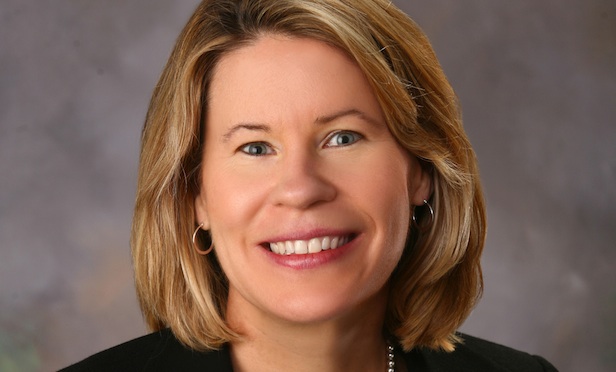
NEW YORK CITY—For Bank of America Merrill Lynch Community Development Banking, 2015 marked a new peak in two ways. It established a 12-month record for equity and lending, totaling $4.5 billion across the US. The group, led by national executive Maria Barry, also completed its single largest transaction—the $770-million San Francisco Rental Assistance Demonstration, which will turn more than 1,400 public housing units at 15 properties into sustainable low-income housing. It was also the largest transaction to date in the Department of Housing and Urban Development's RAD program. For the San Francisco project, BofA Merrill Lynch provided a combination of construction financing, low-income housing tax credits, subordinated debt and approximately $100 million in permanent financing from Freddie Mac.
Yet neither BofA Merrill Lynch nor Barry are newcomers to the affordable housing sector. And as a recent conversation with Barry made clear, the need for more product in this area is as acute as ever.
GlobeSt.com: We've seen a number of reports, both national and regional, describing a shortage of affordable housing stock. What are some of the hurdles that developers need to overcome to close that gap?
Maria Barry: That's correct; there is such a shortage of affordable housing. Whenever we finance the housing, there is usually a long waitlist for renters. Enterprise Community Partners has launched the Make Room campaign to pull together data on the need for affordable housing, and some of it is very compelling. One figure that jumps out is that 11 million families can barely afford rent, and one in four renter families are just one paycheck away from homelessness. That's a big number, so there's really a need. And I feel like there's a real desire to create affordable housing, but when you look at affordable housing, it's expensive to build. In order to make it affordable, you need enough subsidies to bring the rent price down so that the project can support itself on a lower base of rent. So for developers, it's finding property they can buy at a reasonable price, and then gathering the subsidies.
GlobeSt.com: Making the numbers pencil out entails creative financing along with subsidies. In terms of financing vehicles, what are some of the trends you and your team have seen?
Barry: We're very client focused, and we work with our clients across the country to come up with financing solutions that meet the needs of the project they're developing. In order to do that, we have a suite of products we can offer. It's not one size fits all. We try to be as innovative and creative as we can to help the developer so that the project can be built and residents can move in. We offer construction financing; we'll offer our equity and our debt as a one-stop shop in a lot of cases, and our clients seem to love that. It saves them on time and some transaction costs. We also have permanent solutions that we have in-house; we have key partners and we also offer FHA. The permanent financing is so important: you want to have a permanent loan on your project that can be paid back easily from the operations of the project, and that you can count on. We work with our clients to lock in that permanent financing right at construction closing.
For us, it's really about having that suite of products that will meet the needs for that particular development. We've been in this industry for a long time and have seen a lot of different financing solutions. It puts us in a position to offer a myriad of ideas and expertise, which also helps save time, which is an important part of getting from the idea to the closing.
GlobeSt.com: With Bank of America having been in the sector for a long time, how does the current environment compare to other periods in terms of interest and activity?
Barry: This was a record year for us. We're up to $4.5 billion in total production, which represents an increase on the debt and equity sides. We also closed our largest development ever, the RAD project in San Francisco. So this was our largest production year, but we have been in the market as a consistent player for over 30 years. We don't tend to go up or down in really dramatic terms. Even in the late 2000s, when things were getting tougher in the real estate market, we fulfilled our commitments and provided financing for many projects.
GlobeSt.com: You provide financing on different types of projects, from adaptive reuse and rehabilitation to new construction. Do you see any type of project especially prevalent now?
Barry: Give the cost of construction, we continue to see more rehab than we have in prior years. That's definitely an area that's growing. Another area that we're seeing more of is supportive housing, either in larger projects that we're financing or individual, customized developments. In New York City, we recently financed the first supportive housing development that has a homeless shelter in the building.

GlobeSt.com: We've discussed some of the challenges facing developers in affordable housing. Where do you see opportunities, especially in terms of affordable acting as a springboard to more commercial development?
Barry: Despite the challenges that anybody faces when they're developing a project, one thing about this industry is that we have a lot of really creative people who are committed to finding solutions. Another area where we're seeing growth is in RAD; we consider ourselves experts in that area. Clearly, the development that we see does provide jobs and opportunities in neighborhoods. Many of the developments we finance have some sort of commercial space in them. And at the end of the day, there's a huge success in providing people with safe, affordable places to live. Many of the supportive housing projects that we finance have health services available for residents. Overall, it's a great improvement in people's lives, and it's worth all of the work that everyone puts into it.
Yet neither BofA
GlobeSt.com: We've seen a number of reports, both national and regional, describing a shortage of affordable housing stock. What are some of the hurdles that developers need to overcome to close that gap?
Maria Barry: That's correct; there is such a shortage of affordable housing. Whenever we finance the housing, there is usually a long waitlist for renters. Enterprise Community Partners has launched the Make Room campaign to pull together data on the need for affordable housing, and some of it is very compelling. One figure that jumps out is that 11 million families can barely afford rent, and one in four renter families are just one paycheck away from homelessness. That's a big number, so there's really a need. And I feel like there's a real desire to create affordable housing, but when you look at affordable housing, it's expensive to build. In order to make it affordable, you need enough subsidies to bring the rent price down so that the project can support itself on a lower base of rent. So for developers, it's finding property they can buy at a reasonable price, and then gathering the subsidies.
GlobeSt.com: Making the numbers pencil out entails creative financing along with subsidies. In terms of financing vehicles, what are some of the trends you and your team have seen?
Barry: We're very client focused, and we work with our clients across the country to come up with financing solutions that meet the needs of the project they're developing. In order to do that, we have a suite of products we can offer. It's not one size fits all. We try to be as innovative and creative as we can to help the developer so that the project can be built and residents can move in. We offer construction financing; we'll offer our equity and our debt as a one-stop shop in a lot of cases, and our clients seem to love that. It saves them on time and some transaction costs. We also have permanent solutions that we have in-house; we have key partners and we also offer FHA. The permanent financing is so important: you want to have a permanent loan on your project that can be paid back easily from the operations of the project, and that you can count on. We work with our clients to lock in that permanent financing right at construction closing.
For us, it's really about having that suite of products that will meet the needs for that particular development. We've been in this industry for a long time and have seen a lot of different financing solutions. It puts us in a position to offer a myriad of ideas and expertise, which also helps save time, which is an important part of getting from the idea to the closing.
GlobeSt.com: With
Barry: This was a record year for us. We're up to $4.5 billion in total production, which represents an increase on the debt and equity sides. We also closed our largest development ever, the RAD project in San Francisco. So this was our largest production year, but we have been in the market as a consistent player for over 30 years. We don't tend to go up or down in really dramatic terms. Even in the late 2000s, when things were getting tougher in the real estate market, we fulfilled our commitments and provided financing for many projects.
GlobeSt.com: You provide financing on different types of projects, from adaptive reuse and rehabilitation to new construction. Do you see any type of project especially prevalent now?
Barry: Give the cost of construction, we continue to see more rehab than we have in prior years. That's definitely an area that's growing. Another area that we're seeing more of is supportive housing, either in larger projects that we're financing or individual, customized developments. In
GlobeSt.com: We've discussed some of the challenges facing developers in affordable housing. Where do you see opportunities, especially in terms of affordable acting as a springboard to more commercial development?
Barry: Despite the challenges that anybody faces when they're developing a project, one thing about this industry is that we have a lot of really creative people who are committed to finding solutions. Another area where we're seeing growth is in RAD; we consider ourselves experts in that area. Clearly, the development that we see does provide jobs and opportunities in neighborhoods. Many of the developments we finance have some sort of commercial space in them. And at the end of the day, there's a huge success in providing people with safe, affordable places to live. Many of the supportive housing projects that we finance have health services available for residents. Overall, it's a great improvement in people's lives, and it's worth all of the work that everyone puts into it.
© Arc, All Rights Reserved. Request academic re-use from www.copyright.com. All other uses, submit a request to TMSalesOperations@arc-network.com. For more information visit Asset & Logo Licensing.