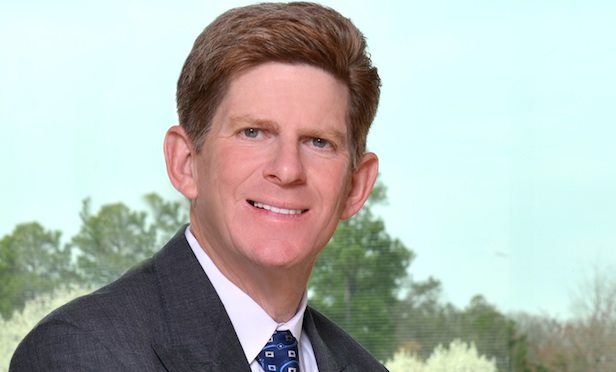
GLEN ALLEN, VA—“I feel like we're ending a journey that we started in the late '90s,” Louis Rogers, founder and CEO of Capital Square 1031, tells GlobeSt.com. Rogers began that journey as a partner with law firm Hirschler Fleischer, among the pioneers of the tenant-in-common ownership program, and later became president of Triple Net Properties LLC, which became the country's largest sponsor of securitized 1031 exchanges including TICs.
Today, Capital Square has formed a new team to assist with the restructuring, management, refinancing and sale of challenged real estate, including properties owned by TICs. The impetus is the upcoming 10-year maturities of billions of dollars in CMBS debt backed by TIC-owned real estate. Those securitizations were the culmination of a ramping-up of interest in TICs spurred by a 2002 Internal Revenue Service ruling that acknowledged the TIC structure.
With maturities looming on 2006 and 2007 securitized debt, most TIC properties acquired through those securitizations must be refinanced or sold. A number of these properties are challenged and need to be restructured and turned around before being refinanced or sold. Many TIC owners don't want to sell but would rather refinance and hold the property.
The snag is that the TIC structure has fallen out of favor with lenders, due largely to the TIC business grinding to a halt amid the capital markets crisis of 2008. “We have seen a few TIC exchanges done, but they're few and far between,” says Capital Square's Mike Waddell, who heads the new turnaround and restructuring management team.
A sizable chunk of the CMBS maturities occurring between 2015 and 2017 are tied to TIC transactions. Capital Square's head of asset and property management, Waddell says that of the estimated $300 billion in securitizations coming due during that time period, TIC transactions “easily represent between $25 billion and $30 billion.” With the average securitized TIC loan coming in at about $10 million, “that's hundreds of properties and hundreds of loans,” Rogers says.
Capital Square is forming the turnaround team, Rogers says, because “generally speaking, those are our investors. We know they're facing challenges in many cases. We believe it's the right time to come together to help some of these investors and some of these properties through the challenges.
“We don't have to guess what the documents say; we drafted them,” he continues. “We know the TIC agreements; we know the management agreements and the loan documents. We negotiated those back in the day and now those properties are coming full cycle.”
Rogers acknowledges “a profit motive” in helping TIC investors through the difficulties. “We want them to become our investors some day,” he says. “When they ultimately sell these properties, they have to do more exchanges. Capital Square 1031 is in the property replacement business, so it's sort of a natural to help them get over the hump.”

One of the best options for TIC owners is to convert the TIC program to a Delaware statutory trust. Unlike a rollup into a single LLC, “a DST conversion allows each individual investor to go their separate ways when the property is sold,” Rogers says. “Those who want to exchange can exchange; those who want to cash out can cash out and pay the taxes.”
Each property, says Waddell, “has its own unique set of factors. It's in a unique market and has unique attributes in terms of how old it is, how stabilized it is, how it's performing and when the loan matures. We look at the needs of each individual property and come up with solutions to address that, all the while keeping in mind the investor's end goal.”
Sometimes an investor is looking to exit the property after 10 years. Other times the investor wants to continue with the investment, “which means you're involved with putting a refinance together, and sometimes bringing capital to the table as well,” Waddell says.
Moving from a TIC structure to a DST isn't without its challenges, the biggest one being the sponsor. “When we have a new lender on the refinancing, the lender has to sign off on the sponsor,” says Rogers.
He points out that the DST structure is “a little different from the TIC. Under the TIC structure, all the investors have a vote and many of the key decisions require unanimous consent. That tax requirement caused a number of problems in the real estate recession, when it was sometimes difficult to get unanimous consent. In the DST structure, the sponsor makes almost all the decisions, so you need a sponsor that has the approval of all the lenders as well as a team to do the asset management, make the distributions, get the quarterly reports out and the end-of-year tax information.” However, Waddell adds, “we've preserved the ability for them to do another 1031 tax-free exchange through the DST structure when they come out.”
Today, Capital Square has formed a new team to assist with the restructuring, management, refinancing and sale of challenged real estate, including properties owned by TICs. The impetus is the upcoming 10-year maturities of billions of dollars in CMBS debt backed by TIC-owned real estate. Those securitizations were the culmination of a ramping-up of interest in TICs spurred by a 2002 Internal Revenue Service ruling that acknowledged the TIC structure.
With maturities looming on 2006 and 2007 securitized debt, most TIC properties acquired through those securitizations must be refinanced or sold. A number of these properties are challenged and need to be restructured and turned around before being refinanced or sold. Many TIC owners don't want to sell but would rather refinance and hold the property.
The snag is that the TIC structure has fallen out of favor with lenders, due largely to the TIC business grinding to a halt amid the capital markets crisis of 2008. “We have seen a few TIC exchanges done, but they're few and far between,” says Capital Square's Mike Waddell, who heads the new turnaround and restructuring management team.
A sizable chunk of the CMBS maturities occurring between 2015 and 2017 are tied to TIC transactions. Capital Square's head of asset and property management, Waddell says that of the estimated $300 billion in securitizations coming due during that time period, TIC transactions “easily represent between $25 billion and $30 billion.” With the average securitized TIC loan coming in at about $10 million, “that's hundreds of properties and hundreds of loans,” Rogers says.
Capital Square is forming the turnaround team, Rogers says, because “generally speaking, those are our investors. We know they're facing challenges in many cases. We believe it's the right time to come together to help some of these investors and some of these properties through the challenges.
“We don't have to guess what the documents say; we drafted them,” he continues. “We know the TIC agreements; we know the management agreements and the loan documents. We negotiated those back in the day and now those properties are coming full cycle.”
Rogers acknowledges “a profit motive” in helping TIC investors through the difficulties. “We want them to become our investors some day,” he says. “When they ultimately sell these properties, they have to do more exchanges. Capital Square 1031 is in the property replacement business, so it's sort of a natural to help them get over the hump.”
One of the best options for TIC owners is to convert the TIC program to a Delaware statutory trust. Unlike a rollup into a single LLC, “a DST conversion allows each individual investor to go their separate ways when the property is sold,” Rogers says. “Those who want to exchange can exchange; those who want to cash out can cash out and pay the taxes.”
Each property, says Waddell, “has its own unique set of factors. It's in a unique market and has unique attributes in terms of how old it is, how stabilized it is, how it's performing and when the loan matures. We look at the needs of each individual property and come up with solutions to address that, all the while keeping in mind the investor's end goal.”
Sometimes an investor is looking to exit the property after 10 years. Other times the investor wants to continue with the investment, “which means you're involved with putting a refinance together, and sometimes bringing capital to the table as well,” Waddell says.
Moving from a TIC structure to a DST isn't without its challenges, the biggest one being the sponsor. “When we have a new lender on the refinancing, the lender has to sign off on the sponsor,” says Rogers.
He points out that the DST structure is “a little different from the TIC. Under the TIC structure, all the investors have a vote and many of the key decisions require unanimous consent. That tax requirement caused a number of problems in the real estate recession, when it was sometimes difficult to get unanimous consent. In the DST structure, the sponsor makes almost all the decisions, so you need a sponsor that has the approval of all the lenders as well as a team to do the asset management, make the distributions, get the quarterly reports out and the end-of-year tax information.” However, Waddell adds, “we've preserved the ability for them to do another 1031 tax-free exchange through the DST structure when they come out.”
© Arc, All Rights Reserved. Request academic re-use from www.copyright.com. All other uses, submit a request to TMSalesOperations@arc-network.com. For more information visit Asset & Logo Licensing.