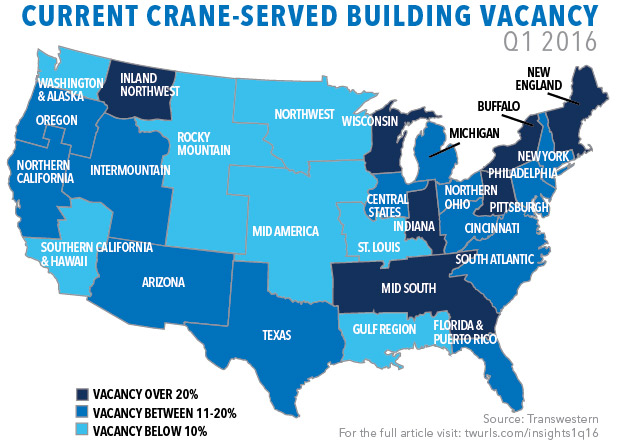
An uptick in steel-related manufacturing and growth in the auto industry are likely to cause demand for crane-served facilities to intensify throughout the year, according to Transwestern. These specialized buildings feature massive overhead bridge cranes to maneuver heavy metal materials or large, unwieldy products.
Automakers and associated suppliers are driving absorption of crane-served buildings in parts of Michigan, Missouri, South Carolina, Georgia, Tennessee, Alabama, Mississippi, Kentucky and Texas. In addition, suppliers are securing space in traditional industrial properties as they ramp up operations to meet demand from automakers.
Steve Kozarits, Transwestern, tells GlobeSt.com: “Growth in the automotive and aviation industries, such as the new Boeing Dreamliner facility in Charleston, SC, is creating additional demand for special-purpose space. Our data shows that overall vacancy for crane-served buildings in the US declined 0.7 percent over the past quarter to 14.2%.”
As these companies expand practices, each must evaluate whether to acquire, lease or build space. Because crane-served buildings must be custom-tailored to the tenant's specifications, many businesses have found constructing a new facility to be the most cost-effective option when looking for new space.
Crane-served buildings are expensive to develop–sometimes double that of a typical warehouse. Presently, the specialized buildings cost $100 to $120 per square foot for the shell versus $60 to $70 per square foot for the shell of a traditional industrial facility. And with construction costs escalating, reliable build-versus-lease analyses will become increasingly more important, says Transwestern.
Join the conversation March 29 at RealShare HOUSTON. Click here for more details on Houston CRE's premier information and networking event.
An uptick in steel-related manufacturing and growth in the auto industry are likely to cause demand for crane-served facilities to intensify throughout the year, according to Transwestern. These specialized buildings feature massive overhead bridge cranes to maneuver heavy metal materials or large, unwieldy products.
Automakers and associated suppliers are driving absorption of crane-served buildings in parts of Michigan, Missouri, South Carolina, Georgia, Tennessee, Alabama, Mississippi, Kentucky and Texas. In addition, suppliers are securing space in traditional industrial properties as they ramp up operations to meet demand from automakers.
Steve Kozarits, Transwestern, tells GlobeSt.com: “Growth in the automotive and aviation industries, such as the new
As these companies expand practices, each must evaluate whether to acquire, lease or build space. Because crane-served buildings must be custom-tailored to the tenant's specifications, many businesses have found constructing a new facility to be the most cost-effective option when looking for new space.
Crane-served buildings are expensive to develop–sometimes double that of a typical warehouse. Presently, the specialized buildings cost $100 to $120 per square foot for the shell versus $60 to $70 per square foot for the shell of a traditional industrial facility. And with construction costs escalating, reliable build-versus-lease analyses will become increasingly more important, says Transwestern.
Join the conversation March 29 at RealShare HOUSTON. Click here for more details on Houston CRE's premier information and networking event.
© Arc, All Rights Reserved. Request academic re-use from www.copyright.com. All other uses, submit a request to TMSalesOperations@arc-network.com. For more information visit Asset & Logo Licensing.