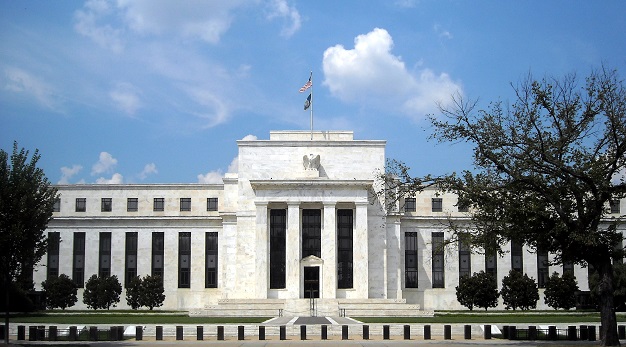
CHICAGO—Throughout much of 2015, the real estate world was filled with discussions on when and by how much the Fed would push up interest rates. A lot of this talk subsided after Janet Yellen and her colleagues took a pass when they had another opportunity to boost rates, but the question still hangs over many of the decisions people have to make every day. And at DLA Piper's Global Real Estate Summit, held yesterday in Chicago, a group of leading bankers and capital providers spoke to hundreds of attendees on what they could expect in the next few years.
Ross L. Smotrich, managing director-research for Barclays Capital Inc., moderated the discussion, and began by asking the panelists whether the era of record low interest rates had ended.
“Interest rates almost definitely cannot rise,” said Thomas M. Flexner, global head of real estate, vice chairman, of Citigroup's institutional clients group. He pointed out that the global rate of growth is hovering around 2% to 3%, and at just about 2% in the US. And in such a low-growth environment it is very difficult to create the inflation and wage growth typically cited as reasons to increase interest rates. “I think we will be in this period for a long time.”
Smotrich asked Catherine Marcus, global chief operating officer of Prudential Real Estate Investors, whether she feels the spread between interest rates and cap rates will grow. She doubts it. There is still a lot of capital being raised around the world by groups, especially pension funds, that want to increase their allocations to real estate, specifically to US property. “Real estate still seems like the best bet in town,” she said. “I don't see the spigot being turned off.”
Flexner added that global capital flows could slow if the Chinese economy hits a truly rough patch. And the trouble with China is that most people outside the country have little confidence in the statistics published by its government. “That jumbo jet is coming down, and we don't know if it's coming down with its wheels up or not.”
But all of the panelists agreed that economic troubles abroad, whether in China or Europe, could still ultimately benefit the US real estate market. It is largely seen as a safe harbor by investors all over the world who are “starving for predictability,” said Flexner.
“We're going to be the belle of the ball for a while,” said Marcus.
CHICAGO—Throughout much of 2015, the real estate world was filled with discussions on when and by how much the Fed would push up interest rates. A lot of this talk subsided after Janet Yellen and her colleagues took a pass when they had another opportunity to boost rates, but the question still hangs over many of the decisions people have to make every day. And at
Ross L. Smotrich, managing director-research for
“Interest rates almost definitely cannot rise,” said Thomas M. Flexner, global head of real estate, vice chairman, of
Smotrich asked Catherine Marcus, global chief operating officer of Prudential Real Estate Investors, whether she feels the spread between interest rates and cap rates will grow. She doubts it. There is still a lot of capital being raised around the world by groups, especially pension funds, that want to increase their allocations to real estate, specifically to US property. “Real estate still seems like the best bet in town,” she said. “I don't see the spigot being turned off.”
Flexner added that global capital flows could slow if the Chinese economy hits a truly rough patch. And the trouble with China is that most people outside the country have little confidence in the statistics published by its government. “That jumbo jet is coming down, and we don't know if it's coming down with its wheels up or not.”
But all of the panelists agreed that economic troubles abroad, whether in China or Europe, could still ultimately benefit the US real estate market. It is largely seen as a safe harbor by investors all over the world who are “starving for predictability,” said Flexner.
“We're going to be the belle of the ball for a while,” said Marcus.
© Arc, All Rights Reserved. Request academic re-use from www.copyright.com. All other uses, submit a request to TMSalesOperations@arc-network.com. For more information visit Asset & Logo Licensing.