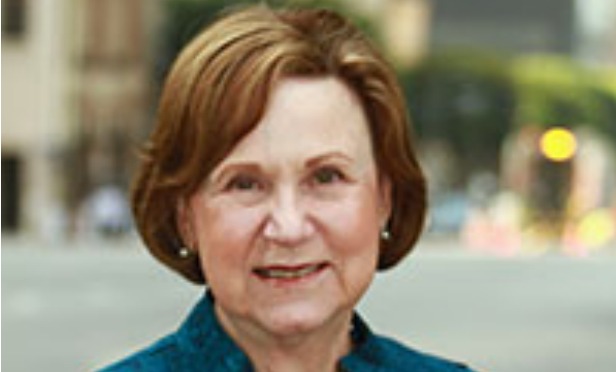
LOS ANGELES—No matter which side you're on in the grand development debate, one thing is clear: we need a new master plan. This is according to the Urban Land Institute, which recently published a Statement of Principles to outline the issues and then held a forum to take the first step toward—what will likely be a long path—to a solution. Gail Goldberg, executive director of the Urban Land Institute Los Angeles, sat down with us for an exclusive interview to talk about the discussion at the forum and what she thinks a new community plan would have to address.
GlobeSt.com: You recently partnered and appeared at a UCLA Ziman Center forum about this issue. What was the reaction from attendees and panelists at the event?
Goldberg: The consistent view from everyone on the panel was that the system was broken and that the city doesn't function well, and it doesn't work well for anyone. The audience was really struck by that. I think that there are some folks out there that believe that this puts developers at a big advantage; the reality is that it puts many more developers at a huge disadvantage, because many mid-sized developers can't afford the risk of having to change the plan. I think that there was an understanding in the audience, maybe for the first time, that the system makes it difficult for everyone. Even the large developers that make the case that because L.A. is a speculative environment and because they are proposing projects that require a plan amendment and a zone change, it makes it more difficult for them to finance it and it makes it more expensive for them to get financing. At every level, this system is problematic. The audience also heard about the distrust of the planning department and the city council. There were varying solutions to these problems, and there were people on the panel that said that maybe it can't be fixed and maybe we are so big and diverse that we will never reconcile how to grow with the folks that want to keep things the same. Optimism was also expressed by a lot of people, including me, but the way out is complicated.
GlobeSt.com: What is driving the divisiveness between the community and developers?
Gail Goldberg: When you have not done community plans in 20 years, and community members and developers have not predictability, I think that environment really creates a lot of angst. I also think that the fact that we don't have city plans makes us vulnerable. There are two things going on. There are some community members don't want change, because they have seen change as a negative thing over the last 10 years and their impression of that change is that their quality of life has been diminished. To them, they are fearful of any change because they don't have the experience of aspirational change. There are other folks that are not opposed to change, but they want to make sure that the change that occurs is not just about accommodating growth and new people coming here. It needs to also be about how to improve the quality of life for people who live here now, and to what extent are we paying attention to that. We haven't had those discussions. We have found ourselves in a quagmire where there is little support for new development.
GlobeSt.com: This is obviously a complicated problem. What are some of the things that a solution needs to address?
Goldberg: We are a very big city, and there are ample opportunities to accommodate growth in ways that do not destroy existing neighborhoods. We need to have plans that identify where that growth should occur and at the same time where it should not occur, but the reality is that we don't have the experience of plans here in Los Angeles, and the plans that we have adopted in the past don't come with a lot of detail in terms of infrastructure or urban design and neighborhood character, and those are the kind of things that people are really interested in. When I was trying to initiate a neighborhood of new community plans, and I thought that a natural ally would be the community and neighborhood council because those are the folks that most need the predictability of what is going to happen. What I heard from the communities was that they had no trust in the process, and even if they spent the time to create a plan that they all bought into, they had no trust that the council would honor the plan. In many cities that I am familiar with, all community plan amendments with are batched together once a year so that you could see them collectively and you could see what the impact would be to the community. There are also criteria to the community plan amendments, so there were some guidelines. We need to have not only community plans, but we need some assurance for communities or from communities that the plan will be implemented.
GlobeSt.com: Do you think we could adopt a procedure from another city?
Goldberg: One of the things that we want to do is look at best practices. I don't think that there is a model out there that L.A. can just pick up. One of the reasons that we can't pick up someone else's process is that we have a lot of work to do to build trust. Our process is going to have to be much more inclusive than anyone else's plan, and much more transparent than anyone else needs because we are trying to overcome a long period of time where we just had no trust in the process. I think that we have a lot to learn from cities that do public outreach and what it is that they do to build consensus. We also have to look at the problems of big cities, because when you have a city as big and diverse as Los Angeles, it is very difficult to adopt citywide policies. Policies that solve a problem in one community may cause a problem in another community. It is more important that we deal with these issues on a community-by-community basis and that the unique character of the community is considered.
GlobeSt.com: You have said that funding is a big part of this issue. Aside from funding, what are the other big challenges?
Goldberg: We have to think about how to connect infrastructure with growth, and we haven't done that in the past. We have to figure out those needs today and what those needs are for the future. When people see development without the infrastructure to support it, they are calling foul. That is not a small issue.
LOS ANGELES—No matter which side you're on in the grand development debate, one thing is clear: we need a new master plan. This is according to the Urban Land Institute, which recently published a Statement of Principles to outline the issues and then held a forum to take the first step toward—what will likely be a long path—to a solution. Gail Goldberg, executive director of the Urban Land Institute Los Angeles, sat down with us for an exclusive interview to talk about the discussion at the forum and what she thinks a new community plan would have to address.
GlobeSt.com: You recently partnered and appeared at a UCLA Ziman Center forum about this issue. What was the reaction from attendees and panelists at the event?
Goldberg: The consistent view from everyone on the panel was that the system was broken and that the city doesn't function well, and it doesn't work well for anyone. The audience was really struck by that. I think that there are some folks out there that believe that this puts developers at a big advantage; the reality is that it puts many more developers at a huge disadvantage, because many mid-sized developers can't afford the risk of having to change the plan. I think that there was an understanding in the audience, maybe for the first time, that the system makes it difficult for everyone. Even the large developers that make the case that because L.A. is a speculative environment and because they are proposing projects that require a plan amendment and a zone change, it makes it more difficult for them to finance it and it makes it more expensive for them to get financing. At every level, this system is problematic. The audience also heard about the distrust of the planning department and the city council. There were varying solutions to these problems, and there were people on the panel that said that maybe it can't be fixed and maybe we are so big and diverse that we will never reconcile how to grow with the folks that want to keep things the same. Optimism was also expressed by a lot of people, including me, but the way out is complicated.
GlobeSt.com: What is driving the divisiveness between the community and developers?
Gail Goldberg: When you have not done community plans in 20 years, and community members and developers have not predictability, I think that environment really creates a lot of angst. I also think that the fact that we don't have city plans makes us vulnerable. There are two things going on. There are some community members don't want change, because they have seen change as a negative thing over the last 10 years and their impression of that change is that their quality of life has been diminished. To them, they are fearful of any change because they don't have the experience of aspirational change. There are other folks that are not opposed to change, but they want to make sure that the change that occurs is not just about accommodating growth and new people coming here. It needs to also be about how to improve the quality of life for people who live here now, and to what extent are we paying attention to that. We haven't had those discussions. We have found ourselves in a quagmire where there is little support for new development.
GlobeSt.com: This is obviously a complicated problem. What are some of the things that a solution needs to address?
Goldberg: We are a very big city, and there are ample opportunities to accommodate growth in ways that do not destroy existing neighborhoods. We need to have plans that identify where that growth should occur and at the same time where it should not occur, but the reality is that we don't have the experience of plans here in Los Angeles, and the plans that we have adopted in the past don't come with a lot of detail in terms of infrastructure or urban design and neighborhood character, and those are the kind of things that people are really interested in. When I was trying to initiate a neighborhood of new community plans, and I thought that a natural ally would be the community and neighborhood council because those are the folks that most need the predictability of what is going to happen. What I heard from the communities was that they had no trust in the process, and even if they spent the time to create a plan that they all bought into, they had no trust that the council would honor the plan. In many cities that I am familiar with, all community plan amendments with are batched together once a year so that you could see them collectively and you could see what the impact would be to the community. There are also criteria to the community plan amendments, so there were some guidelines. We need to have not only community plans, but we need some assurance for communities or from communities that the plan will be implemented.
GlobeSt.com: Do you think we could adopt a procedure from another city?
Goldberg: One of the things that we want to do is look at best practices. I don't think that there is a model out there that L.A. can just pick up. One of the reasons that we can't pick up someone else's process is that we have a lot of work to do to build trust. Our process is going to have to be much more inclusive than anyone else's plan, and much more transparent than anyone else needs because we are trying to overcome a long period of time where we just had no trust in the process. I think that we have a lot to learn from cities that do public outreach and what it is that they do to build consensus. We also have to look at the problems of big cities, because when you have a city as big and diverse as Los Angeles, it is very difficult to adopt citywide policies. Policies that solve a problem in one community may cause a problem in another community. It is more important that we deal with these issues on a community-by-community basis and that the unique character of the community is considered.
GlobeSt.com: You have said that funding is a big part of this issue. Aside from funding, what are the other big challenges?
Goldberg: We have to think about how to connect infrastructure with growth, and we haven't done that in the past. We have to figure out those needs today and what those needs are for the future. When people see development without the infrastructure to support it, they are calling foul. That is not a small issue.
© Arc, All Rights Reserved. Request academic re-use from www.copyright.com. All other uses, submit a request to TMSalesOperations@arc-network.com. For more information visit Asset & Logo Licensing.