LOS ANGELES—CBRE has proven that it is not just a brokerage firm with the recent sale of 400 S. Hope Street, the firm's global headquarters. In an earlier story, GlobeSt.com reported that the firm's investment arm CBRE Global Investors, has sold the property to a joint venture between PNC Financial Services and GLL RE Partners for what industry sources say is $330 million, a value creation of $100 million in four years. CBRE handled every aspect of the business plan internally to drive value.
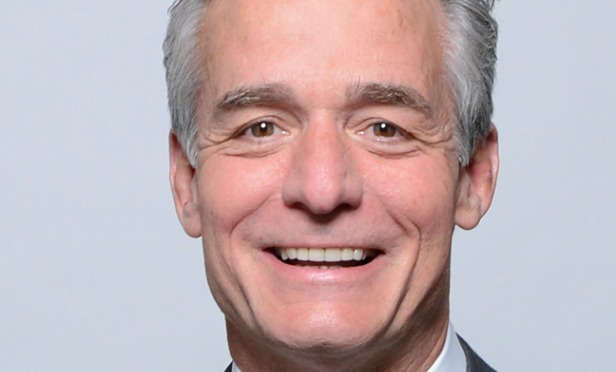
“The big story is the value that we created in a building that has been here since 1983,” Lew Horne, the president of the Los Angeles region and Orange County at CBRE, tells GlobeSt.com exclusively. “Prior to our involvement, the building was considered a good building but not a great building. Now, it is an iconic building with what we have done with it. At the time CBRE Global Investors purchased the property, it was 81% leased. Now it is 93% leased, and it is out performing the rest of the market.”
CBRE was all in on this project. The various groups and divisions of the firm placed the debt, leased the building and managed the building. The firm did all of the interior improvements, and converted the building into a LEED Platinum property. “We also had to do some complicated engineering work,” adds Horne. “The building had a balcony at the top with unsightly window washing equipment, so there was no view. We elected to push the window line out and create a view, but to do that we had to reengineer a boom, basically, at the top of the building that could turnover like fishing line for the window washing equipment to go 360-degrees around the building. We were also able to turn all of the unoccupiable space into occupiable space by coming up with an engineering solution where we put a film on the exterior window and added a tremendous amount of air conditioning to cool the glass.”
To activate the ground floor, CBRE brought in restaurant tenants to add amenities to the property, which was formerly just a lobby. “We really created value there,” says Horne. The amenities went beyond ground floor retail. They also added 50 wellness features that made the building a healthier place. “We add circadian light system so that everyone is able to enjoy outside light, even in the core of the building. We added cork sub substrates under the floors for better posture, and gave everyone standup desks,” he says. “We planted 1,000 plants in the space.” As a result, they were able to extend the Capital Group's lease, the building's largest tenant, through 2033.
For Horne, the impressive value creation completed completely through CBRE groups is more impressive than the sale. “We have been building a company over the last 10 years that isn't just thought of as a brokerage firm but as a global corporate real estate firm,” he add. “Our brokerage capital markets team sold the building to investors, our investment entity bought it; we then place debt on the building; we leased the building; we built the interior tenant improvements in the building. That comes up to seven or eight different types of business in the building all working in concert to create value. We are particularly proud of this one.”
LOS ANGELES—CBRE has proven that it is not just a brokerage firm with the recent sale of 400 S. Hope Street, the firm's global headquarters. In an earlier story, GlobeSt.com reported that the firm's investment arm CBRE Global Investors, has sold the property to a joint venture between PNC Financial Services and GLL RE Partners for what industry sources say is $330 million, a value creation of $100 million in four years. CBRE handled every aspect of the business plan internally to drive value.
“The big story is the value that we created in a building that has been here since 1983,” Lew Horne, the president of the Los Angeles region and Orange County at CBRE, tells GlobeSt.com exclusively. “Prior to our involvement, the building was considered a good building but not a great building. Now, it is an iconic building with what we have done with it. At the time CBRE Global Investors purchased the property, it was 81% leased. Now it is 93% leased, and it is out performing the rest of the market.”
CBRE was all in on this project. The various groups and divisions of the firm placed the debt, leased the building and managed the building. The firm did all of the interior improvements, and converted the building into a LEED Platinum property. “We also had to do some complicated engineering work,” adds Horne. “The building had a balcony at the top with unsightly window washing equipment, so there was no view. We elected to push the window line out and create a view, but to do that we had to reengineer a boom, basically, at the top of the building that could turnover like fishing line for the window washing equipment to go 360-degrees around the building. We were also able to turn all of the unoccupiable space into occupiable space by coming up with an engineering solution where we put a film on the exterior window and added a tremendous amount of air conditioning to cool the glass.”
To activate the ground floor, CBRE brought in restaurant tenants to add amenities to the property, which was formerly just a lobby. “We really created value there,” says Horne. The amenities went beyond ground floor retail. They also added 50 wellness features that made the building a healthier place. “We add circadian light system so that everyone is able to enjoy outside light, even in the core of the building. We added cork sub substrates under the floors for better posture, and gave everyone standup desks,” he says. “We planted 1,000 plants in the space.” As a result, they were able to extend the Capital Group's lease, the building's largest tenant, through 2033.
For Horne, the impressive value creation completed completely through CBRE groups is more impressive than the sale. “We have been building a company over the last 10 years that isn't just thought of as a brokerage firm but as a global corporate real estate firm,” he add. “Our brokerage capital markets team sold the building to investors, our investment entity bought it; we then place debt on the building; we leased the building; we built the interior tenant improvements in the building. That comes up to seven or eight different types of business in the building all working in concert to create value. We are particularly proud of this one.”
© Arc, All Rights Reserved. Request academic re-use from www.copyright.com. All other uses, submit a request to TMSalesOperations@arc-network.com. For more information visit Asset & Logo Licensing.