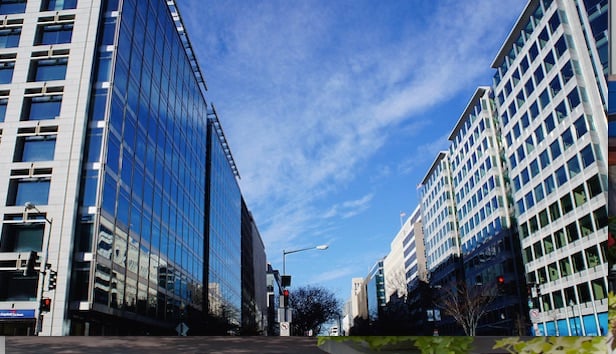
WASHINGTON DC--Washington DC's commercial real estate markets has always been a top choice for foreign investors for both logical and intuitive reasons. In recent years, though, DC has been relying more on the intuitive or emotive case of investing in the nation's Capitol. Simply put, the twin pressures of the post-recession years and sequestration have eroded office property returns.
Indeed, if investors were evaluating a market strictly based on its returns it would opt for an office building in Atlanta where the 12-month total return (cash flow plus appreciation) posted at the end of the fourth quarter in 2015 was 17.4%, according to Delta Associates' Q1 office market report, or San Francisco, at 17.2%. Delta came to these numbers using report data from the Chicago-based National Council of Real Estate Investment Fiduciaries.
Total returns for the Washington office market, meanwhile, were more than ten percentage points away at 6.59% for the 12 months ending December 2015. The District alone posted returns of 7.89%, double the rate of the 3.42% in the suburbs.
But even then DC didn't come that close to last year's national average of 12.50%.
Does Brexit Change Things?
The turmoil surrounding Brexit -- specifically the freezing of assets in three major UK property funds -- is expected to play up Washington DC's “security” bona fides with foreign investors.
But even without Brexit, Washington DC has been looking good to investors in 2016.
So far the majority, or 60%, of buyers of local assets this year through May have been made up of cross-border capital, of which 87% came from institutions, according to CBRE. In addition, holding periods are moving out, from seven to ten years to 10 years plus, CBRE reported -- which is another strong suit for the city.
Delta, for its part, predicts in its report -- which came out a few months ago -- that investment returns in the Washington area should climb “as the region reclaims its position among the premier long-term investment markets in the nation.”
It noted that investors buying Washington assets today “are primarily focused on a longer-term horizon and the strong fundamentals of the region, including a growing private sector and the most educated workforce in the US, which will attract firms seeking high-quality labor.”
The region's office investment sales market has held up remarkably well given the economic headwinds the Washington area has faced, it concluded.
More Disclosure from SWFs
Another plus for the Washington DC, and certainly the US CRE markets as a whole, is the glimmerings of a new trend in which SWF and other private foreign buyers make public some of their returns in the US market.
As more of this information is published, investors will have better gauges by which to make their investments.
To be sure such limited transparency is the most nascent of trends among SWFs. But there are distinct signs of it. Bahrain's sovereign wealth fund, as one example, reported a 70% drop in profits for 2015, a shocking disclosure not because of the drop itself but because so few Middle Eastern SWFs report their figures at all.
But the Bahrain Mumtalakat Holding Co., as the fund is called, was very straightforward about its numbers.
The group registered a net profit of $76.3 million compared to US$243.6 million in the previous year. It said that the reduction in the net profit is attributed to impairment losses recognized on goodwill that was partially offset by an increase in share of profit from associates and improved operational performance of Gulf Air.
This year the fund plans to invest more than $400 million on international deals, according to news reports.
Norges Returns for its US CRE Investments
Norway's Norges fund also published its 2015 results, breaking out returns on a geographic level.
- The fund's unlisted real estate investments returned 10.8% in 2015.
- Investments in Europe accounted for 51.1% of the unlisted real estate portfolio at the end of the year and returned 10%.
- Office and retail property investment in Europe at the end of the year made up 40.6% of the overall unlisted real estate portfolio and returned 11.1%.
- Logistics properties in Europe at the end of the year made up 10.5% of the overall unlisted real estate portfolio and returned 6%.
- Investments in the US accounted for 48.9% of the unlisted real estate portfolio at the end of the year and returned 12.7%.
- Office and retail properties in the US at the end of the year made up 35 percent of the overall unlisted real estate portfolio and returned 13.5%. Its office investments were in four cities of New York, Boston, Washington, DC and San Francisco. Unfortunately Norges doesn't get more granular than that other than to disconcertingly note that Washington DC “was one of the weaker markets, with largely unchanged rents and above-average vacancy” while “San Francisco was the strongest performer.”
- The greatest exposure was to New York, which accounted for 58.1% of the total US office and retail portfolio at the end of the year.
- Logistics properties in the US at the end of the year made up 13.9% of the overall unlisted real estate portfolio and returned 12.6%.
Now consider this data point. Since the fund's inception in 2011, unlisted real estate investments have returned 6.9%, which is why “returns in unlisted markets in a single year should not be given too much weight,” Karsten Kallevig, CEO Norges Bank Real Estate Management, wrote in the forward to the report.
Or maybe, possibly, returns from one single city in a single year.
WASHINGTON DC--Washington DC's commercial real estate markets has always been a top choice for foreign investors for both logical and intuitive reasons. In recent years, though, DC has been relying more on the intuitive or emotive case of investing in the nation's Capitol. Simply put, the twin pressures of the post-recession years and sequestration have eroded office property returns.
Indeed, if investors were evaluating a market strictly based on its returns it would opt for an office building in Atlanta where the 12-month total return (cash flow plus appreciation) posted at the end of the fourth quarter in 2015 was 17.4%, according to Delta Associates' Q1 office market report, or San Francisco, at 17.2%. Delta came to these numbers using report data from the Chicago-based National Council of Real Estate Investment Fiduciaries.
Total returns for the Washington office market, meanwhile, were more than ten percentage points away at 6.59% for the 12 months ending December 2015. The District alone posted returns of 7.89%, double the rate of the 3.42% in the suburbs.
But even then DC didn't come that close to last year's national average of 12.50%.
Does Brexit Change Things?
The turmoil surrounding Brexit -- specifically the freezing of assets in three major UK property funds -- is expected to play up Washington DC's “security” bona fides with foreign investors.
But even without Brexit, Washington DC has been looking good to investors in 2016.
So far the majority, or 60%, of buyers of local assets this year through May have been made up of cross-border capital, of which 87% came from institutions, according to CBRE. In addition, holding periods are moving out, from seven to ten years to 10 years plus, CBRE reported -- which is another strong suit for the city.
Delta, for its part, predicts in its report -- which came out a few months ago -- that investment returns in the Washington area should climb “as the region reclaims its position among the premier long-term investment markets in the nation.”
It noted that investors buying Washington assets today “are primarily focused on a longer-term horizon and the strong fundamentals of the region, including a growing private sector and the most educated workforce in the US, which will attract firms seeking high-quality labor.”
The region's office investment sales market has held up remarkably well given the economic headwinds the Washington area has faced, it concluded.
More Disclosure from SWFs
Another plus for the Washington DC, and certainly the US CRE markets as a whole, is the glimmerings of a new trend in which SWF and other private foreign buyers make public some of their returns in the US market.
As more of this information is published, investors will have better gauges by which to make their investments.
To be sure such limited transparency is the most nascent of trends among SWFs. But there are distinct signs of it. Bahrain's sovereign wealth fund, as one example, reported a 70% drop in profits for 2015, a shocking disclosure not because of the drop itself but because so few Middle Eastern SWFs report their figures at all.
But the Bahrain Mumtalakat Holding Co., as the fund is called, was very straightforward about its numbers.
The group registered a net profit of $76.3 million compared to US$243.6 million in the previous year. It said that the reduction in the net profit is attributed to impairment losses recognized on goodwill that was partially offset by an increase in share of profit from associates and improved operational performance of Gulf Air.
This year the fund plans to invest more than $400 million on international deals, according to news reports.
Norges Returns for its US CRE Investments
Norway's Norges fund also published its 2015 results, breaking out returns on a geographic level.
- The fund's unlisted real estate investments returned 10.8% in 2015.
- Investments in Europe accounted for 51.1% of the unlisted real estate portfolio at the end of the year and returned 10%.
- Office and retail property investment in Europe at the end of the year made up 40.6% of the overall unlisted real estate portfolio and returned 11.1%.
- Logistics properties in Europe at the end of the year made up 10.5% of the overall unlisted real estate portfolio and returned 6%.
- Investments in the US accounted for 48.9% of the unlisted real estate portfolio at the end of the year and returned 12.7%.
- Office and retail properties in the US at the end of the year made up 35 percent of the overall unlisted real estate portfolio and returned 13.5%. Its office investments were in four cities of
- The greatest exposure was to
- Logistics properties in the US at the end of the year made up 13.9% of the overall unlisted real estate portfolio and returned 12.6%.
Now consider this data point. Since the fund's inception in 2011, unlisted real estate investments have returned 6.9%, which is why “returns in unlisted markets in a single year should not be given too much weight,” Karsten Kallevig, CEO Norges Bank Real Estate Management, wrote in the forward to the report.
Or maybe, possibly, returns from one single city in a single year.
© Arc, All Rights Reserved. Request academic re-use from www.copyright.com. All other uses, submit a request to TMSalesOperations@arc-network.com. For more information visit Asset & Logo Licensing.