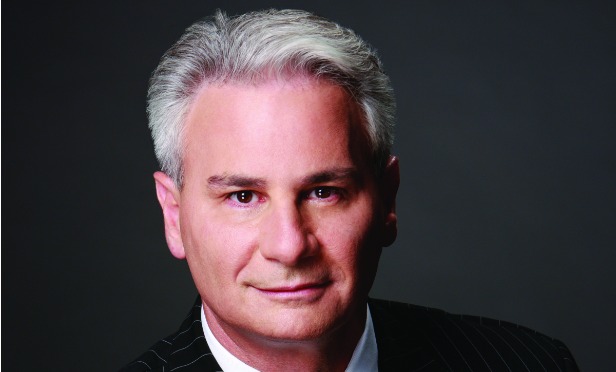
LOS ANGELES—Many experts are saying that we should expect a flood of foreign capital to come into the US following Brexit, but we may see capital flooding into Europe instead. According to Lew Feldman, CEO at Heritage Capital Ventures and chairman emeritus of Goodwin Procter's California Offices, opportunistic capital is likely looking to pick up distressed assets in Europe as a result of Brexit. While Feldman still anticipates that some money will come to the US for security, we should also expect to see resourceful buyers pouring into countries like the UK, Germany and France. Feldman sat down for an exclusive interview to talk about his forecast and how past cycles will serve as an indication of what is to come.
GlobeSt.com: We have seen a lot of foreign capital investing in the US, especially in Los Angeles. Will Brexit attract more capital to the market?
Lew Feldman: Brexit will have two impacts. One is that if Europe continues, and I think it will, to be slow in coming out of their recessionary time, there will be opportunities available in distress. Money will flow into distressed assets the way that it did here in 2009 and 2010, so there could be stimulation into some of the opportunistic buyers. Here, we are more of a safety play. If the rest of the world is printing lots and lots of money and we are standing pad with low rates and the value of the dollar is strong, this becomes a good market for safety. So, some people will put their money into opportunistic investments, and some will put money into secure investments. From what I saw in the last cycle, however, the opportunistic capital portends where future capital flows were going to go, and my sense is that if there is big money going into Europe, you are going to see more foreign money going into those distressed markets. It may be through private equity fund investments or through wealth management or hedge funds. A lot of companies have just opened up offices in Germany and France, so they are banking on bad times being good times for professionals.
GlobeSt.com: How will that move affect real estate activity here?
Feldman: I think that uncertainty will keep money coming here, but as the dollar is stronger versus other currencies, purchases of real estate become more expensive here. Therefore, folks can't afford to buy as much. Overtime, we are going to see some kind of equilibrium return to the market, but I can't tell you how long that will last. You are still seeing people diversifying into rule-of-law countries and opportunistic countries right now.
GlobeSt.com: Have we seen this happen in past cycles?
Feldman: When real estate gets distressed, a ton of people with cash come out from other countries. We saw it in the 1980s with British companies. They had a really high savings rate and were the manufacturers of the world, and a lot of their money came in to buy distressed assets here. They always said that they were going to buy and hold for 100 years, and they ended up selling when everything crashed in 2002. That product was then picked up by a bunch of private equity funds and sovereign wealth funds. We have definitely seen this before. When folks do well in other countries, the first thing that they do is put money into commercial real estate because it has inflation protection, because you can raise rents if the value of the dollar falls, and it has income protection if you buy it right because you are always going to get cash flow with healthy tenants. It is part of the permanent aspect of any capital stack for most funds. We have seen it time and time again.
LOS ANGELES—Many experts are saying that we should expect a flood of foreign capital to come into the US following Brexit, but we may see capital flooding into Europe instead. According to Lew Feldman, CEO at Heritage Capital Ventures and chairman emeritus of
GlobeSt.com: We have seen a lot of foreign capital investing in the US, especially in Los Angeles. Will Brexit attract more capital to the market?
Lew Feldman: Brexit will have two impacts. One is that if Europe continues, and I think it will, to be slow in coming out of their recessionary time, there will be opportunities available in distress. Money will flow into distressed assets the way that it did here in 2009 and 2010, so there could be stimulation into some of the opportunistic buyers. Here, we are more of a safety play. If the rest of the world is printing lots and lots of money and we are standing pad with low rates and the value of the dollar is strong, this becomes a good market for safety. So, some people will put their money into opportunistic investments, and some will put money into secure investments. From what I saw in the last cycle, however, the opportunistic capital portends where future capital flows were going to go, and my sense is that if there is big money going into Europe, you are going to see more foreign money going into those distressed markets. It may be through private equity fund investments or through wealth management or hedge funds. A lot of companies have just opened up offices in Germany and France, so they are banking on bad times being good times for professionals.
GlobeSt.com: How will that move affect real estate activity here?
Feldman: I think that uncertainty will keep money coming here, but as the dollar is stronger versus other currencies, purchases of real estate become more expensive here. Therefore, folks can't afford to buy as much. Overtime, we are going to see some kind of equilibrium return to the market, but I can't tell you how long that will last. You are still seeing people diversifying into rule-of-law countries and opportunistic countries right now.
GlobeSt.com: Have we seen this happen in past cycles?
Feldman: When real estate gets distressed, a ton of people with cash come out from other countries. We saw it in the 1980s with British companies. They had a really high savings rate and were the manufacturers of the world, and a lot of their money came in to buy distressed assets here. They always said that they were going to buy and hold for 100 years, and they ended up selling when everything crashed in 2002. That product was then picked up by a bunch of private equity funds and sovereign wealth funds. We have definitely seen this before. When folks do well in other countries, the first thing that they do is put money into commercial real estate because it has inflation protection, because you can raise rents if the value of the dollar falls, and it has income protection if you buy it right because you are always going to get cash flow with healthy tenants. It is part of the permanent aspect of any capital stack for most funds. We have seen it time and time again.
© Arc, All Rights Reserved. Request academic re-use from www.copyright.com. All other uses, submit a request to TMSalesOperations@arc-network.com. For more information visit Asset & Logo Licensing.