(First of two parts)
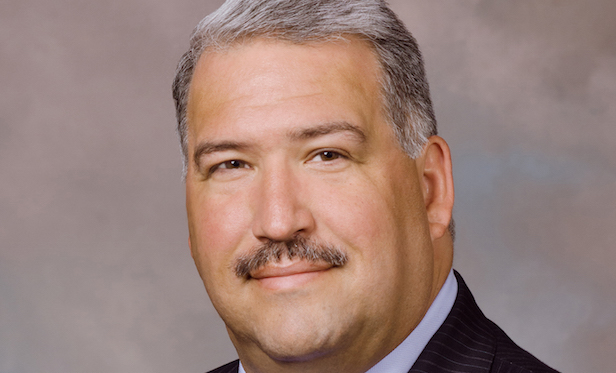
NEW YORK CITY—The emergence of a region as a destination for corporate tenants, and for the commercial real estate development that fans out from there, doesn't occur in a vacuum. Economic development groups set the wheels in motion, and can serve as the catalyst for both local and regional expansion. Barry Matherly, currently serving a one-year term as chair of the International Economic Development Council, attests to the importance of economic developers generally and also can point to the success of one initiative in particular: the Greater Richmond Partnership, of which he's president and CEO.
With a population of 1.3 million, the Richmond, VA metro area has grown by 7.9% between the 2010 census and 2015. Since 2015, more than $1.035 billion has been invested in to a revitalization of Downtown Richmond, with projects including 2,149 lofts, more than 850,000 square feet of commercial space, 640,000 square feet of medical space; more than 628,000 square feet in arts- and education-related development, living quarters for 411 Virginia Commonwealth University students and a 52-mile bike trail.
In part one of a two-part interview, Matherly sat down with GlobeSt.com at our offices in New York City to discuss long-term trends in economic development and what made the Richmond, VA region a natural for growth.
GlobeSt.com:How has economic development evolved during your time with the IEDC leadership and, longer term, over the years that you have been part of the economic development community?
Barry Matherly: I've been in economic development for 22 years at different levels—university, regional, local. The big change I've seen in the industry is the use of information. It used to be that the economic developer was valued because of the statistical information. Now you can get that on the Internet, so that is no longer a big value proposition. Also, a lot of the consultants we work with with, and even companies, have that information already and are doing more analysis before they talk to us. So what you'll find is that our customers know more about the regions and they bring us in at a later stage of the process, because they're doing most of the elimination of communities without your even knowing you were in the running.
As a value proposition, although we still provide custom information that you cannot get over the Internet, economic developers now are more single-point-of-contact connectors to all the resources for a region. We don't control all the resources, but we know where they are and who controls them.
GlobeSt.com: These are both public and private resources, correct?
Matherly: That's correct. We're structured as a public-private partnership. So the board and my funding comes from both the public and private sectors. That's probably a trend too, because there are more public-private economic development groups now than there even 10 or 15 years ago. In our region and around the country, most cities and counties still have local economic development groups; most are private. But at the regional level, we represent them, because it's better to go out of market as one region to be able to do lead generation and especially international. We do a lot of foreign direct investment; it takes more resources, more know-how to go out after those companies. We handle companies within the region as kind of a neutral broker among those ED organizations. But those local ED groups are the ones that finalize the deals, because they're at the level where the zoning and incentives occur.
GlobeSt.com: Would it be fair to say that an economic development group involves a lot of diplomacy?
Matherly: At the regional level, there's definitely a lot of diplomacy. We represent the city of Richmond itself, suburban counties and counties in the suburban-rural area. Each of them has their own vision of the future for their communities. They all have target companies they'd like to see in their communities. We have to be aware of that, because we have a regional strategy, and we try to do the most work where those overlap, so we're getting the best benefit for the region for each of them. But we still have to understand that there are unique differences between the localities we represent.
GlobeSt.com: What are some of the ways you can help bridge those differences and bring people together to realize a common purpose?
Matherly: In our structure of public-private, all of our localities have an elected official on our board, and ex officio their city or county manager sits on the board. Then we also have the private-sector companies. So even at the top level, we are working with everybody to craft a common work plan, a common vision and a common strategy about how we want to grow the region as a whole.
When we travel and when we market, we include the local economic developers in on the travel, so we'll always have one or two local economic developers along with members of my staff as we travel around the US and the world. That way, they get to see first-hand what the companies' consultants and brokers are telling us that they want. We're able to take that information and use it to craft our own plans of how we can interact with them and work better with them, in order for them to hopefully consider the Richmond, VA region as a location.
GlobeSt.com: What are some of the key attractions for companies that are considering Greater Richmond?
Matherly: We have six clusters. They're all diverse, and companies have different needs depending on which cluster they're in. But in general, Richmond is the first Southern metro you come to on the East Coast. The largest consumer market in the world is located between Boston and Washington, DC, and at the same time it's a very expensive place to do business. Coming down the East Coast from Boston, Richmond is that first metro where things change greatly—the cost of living index in DC is 148, while in Richmond it drops to 93.7.
As with the South as a whole, it's right to work states, lower cost of living, lower taxation. So you have true cost savings not just personally, but also from a business standpoint. That is very powerful to businesses, but they still have to reach their markets. You can get in a car and drive to New York City in about six hours; a truck can do the same thing. You could say, “North Carolina has some of the same advantages in their cities.” They do, but then you've just put yourself three or four hours farther away from your customers. As well all know, logistics is a huge driver.
Looking at the larger demographic trends, the federal government has released its 2030 forecast, and most of the net population growth is in the Mid-Atlantic and the Southeast. Boston and New York City will still grow, but when you look inland—upstate New York and a lot of the Midwest—no new net growth there. The nice thing is that in Richmond, you're on this fulcrum where you're serving the largest consumer market in the world, but every year, a little of that is going toward us and beyond us. Then we also have a great port system nearby. So it's a very easy sell from a business perspective; our main focus is just getting the word out that it exists, especially internationally.
Next: Richmond's success stories and the future direction of economic development
(First of two parts)
With a population of 1.3 million, the Richmond, VA metro area has grown by 7.9% between the 2010 census and 2015. Since 2015, more than $1.035 billion has been invested in to a revitalization of Downtown Richmond, with projects including 2,149 lofts, more than 850,000 square feet of commercial space, 640,000 square feet of medical space; more than 628,000 square feet in arts- and education-related development, living quarters for 411
In part one of a two-part interview, Matherly sat down with GlobeSt.com at our offices in
GlobeSt.com:How has economic development evolved during your time with the IEDC leadership and, longer term, over the years that you have been part of the economic development community?
Barry Matherly: I've been in economic development for 22 years at different levels—university, regional, local. The big change I've seen in the industry is the use of information. It used to be that the economic developer was valued because of the statistical information. Now you can get that on the Internet, so that is no longer a big value proposition. Also, a lot of the consultants we work with with, and even companies, have that information already and are doing more analysis before they talk to us. So what you'll find is that our customers know more about the regions and they bring us in at a later stage of the process, because they're doing most of the elimination of communities without your even knowing you were in the running.
As a value proposition, although we still provide custom information that you cannot get over the Internet, economic developers now are more single-point-of-contact connectors to all the resources for a region. We don't control all the resources, but we know where they are and who controls them.
GlobeSt.com: These are both public and private resources, correct?
Matherly: That's correct. We're structured as a public-private partnership. So the board and my funding comes from both the public and private sectors. That's probably a trend too, because there are more public-private economic development groups now than there even 10 or 15 years ago. In our region and around the country, most cities and counties still have local economic development groups; most are private. But at the regional level, we represent them, because it's better to go out of market as one region to be able to do lead generation and especially international. We do a lot of foreign direct investment; it takes more resources, more know-how to go out after those companies. We handle companies within the region as kind of a neutral broker among those ED organizations. But those local ED groups are the ones that finalize the deals, because they're at the level where the zoning and incentives occur.
GlobeSt.com: Would it be fair to say that an economic development group involves a lot of diplomacy?
Matherly: At the regional level, there's definitely a lot of diplomacy. We represent the city of Richmond itself, suburban counties and counties in the suburban-rural area. Each of them has their own vision of the future for their communities. They all have target companies they'd like to see in their communities. We have to be aware of that, because we have a regional strategy, and we try to do the most work where those overlap, so we're getting the best benefit for the region for each of them. But we still have to understand that there are unique differences between the localities we represent.
GlobeSt.com: What are some of the ways you can help bridge those differences and bring people together to realize a common purpose?
Matherly: In our structure of public-private, all of our localities have an elected official on our board, and ex officio their city or county manager sits on the board. Then we also have the private-sector companies. So even at the top level, we are working with everybody to craft a common work plan, a common vision and a common strategy about how we want to grow the region as a whole.
When we travel and when we market, we include the local economic developers in on the travel, so we'll always have one or two local economic developers along with members of my staff as we travel around the US and the world. That way, they get to see first-hand what the companies' consultants and brokers are telling us that they want. We're able to take that information and use it to craft our own plans of how we can interact with them and work better with them, in order for them to hopefully consider the Richmond, VA region as a location.
GlobeSt.com: What are some of the key attractions for companies that are considering Greater Richmond?
Matherly: We have six clusters. They're all diverse, and companies have different needs depending on which cluster they're in. But in general, Richmond is the first Southern metro you come to on the East Coast. The largest consumer market in the world is located between Boston and Washington, DC, and at the same time it's a very expensive place to do business. Coming down the East Coast from Boston, Richmond is that first metro where things change greatly—the cost of living index in DC is 148, while in Richmond it drops to 93.7.
As with the South as a whole, it's right to work states, lower cost of living, lower taxation. So you have true cost savings not just personally, but also from a business standpoint. That is very powerful to businesses, but they still have to reach their markets. You can get in a car and drive to
Looking at the larger demographic trends, the federal government has released its 2030 forecast, and most of the net population growth is in the Mid-Atlantic and the Southeast. Boston and
Next: Richmond's success stories and the future direction of economic development
© Arc, All Rights Reserved. Request academic re-use from www.copyright.com. All other uses, submit a request to TMSalesOperations@arc-network.com. For more information visit Asset & Logo Licensing.