Second of two parts.
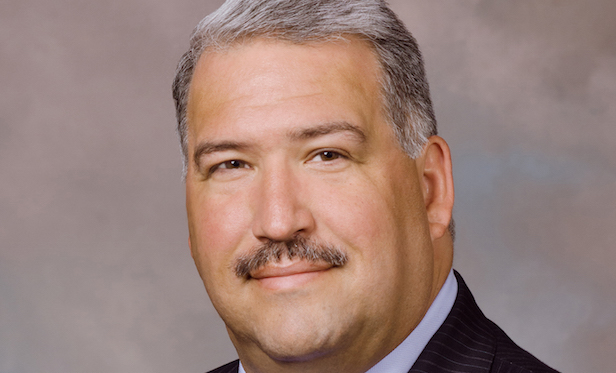
NEW YORK CITY—Compared to the role that economic development groups played in former years, they're now “more single-point-of-contact connectors to all the resources for a region,” Barry Matherly, chair of the International Economic Development Council as well as president and CEO of the Greater Richmond Partnership, told GlobeSt.com in a visit to our offices recently. “We don't control all the resources, but we know where they are and who controls them.”
In part one of this two-part interview, Matherly discussed the role that pubic-private partnerships can take in advancing local and regional economic goals. Here, he focuses on the global stage, whence has come the majority of jobs and investment in the Richmond, VA region in recent years.
GlobeSt.com: What are some of the key business sectors that have chosen to come to Greater Richmond over the past five to 10 years?
Barry Matherly: A big one is food and beverage; it's been a very hot cluster for us. Take Sabra Hummus—its headquarters is in White Plains, NY, but all of the manufacturing is in Richmond. It's reported as the world's largest hummus plant. For what used to be Nabisco, now called Mondelez, the second largest bakery in the United States is in Richmond. Last month we announced that Niagara Bottling, the largest private water bottling company in the United States, is going to build a 400,000-square-foot, $100-million facility there.
We do a huge job in logistics. Amazon has two one-million-square-foot distribution centers, and Lumber Liquidators has its only million-square-foot distribution center there. Vitamin Shoppe relocated its East Coast distribution from New Jersey down to Richmond. And the list goes on and on.
We do a lot of manufacturing. Tranlin is building a $2-billion paper manufacturing facility in Richmond; it's the largest greenfield announcement in the US by the Chinese. The company bought 800 acres, and construction starts this fall. We do everything from that scale down to smaller manufacturers.
There's still a lot of finance, in back office functions. Sun Trust is headquartered in Atlanta, but its mortgage division is headquartered in Richmond. One that you might not expect is biotech; we're the hub for biotech in Virginia. We're much smaller than other biotech markets such as Boston, but we're growing at twice the national average.
GlobeSt.com: Has the success that Richmond and the partnership had in attracting these industries been evolutionary in terms of people becoming aware of the region, or is there a technique that the partnership has used in the past few years that has spurred this growth?
Matherly: Prior to the recession, the organization did most of our recruiting domestically. We had international recruiting, but most of the results came from domestic companies wanting to open another office. Since the recession, most of our jobs and investment have come from overseas. So there's a greater emphasis on international companies and foreign direct investment. Fifty-two percent of the jobs, and 72% of the investment, has come from foreign owned firms. About three or four years ago, we changed our strategy. We used to have some fixed offices around the world, mainly in Europe, but the problem with those is that they're high cost, and there are so many options around the world for business. We shuttered those offices and used a more nimble approach with third-party contractors that specialize in different places around the world. By doing that, we're not just going to the same places. We still go to Europe—the UK and Germany are great places—but now we also go to South America, Israel, China and Eastern Europe. There are so many options nowadays of where you can interface in an economic business relationship, and so those new markets that we're pushing into are where we're getting a lot of investment.
GlobeSt.com: Tell us about the outlook for economic development generally, and for the Greater Richmond Partnership specifically, over the next 12 to 18 months. What are some of the key themes?
Matherly: For the Greater Richmond Partnership, 65% to 70% of our active projects are international. So we'll continue to see foreign investment be a big part of what we do. The other thing is that we realize it's a two-way street on FDIs: you're asking companies to come to your community, but we're also trying to help with exporting so that our existing businesses in Richmond can have bigger markets. Ninety-six percent of the consumer population base lives outside the US. If you're happy with 4%, that's good; most people want to get beyond 4%of the world's customers. So we have launched an export initiative, which kind of goes hand in hand with foreign direct investment, because you're helping your companies look at new markets, and you're helping companies there look at the US. We'll spend more time looking at both directions of foreign flows of goods and services.
At the national and international level, especially with IEDC, one thing we'll be looking at is economic equity, which we've never looked at before as a profession. We've noticed that since we've come out of the recession and started to grow the economy, it's been very uneven. There are lots of counties that have still not recovered from the recession to previous employment levels. There are regions of the country where, if you talk to them, they feel like they're still in a recession. Even in cities across the US, there are parts of the city that are growing and parts that are not. We're producing a research paper through our in-house think tank, and it will represent our first attempt at addressing what economic developers should do about economic equity. Is it okay to grow a region and not include a large part of it in that growth, or should be there be a solution there? We're not on the social services side here; we're looking at it in a purely economic-development , community-building way.
Second of two parts.
In part one of this two-part interview, Matherly discussed the role that pubic-private partnerships can take in advancing local and regional economic goals. Here, he focuses on the global stage, whence has come the majority of jobs and investment in the Richmond, VA region in recent years.
GlobeSt.com: What are some of the key business sectors that have chosen to come to Greater Richmond over the past five to 10 years?
Barry Matherly: A big one is food and beverage; it's been a very hot cluster for us. Take Sabra Hummus—its headquarters is in White Plains, NY, but all of the manufacturing is in Richmond. It's reported as the world's largest hummus plant. For what used to be Nabisco, now called Mondelez, the second largest bakery in the United States is in Richmond. Last month we announced that Niagara Bottling, the largest private water bottling company in the United States, is going to build a 400,000-square-foot, $100-million facility there.
We do a huge job in logistics. Amazon has two one-million-square-foot distribution centers, and Lumber Liquidators has its only million-square-foot distribution center there. Vitamin Shoppe relocated its East Coast distribution from New Jersey down to Richmond. And the list goes on and on.
We do a lot of manufacturing. Tranlin is building a $2-billion paper manufacturing facility in Richmond; it's the largest greenfield announcement in the US by the Chinese. The company bought 800 acres, and construction starts this fall. We do everything from that scale down to smaller manufacturers.
There's still a lot of finance, in back office functions. Sun Trust is headquartered in Atlanta, but its mortgage division is headquartered in Richmond. One that you might not expect is biotech; we're the hub for biotech in
GlobeSt.com: Has the success that Richmond and the partnership had in attracting these industries been evolutionary in terms of people becoming aware of the region, or is there a technique that the partnership has used in the past few years that has spurred this growth?
Matherly: Prior to the recession, the organization did most of our recruiting domestically. We had international recruiting, but most of the results came from domestic companies wanting to open another office. Since the recession, most of our jobs and investment have come from overseas. So there's a greater emphasis on international companies and foreign direct investment. Fifty-two percent of the jobs, and 72% of the investment, has come from foreign owned firms. About three or four years ago, we changed our strategy. We used to have some fixed offices around the world, mainly in Europe, but the problem with those is that they're high cost, and there are so many options around the world for business. We shuttered those offices and used a more nimble approach with third-party contractors that specialize in different places around the world. By doing that, we're not just going to the same places. We still go to Europe—the UK and Germany are great places—but now we also go to South America, Israel, China and Eastern Europe. There are so many options nowadays of where you can interface in an economic business relationship, and so those new markets that we're pushing into are where we're getting a lot of investment.
GlobeSt.com: Tell us about the outlook for economic development generally, and for the Greater Richmond Partnership specifically, over the next 12 to 18 months. What are some of the key themes?
Matherly: For the Greater Richmond Partnership, 65% to 70% of our active projects are international. So we'll continue to see foreign investment be a big part of what we do. The other thing is that we realize it's a two-way street on FDIs: you're asking companies to come to your community, but we're also trying to help with exporting so that our existing businesses in Richmond can have bigger markets. Ninety-six percent of the consumer population base lives outside the US. If you're happy with 4%, that's good; most people want to get beyond 4%of the world's customers. So we have launched an export initiative, which kind of goes hand in hand with foreign direct investment, because you're helping your companies look at new markets, and you're helping companies there look at the US. We'll spend more time looking at both directions of foreign flows of goods and services.
At the national and international level, especially with IEDC, one thing we'll be looking at is economic equity, which we've never looked at before as a profession. We've noticed that since we've come out of the recession and started to grow the economy, it's been very uneven. There are lots of counties that have still not recovered from the recession to previous employment levels. There are regions of the country where, if you talk to them, they feel like they're still in a recession. Even in cities across the US, there are parts of the city that are growing and parts that are not. We're producing a research paper through our in-house think tank, and it will represent our first attempt at addressing what economic developers should do about economic equity. Is it okay to grow a region and not include a large part of it in that growth, or should be there be a solution there? We're not on the social services side here; we're looking at it in a purely economic-development , community-building way.
© Arc, All Rights Reserved. Request academic re-use from www.copyright.com. All other uses, submit a request to TMSalesOperations@arc-network.com. For more information visit Asset & Logo Licensing.