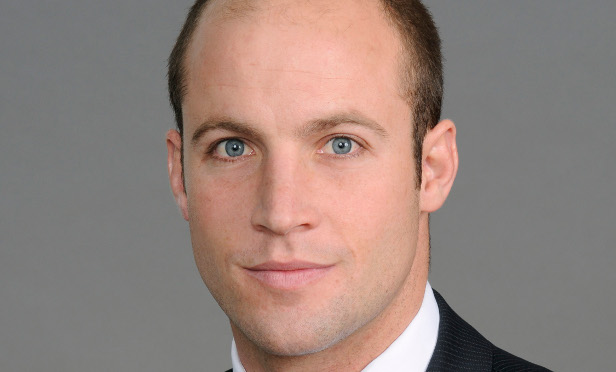
IRVINE, CA—While there was a correction in Q1, experts were still planning to see a number of emerging Orange County-based companies raise venture-capital funds in Q2, JLL VP Jason Lantgen tells GlobeSt.com. As we reported in June, Lantgen told us An apparent decrease in venture-capital funding for Orange County businesses over the previous year was more indicative of global financial issues than problems with OC companies. A recent report from the firm revealed that $229.4 million was invested in OC-based companies by venture-capital firms in Q2 and that quarterly high-tech venture capital investment volume grew 2.3% in Orange County from 12 months ago while increasing 229.1% from the first quarter of 2016. We spoke exclusively with Lantgen about the VC-funding environment in Orange County and what he sees happening going forward.
GlobeSt.com: How would you characterize the Q2 VC funding environment?
Lantgen: Compared to how the year started, the Q2 funding market was considerably stronger both locally and nationally. In Orange County, deal volume and average funding round increased quarter-over-quarter. Across the US, deal volume decreased, but more money was placed (nearly $3.2 billion more).
While there was a correction in Q1, we were still planning on seeing a number of emerging companies raise funds in Q2 or later on this year. That has not changed. Provided the businesses have strong products and leadership, access to venture capital should remain readily available. This forecast is underscored by several new funds launched earlier this year, e.g., Andreesen Horowitz's $1.5 billion, Kleiner Perkins' two funds totaling $1.3 billion and Accel Partners raising $2 billion for a new fund. While we expect investors to place a greater emphasis on funding due diligence for prospective portfolio companies, we are long in Orange County and the markets' ability to provide equity to growing companies.
GlobeSt.com: How did the Q2 VC funding environment differ from Q1? What are you seeing out there?
Lantgen: For starters, we had a correction in Q1, which impacted equity investments across all industries. For scaling companies, this was no different. A number of early-stage companies went to the banks, opting to raise debt in lieu of equity, hoping that valuations would rise as the funding environment stabilized/improved. High-growth companies were always focused on their product, services and topline revenue, but now they've had to cut expenses and spending in an effort to shift toward profitability.
We expected companies to get through that period through traditional bootstrapping (some in larger markets subleased out excess growth space to reduce costs), providing employees with greater responsibility and job descriptions to reduce human capital costs, and again, raising debt proved a popular cost-lowering mechanism—particularly due to favorable interest rates.
GlobeSt.com: What industries do you see being more active with VC funding going forward?
Lantgen: Going forward, we expect to see active funding for companies that are hyper-responsive to consumer markets and consumer needs. A few examples:
- Automotive R&D: Autonomous Vehicles and improving the driver experience is one area. Karma's (formerly Fisker) and AutoGravity's recent leases in Orange County are highlighting this trend.
- Augmented reality/virtual reality: The consumer focus by AR/VR companies needs little explanation. Numerous local startups, such as NextVR, have received funding. The recent success of Pokémon Go clearly paved a roadmap for how to monetize AR. And now that headsets like Oculus' Rift and Sony's Morpheus are available for consumer purchase, we expect to see many more applications and many more startups enter this space.
- Semiconductors: Orange County has a deep history in this space (e.g., Broadcom moved its headquarters from Los Angeles to Irvine in 1995) with an abundant labor pool of skilled workers, so we expect job growth and VC funding to continue. The industry is also benefiting from the proliferation of artificial intelligence and the Internet of Things. Connecting your car to your garage door to the lights and locks in your home so they all work together is really the opportunity being chased here—it is a direct response to consumer demand for pragmatic technology. On the industrial side, it's even greater.
- Cybersecurity: As long as there are banks, there will be thieves. As long as there is Internet, there will be hackers. E-commerce, m-commerce, email, cloud networks, omnipresent WiFi—there are numerous opportunities for hackers both big and small, so the need for both consumers and businesses to protect themselves has never been greater. Companies like Crowdstrike and Cylance are industry leaders in our own backyard.
GlobeSt.com: How is future VC funding going to impact the office leasing market?
Lantgen: Different, but related, is M&A activity, which we have seen a lot this year (e.g., Avago's acquisition of Broadcom and Ingram Micro's sale to Tianjin Tianhai). Many public corporations still have large cash reserves, which will likely spur M&A activity. This could eventually lead to more sublease space (or shadow space) to office markets as startups are gobbled up and relocated to the acquirer's main location. Local examples include LinkedIn's acquisition of Connectifier and, of course, Facebook's acquisition of Oculus.
Companies that are looking to scale are always looking for flexibility. We repeatedly advise our clients to preserve capital and invest it in their people and their platform until they've reached a point where it makes sense to invest in a true, long-term headquarters. As such, we have been advising our clients to consider shorter-term leases, subleases, co-working options and/or larger projects that have vacancy to accommodate early expansions. We don't see this changing in the near future. There are a few subleases on the market currently that we can point to as great values and as examples of going the opposite direction of this advice.
This becomes the challenge for certain projects in OC. Landlords with blocks of vacancy as well as new conversion projects offering robust TI packages for longer term leases will continue to see tours. However, scaling companies will have a hard time justifying the commitment for putting the longer lease obligations on their balance sheet and being hamstrung. It's a matter of “wants” vs “needs,” which could cool the fervent office-leasing market, especially as VC firms play closer attention to how they and their portfolio companies are investing their money.
IRVINE, CA—While there was a correction in Q1, experts were still planning to see a number of emerging Orange County-based companies raise venture-capital funds in Q2, JLL VP Jason Lantgen tells GlobeSt.com. As we reported in June, Lantgen told us An apparent decrease in venture-capital funding for Orange County businesses over the previous year was more indicative of global financial issues than problems with OC companies. A recent report from the firm revealed that $229.4 million was invested in OC-based companies by venture-capital firms in Q2 and that quarterly high-tech venture capital investment volume grew 2.3% in Orange County from 12 months ago while increasing 229.1% from the first quarter of 2016. We spoke exclusively with Lantgen about the VC-funding environment in Orange County and what he sees happening going forward.
GlobeSt.com: How would you characterize the Q2 VC funding environment?
Lantgen: Compared to how the year started, the Q2 funding market was considerably stronger both locally and nationally. In Orange County, deal volume and average funding round increased quarter-over-quarter. Across the US, deal volume decreased, but more money was placed (nearly $3.2 billion more).
While there was a correction in Q1, we were still planning on seeing a number of emerging companies raise funds in Q2 or later on this year. That has not changed. Provided the businesses have strong products and leadership, access to venture capital should remain readily available. This forecast is underscored by several new funds launched earlier this year, e.g., Andreesen Horowitz's $1.5 billion, Kleiner Perkins' two funds totaling $1.3 billion and Accel Partners raising $2 billion for a new fund. While we expect investors to place a greater emphasis on funding due diligence for prospective portfolio companies, we are long in Orange County and the markets' ability to provide equity to growing companies.
GlobeSt.com: How did the Q2 VC funding environment differ from Q1? What are you seeing out there?
Lantgen: For starters, we had a correction in Q1, which impacted equity investments across all industries. For scaling companies, this was no different. A number of early-stage companies went to the banks, opting to raise debt in lieu of equity, hoping that valuations would rise as the funding environment stabilized/improved. High-growth companies were always focused on their product, services and topline revenue, but now they've had to cut expenses and spending in an effort to shift toward profitability.
We expected companies to get through that period through traditional bootstrapping (some in larger markets subleased out excess growth space to reduce costs), providing employees with greater responsibility and job descriptions to reduce human capital costs, and again, raising debt proved a popular cost-lowering mechanism—particularly due to favorable interest rates.
GlobeSt.com: What industries do you see being more active with VC funding going forward?
Lantgen: Going forward, we expect to see active funding for companies that are hyper-responsive to consumer markets and consumer needs. A few examples:
- Automotive R&D: Autonomous Vehicles and improving the driver experience is one area. Karma's (formerly Fisker) and AutoGravity's recent leases in Orange County are highlighting this trend.
- Augmented reality/virtual reality: The consumer focus by AR/VR companies needs little explanation. Numerous local startups, such as NextVR, have received funding. The recent success of Pokémon Go clearly paved a roadmap for how to monetize AR. And now that headsets like Oculus' Rift and Sony's Morpheus are available for consumer purchase, we expect to see many more applications and many more startups enter this space.
- Semiconductors: Orange County has a deep history in this space (e.g., Broadcom moved its headquarters from Los Angeles to Irvine in 1995) with an abundant labor pool of skilled workers, so we expect job growth and VC funding to continue. The industry is also benefiting from the proliferation of artificial intelligence and the Internet of Things. Connecting your car to your garage door to the lights and locks in your home so they all work together is really the opportunity being chased here—it is a direct response to consumer demand for pragmatic technology. On the industrial side, it's even greater.
- Cybersecurity: As long as there are banks, there will be thieves. As long as there is Internet, there will be hackers. E-commerce, m-commerce, email, cloud networks, omnipresent WiFi—there are numerous opportunities for hackers both big and small, so the need for both consumers and businesses to protect themselves has never been greater. Companies like Crowdstrike and Cylance are industry leaders in our own backyard.
GlobeSt.com: How is future VC funding going to impact the office leasing market?
Lantgen: Different, but related, is M&A activity, which we have seen a lot this year (e.g., Avago's acquisition of Broadcom and Ingram Micro's sale to Tianjin Tianhai). Many public corporations still have large cash reserves, which will likely spur M&A activity. This could eventually lead to more sublease space (or shadow space) to office markets as startups are gobbled up and relocated to the acquirer's main location. Local examples include
Companies that are looking to scale are always looking for flexibility. We repeatedly advise our clients to preserve capital and invest it in their people and their platform until they've reached a point where it makes sense to invest in a true, long-term headquarters. As such, we have been advising our clients to consider shorter-term leases, subleases, co-working options and/or larger projects that have vacancy to accommodate early expansions. We don't see this changing in the near future. There are a few subleases on the market currently that we can point to as great values and as examples of going the opposite direction of this advice.
This becomes the challenge for certain projects in OC. Landlords with blocks of vacancy as well as new conversion projects offering robust TI packages for longer term leases will continue to see tours. However, scaling companies will have a hard time justifying the commitment for putting the longer lease obligations on their balance sheet and being hamstrung. It's a matter of “wants” vs “needs,” which could cool the fervent office-leasing market, especially as VC firms play closer attention to how they and their portfolio companies are investing their money.
© Arc, All Rights Reserved. Request academic re-use from www.copyright.com. All other uses, submit a request to TMSalesOperations@arc-network.com. For more information visit Asset & Logo Licensing.