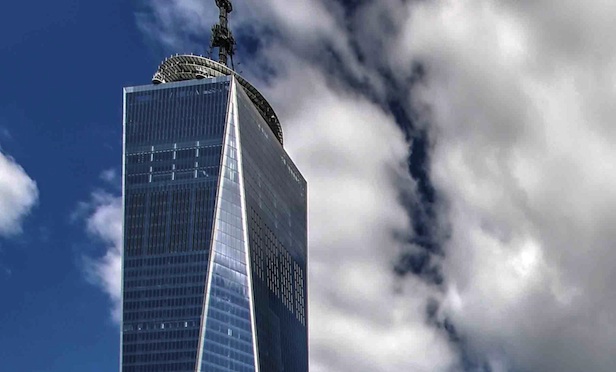
NEW YORK CITY—When comparing the Lower Manhattan of today to the same area in the days following 9/11, the transformation seems magical. Prior to the horrific terrorist attacks of that day, the Downtown submarket was little more than a hub for the financial services sector, without resident or tourist activity that could spur residential or retail development.
But when developers like Silverstein Properties, Rudin Management Co. and others set about to redevelop the area, it turns out they had a blueprint. Downtown's business and real estate community had gone through a revitalization before and they knew how to recreate it.
“My family has been building in Lower Manhattan since the late 1950s with 80 Pine St., and in 1990, Drexel went bankrupt and Lower Manhattan had 30 million square feet of vacant space,” recalls Bill Rudin, CEO of Rudin Management, speaking to GlobeSt.com on behalf of the Downtown Alliance. “There was a lot of migration to Midtown and New Jersey.”
He continues, “We, the downtown business community prepared a white paper on what we should do to revitalize and we created the Downtown Alliance. Our building at 55 Broad St. became 100% vacant because of Drexel almost overnight, but it became the role model of how to revitalize CBDs and turn them into a 24/7 live, work, play community.”
He elaborates, “We handed Mayor Rudy Giuliani the white paper, which had principals of converting office buildings to residential units, suggested reducing real estate taxes and energy costs and recommended marketing to promote the area as a 24/7 live/work community. In 1995, when the Alliance was created, there were 14,000 residents Downtown, and in 2000 there were 23,000. Today, there are 60,000.
With the residential development came retail and cultural offerings, Rudin says. “So the foundation of post 9/11 was really back in 1995. At that time you could buy a building for $25 per square foot and by 9/11, that was up to $300 to $400. But no one could get financing and we turned all that around. We did all of the major work, in terms of reimaging Lower Manhattan, and it was a holistic approach.”
Looking at the Downtown Manhattan of today, according to the Downtown Alliance, area employment reached 232,000 jobs last year, representing the sixth consecutive year of job growth Downtown and the highest level since 2001.
Also of note, the FIRE (finance, insurance and real estate) sector's share of private sector employment in Lower Manhattan decreased from 55% to 35% between 2001 and 2015. However, TAMI sector employment in Lower Manhattan—an unheard-of-contingent in the area back in 2001—has grown by 37% from 2009 and today accounts for nearly 10% of the private sector employment in the district.
Adds a report from JLL, “Since 2007, roughly 7.4 million square feet of office product has been converted to residential usage. These older assets have been replaced by newly constructed Class A product, leading to a more efficient market for both office and residential space. When factoring in the 1.2 million square feet of retail space either recently delivered or in the pipeline, it is clear that Downtown Manhattan has developed over the past 15 years into a vibrant live-work-play community.
“Upon completion of 3 World Trade Center in 2018, the Downtown market will have seen more than 12 million square feet of office deliveries since 2001.”
Rudin can explain the area's remarkable comeback story. “The fact that we proved everyone wrong in the 90s gave us confidence after 9/11,” he says. “Although we were hurting and shaken, we knew that with the right plan and capital from the Fed government, and spending on infrastructure, including the World Trade Center, that we could do it again.”
But when developers like Silverstein Properties, Rudin Management Co. and others set about to redevelop the area, it turns out they had a blueprint. Downtown's business and real estate community had gone through a revitalization before and they knew how to recreate it.
“My family has been building in Lower Manhattan since the late 1950s with 80 Pine St., and in 1990, Drexel went bankrupt and Lower Manhattan had 30 million square feet of vacant space,” recalls Bill Rudin, CEO of Rudin Management, speaking to GlobeSt.com on behalf of the Downtown Alliance. “There was a lot of migration to Midtown and New Jersey.”
He continues, “We, the downtown business community prepared a white paper on what we should do to revitalize and we created the Downtown Alliance. Our building at 55 Broad St. became 100% vacant because of Drexel almost overnight, but it became the role model of how to revitalize CBDs and turn them into a 24/7 live, work, play community.”
He elaborates, “We handed Mayor Rudy Giuliani the white paper, which had principals of converting office buildings to residential units, suggested reducing real estate taxes and energy costs and recommended marketing to promote the area as a 24/7 live/work community. In 1995, when the Alliance was created, there were 14,000 residents Downtown, and in 2000 there were 23,000. Today, there are 60,000.
With the residential development came retail and cultural offerings, Rudin says. “So the foundation of post 9/11 was really back in 1995. At that time you could buy a building for $25 per square foot and by 9/11, that was up to $300 to $400. But no one could get financing and we turned all that around. We did all of the major work, in terms of reimaging Lower Manhattan, and it was a holistic approach.”
Looking at the Downtown Manhattan of today, according to the Downtown Alliance, area employment reached 232,000 jobs last year, representing the sixth consecutive year of job growth Downtown and the highest level since 2001.
Also of note, the FIRE (finance, insurance and real estate) sector's share of private sector employment in Lower Manhattan decreased from 55% to 35% between 2001 and 2015. However, TAMI sector employment in Lower Manhattan—an unheard-of-contingent in the area back in 2001—has grown by 37% from 2009 and today accounts for nearly 10% of the private sector employment in the district.
Adds a report from JLL, “Since 2007, roughly 7.4 million square feet of office product has been converted to residential usage. These older assets have been replaced by newly constructed Class A product, leading to a more efficient market for both office and residential space. When factoring in the 1.2 million square feet of retail space either recently delivered or in the pipeline, it is clear that Downtown Manhattan has developed over the past 15 years into a vibrant live-work-play community.
“Upon completion of 3 World Trade Center in 2018, the Downtown market will have seen more than 12 million square feet of office deliveries since 2001.”
Rudin can explain the area's remarkable comeback story. “The fact that we proved everyone wrong in the 90s gave us confidence after 9/11,” he says. “Although we were hurting and shaken, we knew that with the right plan and capital from the Fed government, and spending on infrastructure, including the World Trade Center, that we could do it again.”
© Arc, All Rights Reserved. Request academic re-use from www.copyright.com. All other uses, submit a request to TMSalesOperations@arc-network.com. For more information visit Asset & Logo Licensing.