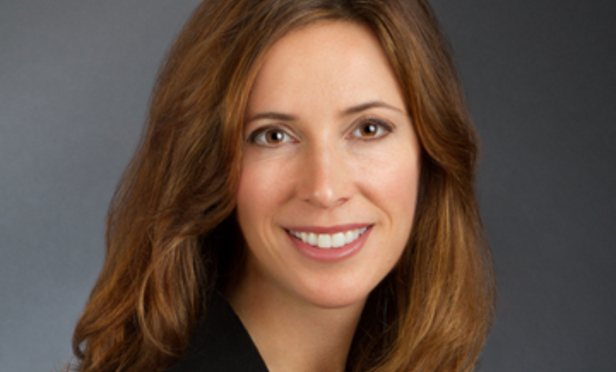
NEWPORT BEACH, CA—The scarcity of suitable development parcels and the ever-growing challenges of gaining entitlements have contributed to rapidly rising lease rates and a host of other difficulties for industrial-distribution developers, Dermody Properties' SVP Nancy Shultz tells GlobeSt.com. Shultz recently joined the firm's newly established Southern California office here and is responsible for growing and managing its portfolio of industrial property in Southern California. Her efforts will include sourcing acquisitions with a value-add profile and the development of high-quality distribution product. We spoke exclusively with Shultz about the challenges of developing these properties in this market.
GlobeSt.com: What are you hoping to accomplish in your new role with Dermody Properties?
Shultz: I'm hoping to build a portfolio, expanding Dermody's nationwide presence to Southern California, the most vibrant yet stable industrial market in the US. I am focused on acquiring existing value-add opportunities and developing class-A facilities.
GlobeSt.com: How are developers dealing with the scarcity of land available for industrial-distribution product development in Southern California?
Shultz: It's tough. The scarcity of suitable development parcels and the ever growing challenges of gaining entitlements has contributed to rapidly rising lease rates. In turn, this allows investors to make sense of purchasing older dysfunctional product and redeveloping it into new, class-A product. Another tactic to obtain development land is to purchase land currently encumbered by a lease, wait for the lease to expire and then redevelop. And we're also seeing assemblages occur, which may be the toughest route to a development site. These are creative and difficult routes to new product, but necessary in this environment.
GlobeSt.com: What are the challenges in sourcing acquisitions in this product category?
Shultz: For value-add acquisitions, the biggest challenge is the amount of competitive money chasing very few deals. As a result, many value-add deals price to near perfection, and risk-adjusted returns are questionable.
For land acquisitions, the biggest challenges are availability (infill) and entitlements (Inland Empire). The infill markets are so built out that redevelopment is the only viable opportunity that presents itself with any frequency. And individuals who own land containing older product ripe that's for redevelopment are likely to have owned it for a long time and have a low basis. With rents so high, returns are good. Owners are not motivated to sell since there are few better alternatives to reinvest profits.
On the entitlement front, headwinds are strong since almost all big-box projects greater than 300,000 square feet are somehow challenged by environmentalists, unions or other opponents. These cause significant cost increases and/or time delays for projects.
GlobeSt.com: What else should our readers know about industrial-distribution product?
Shultz: Many investors consider industrial real estate to be one of the safest asset classes as it experiences its seventh year of positive statistics following the recession. Many investors wonder if we are at a peak again and whether we will we experience a correction in values. But the logistics industry is experiencing a shift as e-commerce businesses expand and redesign their supply chains, and industrial real estate is a primary beneficiary of this continuing trend.
NEWPORT BEACH, CA—The scarcity of suitable development parcels and the ever-growing challenges of gaining entitlements have contributed to rapidly rising lease rates and a host of other difficulties for industrial-distribution developers, Dermody Properties' SVP Nancy Shultz tells GlobeSt.com. Shultz recently joined the firm's newly established Southern California office here and is responsible for growing and managing its portfolio of industrial property in Southern California. Her efforts will include sourcing acquisitions with a value-add profile and the development of high-quality distribution product. We spoke exclusively with Shultz about the challenges of developing these properties in this market.
GlobeSt.com: What are you hoping to accomplish in your new role with Dermody Properties?
Shultz: I'm hoping to build a portfolio, expanding Dermody's nationwide presence to Southern California, the most vibrant yet stable industrial market in the US. I am focused on acquiring existing value-add opportunities and developing class-A facilities.
GlobeSt.com: How are developers dealing with the scarcity of land available for industrial-distribution product development in Southern California?
Shultz: It's tough. The scarcity of suitable development parcels and the ever growing challenges of gaining entitlements has contributed to rapidly rising lease rates. In turn, this allows investors to make sense of purchasing older dysfunctional product and redeveloping it into new, class-A product. Another tactic to obtain development land is to purchase land currently encumbered by a lease, wait for the lease to expire and then redevelop. And we're also seeing assemblages occur, which may be the toughest route to a development site. These are creative and difficult routes to new product, but necessary in this environment.
GlobeSt.com: What are the challenges in sourcing acquisitions in this product category?
Shultz: For value-add acquisitions, the biggest challenge is the amount of competitive money chasing very few deals. As a result, many value-add deals price to near perfection, and risk-adjusted returns are questionable.
For land acquisitions, the biggest challenges are availability (infill) and entitlements (Inland Empire). The infill markets are so built out that redevelopment is the only viable opportunity that presents itself with any frequency. And individuals who own land containing older product ripe that's for redevelopment are likely to have owned it for a long time and have a low basis. With rents so high, returns are good. Owners are not motivated to sell since there are few better alternatives to reinvest profits.
On the entitlement front, headwinds are strong since almost all big-box projects greater than 300,000 square feet are somehow challenged by environmentalists, unions or other opponents. These cause significant cost increases and/or time delays for projects.
GlobeSt.com: What else should our readers know about industrial-distribution product?
Shultz: Many investors consider industrial real estate to be one of the safest asset classes as it experiences its seventh year of positive statistics following the recession. Many investors wonder if we are at a peak again and whether we will we experience a correction in values. But the logistics industry is experiencing a shift as e-commerce businesses expand and redesign their supply chains, and industrial real estate is a primary beneficiary of this continuing trend.
© Arc, All Rights Reserved. Request academic re-use from www.copyright.com. All other uses, submit a request to TMSalesOperations@arc-network.com. For more information visit Asset & Logo Licensing.