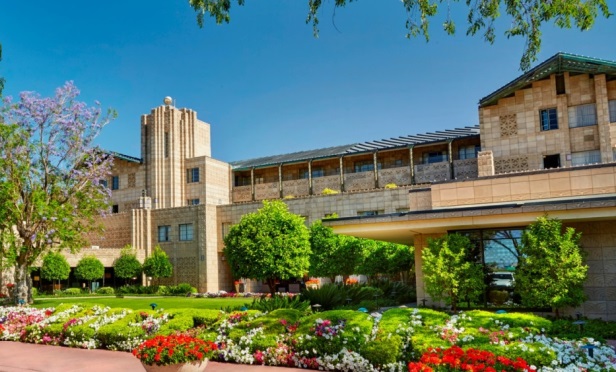
PHOENIX—Panelists tackled the subject, “The View from the C-Suite” to kick off Wednesday's full slate of sessions at the Lodging Conference held at the Arizona Biltmore this week. The session moderator was Katherine Lugar, president and CEO of the American Hotel and Lodging Association.
Panelists were Jim Amorosia, president/chief executive officer, G6 Hospitality LLC; Naveen Kakarla, president and CEO of HHM; Kirk Kinsell, president and CEO of Loews Hotels; David Kong, president and CEO of Best Western Hotels and Resorts; Thomas Magnuson, chief executive officer of Magnuson Hotels London UK; and Lance Shaner, chief executive officer of Shaner Hotels. The discussion centered around challenges and opportunities, along with focuses, future outlooks, key market specifics, loyalty programs, Airbnb and the upcoming election.
The group mentioned staying ahead of the curve on technology as a challenge common theme. Other challenging areas were surrounding legislation floating around that will impact the hospitality industry. As for opportunities, Magnuson mentioned return on investment for property improvement plans and Shaner added investing in great resort locations.
Regarding focuses, Kong said, “We look at the pace of growth for leading indicators, study forecasts and look at interest rates.”
Others said measurement from competitors was an important focus.
“We look at the unemployment rate and disposable income for contraction/expansion indicators,” said Amorosia.
Kakarla agreed that outside influences play a key role.
“We are bigger than the lodging industry. We factor in consumer spending, which impacts leisure travel, business spending where there is a lot of stress, the unemployment rate and GDP,” the president and CEO of HHM said.
Looking to the future, the panelists discussed managing whether to contract or expand, doing more with less of an investment, robust training and partnering with construction companies to get on-time developments as areas going forward. Key market specifics included the select service side, high barriers to entry/RevPAR markets, upscale luxury top 16 of 25 markets, converting independent hotels to flags and optimizing resources.
Amorosia said G6 Hospitality was specifically opening 160 hotels this year by looking at independent conversions and focusing on Florida, the Carolinas, California and the Midwest. Magnuson added China, the Middle East, UK and Africa as focus points.
When the conversation turned to loyalty programs, Amorosia said G6 Hospitality does not have a formal program because of costs, instead following the belief that “every single guest is a walking billboard. The key to loyalty is gaining loyalty through service, locations and the personal touch,” he said.
Kong concurred about superior customer care but saying loyalty programs are especially important today.
“Databases are created and you are able to provide member rates through loyalty programs,” Kong pointed out.
Magnuson says his hospitality company focuses on the basics, giving the customer what they want, when they want it and at the right price. Shaner added that TripAdvisor is becoming increasingly important to identify guests' preferences and experiences.
The one topic where the group wholeheartedly agreed was with regard to Airbnb.
“Airbnb is a $30 billion company and we cannot allow it to continue,” said Kong. “A large number of Airbnb participants are commercial operators. It is really troublesome and illegal. We must wake up and take action.”
The group suggested the hospitality industry should drive greater regulation and legislation toward the growing company as a way to show strength.
Finally, when asked on what the newly elected president should focus, the responses were varied, with immigration at the top of the list.
“A push for a visa program is necessary for the lifeblood of this country,” said Amorosia. “I'm also watching the extreme wage initiatives. The exempt status went from one to two, which will cause compression throughout the economy because of wage pressures.”
Kakarla agreed with Amorosia on the need for immigration reform, saying it is currently not a level playing field but Shaner cautioned that rational immigration policy be considered because too much regulation impacts small businesses. Others focused on issues within the borders, such as an increase in minimum wage and tax reform.
“Our infrastructure, airports, bridges and roads are in bad shape,” said Kinsell. “We need to play as a team with regard to working with local legislation.”
The biggest audience response came from Kong's impassioned statement on legislation.
“Travel is a major driver but we have no voice,” he said. “We need a cabinet position for the hospitality industry.”
PHOENIX—Panelists tackled the subject, “The View from the C-Suite” to kick off Wednesday's full slate of sessions at the Lodging Conference held at the Arizona Biltmore this week. The session moderator was Katherine Lugar, president and CEO of the American Hotel and Lodging Association.
Panelists were Jim Amorosia, president/chief executive officer, G6 Hospitality LLC; Naveen Kakarla, president and CEO of HHM; Kirk Kinsell, president and CEO of Loews Hotels; David Kong, president and CEO of Best Western Hotels and Resorts; Thomas Magnuson, chief executive officer of Magnuson Hotels London UK; and Lance Shaner, chief executive officer of Shaner Hotels. The discussion centered around challenges and opportunities, along with focuses, future outlooks, key market specifics, loyalty programs, Airbnb and the upcoming election.
The group mentioned staying ahead of the curve on technology as a challenge common theme. Other challenging areas were surrounding legislation floating around that will impact the hospitality industry. As for opportunities, Magnuson mentioned return on investment for property improvement plans and Shaner added investing in great resort locations.
Regarding focuses, Kong said, “We look at the pace of growth for leading indicators, study forecasts and look at interest rates.”
Others said measurement from competitors was an important focus.
“We look at the unemployment rate and disposable income for contraction/expansion indicators,” said Amorosia.
Kakarla agreed that outside influences play a key role.
“We are bigger than the lodging industry. We factor in consumer spending, which impacts leisure travel, business spending where there is a lot of stress, the unemployment rate and GDP,” the president and CEO of HHM said.
Looking to the future, the panelists discussed managing whether to contract or expand, doing more with less of an investment, robust training and partnering with construction companies to get on-time developments as areas going forward. Key market specifics included the select service side, high barriers to entry/RevPAR markets, upscale luxury top 16 of 25 markets, converting independent hotels to flags and optimizing resources.
Amorosia said G6 Hospitality was specifically opening 160 hotels this year by looking at independent conversions and focusing on Florida, the Carolinas, California and the Midwest. Magnuson added China, the Middle East, UK and Africa as focus points.
When the conversation turned to loyalty programs, Amorosia said G6 Hospitality does not have a formal program because of costs, instead following the belief that “every single guest is a walking billboard. The key to loyalty is gaining loyalty through service, locations and the personal touch,” he said.
Kong concurred about superior customer care but saying loyalty programs are especially important today.
“Databases are created and you are able to provide member rates through loyalty programs,” Kong pointed out.
Magnuson says his hospitality company focuses on the basics, giving the customer what they want, when they want it and at the right price. Shaner added that TripAdvisor is becoming increasingly important to identify guests' preferences and experiences.
The one topic where the group wholeheartedly agreed was with regard to Airbnb.
“Airbnb is a $30 billion company and we cannot allow it to continue,” said Kong. “A large number of Airbnb participants are commercial operators. It is really troublesome and illegal. We must wake up and take action.”
The group suggested the hospitality industry should drive greater regulation and legislation toward the growing company as a way to show strength.
Finally, when asked on what the newly elected president should focus, the responses were varied, with immigration at the top of the list.
“A push for a visa program is necessary for the lifeblood of this country,” said Amorosia. “I'm also watching the extreme wage initiatives. The exempt status went from one to two, which will cause compression throughout the economy because of wage pressures.”
Kakarla agreed with Amorosia on the need for immigration reform, saying it is currently not a level playing field but Shaner cautioned that rational immigration policy be considered because too much regulation impacts small businesses. Others focused on issues within the borders, such as an increase in minimum wage and tax reform.
“Our infrastructure, airports, bridges and roads are in bad shape,” said Kinsell. “We need to play as a team with regard to working with local legislation.”
The biggest audience response came from Kong's impassioned statement on legislation.
“Travel is a major driver but we have no voice,” he said. “We need a cabinet position for the hospitality industry.”
© Arc, All Rights Reserved. Request academic re-use from www.copyright.com. All other uses, submit a request to TMSalesOperations@arc-network.com. For more information visit Asset & Logo Licensing.