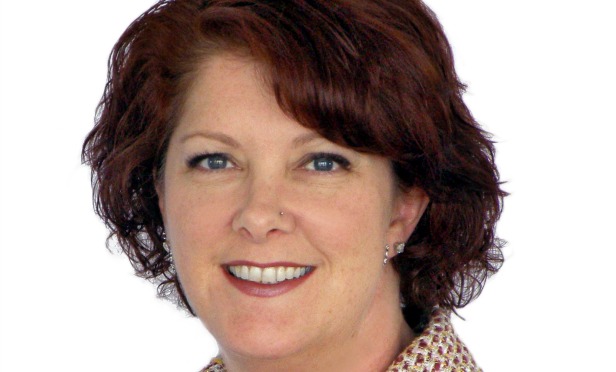
LOS ANGELES—The office market has a healthy life ahead, according the 3Q16 office report from CBRE. New demand from creative office users and stable demand from traditional office users has created a robust market. This may not be surprising, considering that CBRE produced an earlier report that showed creative office and traditional office will soon become synonymous. To find out more about how this dynamic played out in the third quarter, and how the L.A. office market has evolved this year, we sat down with Petra Durnin, the director of research and analysis for Southern California at CBRE, for an exclusive interview.
GlobeSt.com: Is conventional office being absorbed as quickly as creative office?
Petra Durnin: Conventional office tenants are usually bigger than creative tenants so in terms of square-foot activity, conventional office still outweighs creative product. The creative deals, however, totaled 2.1 million square feet of the 8.5 million square feet leased in 2016, and are fast acquiring a spot in the top 10-transaction list. Warner Music recently signed a 257,000 square-foot lease in the Arts District, the largest signed in L.A. in 2016, which will act as a beacon for other creative tenants in the area. Across L.A., large creative tenants have begun to emerge, but the average office size remains about 12,000 square feet.
GlobeSt.com: We are nearing the end of the year. How has the office market performed compared to the original forecast?
Durnin: We look at employment data for our forecast and factored in that Los Angeles will reach full employment by mid-2017, after which, job growth will taper. Even though there will be continued growth into 2019, market fundamentals will likely begin to soften. Another market influencer is the impending election, which may have a minimal effect on the market, but could also impact market confidence. GlobeSt.com: What is driving rents to increase so significantly, while the vacancy rate and occupancy levels are remaining the same?
Durnin: It differs from submarket to submarket, but overall, landlord confidence is the main driver. Vacancy continues to trend down and will do so for the foreseeable future. Demand from nearly every industry sector benefits every L.A. submarket and large blocks are dwindling. The other contributing factor is the higher priced creative space. With some landlord upgrades, spaces that fetched average market rates could obtain rents 25 percent higher and with a more expensive build out, that rent can climb as much as 75 percent higher, depending on the submarket.
GlobeSt.com: Last quarter, the Tri-Cities market had seen the most growth. Did this market still drive growth in the third quarter?
Durnin: The markets that outperformed in the third quarter in Los Angeles were geographically diverse—Hollywood, El Segundo, and Burbank. Hollywood has become a very popular destination for large media users who have recently planted their flag there and signed leases for production space as well. Burbank benefitted from traditional as well as media tenant activity and El Segundo, a market that is becoming increasingly attractive to occupiers, outperformed due to several large move-ins, most notably Guthy Renker.
GlobeSt.com: Any concerns, or is the office outlook still pretty bright?
Durnin: As tenants seek more of a holistic workplace experience with wellness programs and amenities, “creative” and “office” become synonymous. Demand from traditional users will remain steady and new demand will come from growing start-ups and companies using co-working space as a stopgap.
LOS ANGELES—The office market has a healthy life ahead, according the 3Q16 office report from CBRE. New demand from creative office users and stable demand from traditional office users has created a robust market. This may not be surprising, considering that CBRE produced an earlier report that showed creative office and traditional office will soon become synonymous. To find out more about how this dynamic played out in the third quarter, and how the L.A. office market has evolved this year, we sat down with Petra Durnin, the director of research and analysis for Southern California at CBRE, for an exclusive interview.
GlobeSt.com: Is conventional office being absorbed as quickly as creative office?
Petra Durnin: Conventional office tenants are usually bigger than creative tenants so in terms of square-foot activity, conventional office still outweighs creative product. The creative deals, however, totaled 2.1 million square feet of the 8.5 million square feet leased in 2016, and are fast acquiring a spot in the top 10-transaction list.
GlobeSt.com: We are nearing the end of the year. How has the office market performed compared to the original forecast?
Durnin: We look at employment data for our forecast and factored in that Los Angeles will reach full employment by mid-2017, after which, job growth will taper. Even though there will be continued growth into 2019, market fundamentals will likely begin to soften. Another market influencer is the impending election, which may have a minimal effect on the market, but could also impact market confidence. GlobeSt.com: What is driving rents to increase so significantly, while the vacancy rate and occupancy levels are remaining the same?
Durnin: It differs from submarket to submarket, but overall, landlord confidence is the main driver. Vacancy continues to trend down and will do so for the foreseeable future. Demand from nearly every industry sector benefits every L.A. submarket and large blocks are dwindling. The other contributing factor is the higher priced creative space. With some landlord upgrades, spaces that fetched average market rates could obtain rents 25 percent higher and with a more expensive build out, that rent can climb as much as 75 percent higher, depending on the submarket.
GlobeSt.com: Last quarter, the Tri-Cities market had seen the most growth. Did this market still drive growth in the third quarter?
Durnin: The markets that outperformed in the third quarter in Los Angeles were geographically diverse—Hollywood, El Segundo, and Burbank. Hollywood has become a very popular destination for large media users who have recently planted their flag there and signed leases for production space as well. Burbank benefitted from traditional as well as media tenant activity and El Segundo, a market that is becoming increasingly attractive to occupiers, outperformed due to several large move-ins, most notably Guthy Renker.
GlobeSt.com: Any concerns, or is the office outlook still pretty bright?
Durnin: As tenants seek more of a holistic workplace experience with wellness programs and amenities, “creative” and “office” become synonymous. Demand from traditional users will remain steady and new demand will come from growing start-ups and companies using co-working space as a stopgap.
© Arc, All Rights Reserved. Request academic re-use from www.copyright.com. All other uses, submit a request to TMSalesOperations@arc-network.com. For more information visit Asset & Logo Licensing.