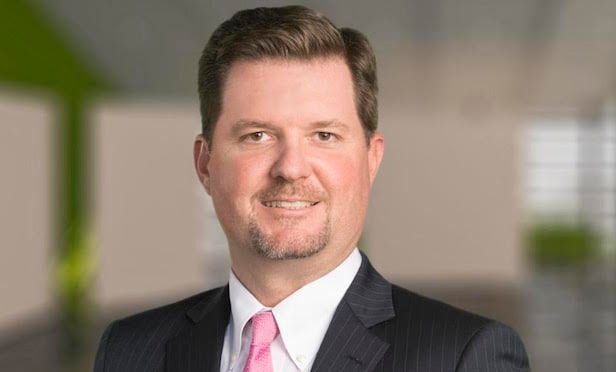
HOUSTON—Industrial's hot streak as an asset class continues, and yet its growth is not unbridled. Despite concerns about overbuilding in some of the hottest markets, development is predicted to continue lagging demand for some time. However, Jeff Stringer, Houston-based VP with Conor Commercial Real Estate, sees some additional pressure being applied to the brakes by another source.
“Lenders are very reluctant to put debt out on projects,” Stringer tells GlobeSt.com. “It's harder to get debt now than it was in the past, and relationships with your lender are more important today than ever.”
A 22-year industry veteran, Stringer will be among the experts taking the stage to talk development at next week's RealShare Industrial conference, scheduled for Nov. 16 and 17 at the Hilton Dallas/Plano Granite Park in Plano, TX. Having joined Conor Commercial in 2013 to provide growth and expansion to its development platform across Texas, Springer has already launched several new industrial developments in the Lone Star State. One is Doerr Lane Industrial Park, a 213,864-square-foot single- or multi-tenant warehouse/distribution facility under construction in Schertz, a growing submarket of San Antonio. Another is Gateway Southwest, a 36-acre site in the Houston submarket of Missouri City, that supports a three-building 528,300-square-foot development.
At first blush, it would seem as though industrial ought to be less vulnerable to the pullback in lending that has made getting construction financing a challenge in other sectors. After all, industrial's a high-demand sector, isn't it? “It is, but it's still a challenge, especially on a spec basis,” says Stringer. “They'll tell you that the regulators are forcing them to do so, constantly looking over their shoulder. “
There's another possible cause of lenders' increasingly tight hold on the purse strings. “Everybody is concerned about what inning we're in: are we in the sixth inning, or the seventh inning, especially on the industrial front,” Stringer says. “When the music stops, no one likes to be holding the bag. Those may be the two main culprits.”
If traditional lenders have been pulling back, other sources of financing have begun to look more appealing as a result of traditional banks dialing it down. 'There's a few institutional equity players that are providing not just equity but also debt on projects,” explains Stringer. “That's become a pretty common phenomenon lately.” Going through these alternate channels, he acknowledges, “the debt's a little more costly, not tremendously so, but there is a little bit higher interest rate.”
Asked whether the institutional players are relative newcomers to the industrial space that see an opportunity to fill a debt and equity void, Stringer offers, “For some, the answer may be yes, but for others it's just a way for them to get more of their equity invested into projects, get it 'out the door.' Whatever the dollar volume of the loan is, that interest rate is substantially less than what the pref is on the actual equity stack.”
Stringer says these institutional players are “not necessarily” as averse to financing spec construction as traditional banks have become. “But the projects are definitely going to be relationship-driven.”
The industrial sector has become the hottest segment in commercial real estate. How will logistics companies keep up with the market forces of omnichannel commerce? When will new supply finally catch up with demand? Who's putting investment capital into industrial and what does the future hold? Join us at RealShare Industrial on November 16 and 17 for answers to these and other questions. Learn more.
HOUSTON—Industrial's hot streak as an asset class continues, and yet its growth is not unbridled. Despite concerns about overbuilding in some of the hottest markets, development is predicted to continue lagging demand for some time. However, Jeff Stringer, Houston-based VP with Conor Commercial Real Estate, sees some additional pressure being applied to the brakes by another source.
“Lenders are very reluctant to put debt out on projects,” Stringer tells GlobeSt.com. “It's harder to get debt now than it was in the past, and relationships with your lender are more important today than ever.”
A 22-year industry veteran, Stringer will be among the experts taking the stage to talk development at next week's RealShare Industrial conference, scheduled for Nov. 16 and 17 at the Hilton Dallas/Plano Granite Park in Plano, TX. Having joined Conor Commercial in 2013 to provide growth and expansion to its development platform across Texas, Springer has already launched several new industrial developments in the Lone Star State. One is Doerr Lane Industrial Park, a 213,864-square-foot single- or multi-tenant warehouse/distribution facility under construction in Schertz, a growing submarket of San Antonio. Another is Gateway Southwest, a 36-acre site in the Houston submarket of Missouri City, that supports a three-building 528,300-square-foot development.
At first blush, it would seem as though industrial ought to be less vulnerable to the pullback in lending that has made getting construction financing a challenge in other sectors. After all, industrial's a high-demand sector, isn't it? “It is, but it's still a challenge, especially on a spec basis,” says Stringer. “They'll tell you that the regulators are forcing them to do so, constantly looking over their shoulder. “
There's another possible cause of lenders' increasingly tight hold on the purse strings. “Everybody is concerned about what inning we're in: are we in the sixth inning, or the seventh inning, especially on the industrial front,” Stringer says. “When the music stops, no one likes to be holding the bag. Those may be the two main culprits.”
If traditional lenders have been pulling back, other sources of financing have begun to look more appealing as a result of traditional banks dialing it down. 'There's a few institutional equity players that are providing not just equity but also debt on projects,” explains Stringer. “That's become a pretty common phenomenon lately.” Going through these alternate channels, he acknowledges, “the debt's a little more costly, not tremendously so, but there is a little bit higher interest rate.”
Asked whether the institutional players are relative newcomers to the industrial space that see an opportunity to fill a debt and equity void, Stringer offers, “For some, the answer may be yes, but for others it's just a way for them to get more of their equity invested into projects, get it 'out the door.' Whatever the dollar volume of the loan is, that interest rate is substantially less than what the pref is on the actual equity stack.”
Stringer says these institutional players are “not necessarily” as averse to financing spec construction as traditional banks have become. “But the projects are definitely going to be relationship-driven.”
The industrial sector has become the hottest segment in commercial real estate. How will logistics companies keep up with the market forces of omnichannel commerce? When will new supply finally catch up with demand? Who's putting investment capital into industrial and what does the future hold? Join us at RealShare Industrial on November 16 and 17 for answers to these and other questions. Learn more.
© Arc, All Rights Reserved. Request academic re-use from www.copyright.com. All other uses, submit a request to TMSalesOperations@arc-network.com. For more information visit Asset & Logo Licensing.