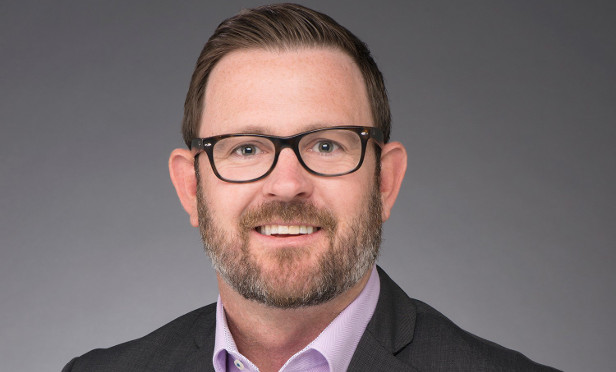
SAN DIEGO—Conversions of obsolete industrial space to self-storage is becoming more popular as ground-up development grows increasingly more cost-prohibitive, Wentworth Storage Co.'s VP Dave King tells GlobeSt.com. The Arizona-based development and acquisition company recently purchased two industrial properties in Southern California with plans to convert both to class-A self-storage facilities.The acquisitions include a ± 90,000-square-foot industrial building at 2391 Fenton St. in Eastlake Village and a ±81,980-square-foot industrial building at 12340 World Trade Dr. in San Diego, with plans to open both as self-storage facilities in 2017.
We spoke exclusively with King about the self-storage business, how it relates to industrial and other markets the firm is eyeing.
GlobeSt.com: Is converting industrial buildings to self-storage facilities common practice?
King: There have always been occasional conversions, mostly in pretty dense infill markets, where self-storage was created from repurposing or reusing industrial or retail, but this has surged over the last 18 months or so. You will find old furniture retail warehouses or bowling alleys or Kmarts—someone recently converted a Target supercenter in Arizona to self-storage. They make for a really good conversion because they're large and you don't have to put a lot into them.
It seems to me as big-box retail struggles a little bit, if they're in decent markets and even some in secondary markets, these spaces will get snatched up, and storage is a good use because it doesn't cost much to convert. In New York, the South or even L.A., you will find conversions of a lot of old buildings—even in Kentucky recently, a factory was converted to storage.

We're looking for good, solid structures with good clear heights in good markets. Part of the interesting thing is, we try to work with not just self-storage-specific brokers, but industrial and retail and explain what we're looking for, and someone turns up some opportunity for us. Brokers are leading us to new properties. Both of these recent deals came through some land guys we've known for years in Phoenix; it's all timing and going through different channels.
We're big believers in networking, from the vendors we buy from to brokers in different industries. When we look at a building that's 90,000 square feet and X number of dollars per square foot, a lot of people get turned off because it's way too expensive and the comps don't support it. But from our base, we will put a structural mezzanine in there and not quite double the square footage so we can get 60% more rentable square footage than existed before. So, that $66 per foot turns into $33 per foot. This is a pretty good place to be when stuff's trading for $200 to $300 per square foot. That's part of the reason we like the conversion. It helps that we are a development company, and we've built class-A institutional office, so we know what to look for, whereas for someone in just the storage business it's much bigger production—even bigger than ground-up because you don't know what's in the floor or walls.
GlobeSt.com: Do you think we'll see more of these conversions in the future?
King: Yes. They're very time-consuming and complicated, so I'm not sure how many people who try to do them are actually going to do them. Plus, there's the issue of the availability of these buildings. Two or three years from now, a lot of these buildings are going to be creative offices; other uses are targeting these buildings as well, so we're competing harder than we were a year ago with office. It seems like someone is nipping at my heels for each of these deals, and it's not another storage person.
It's almost impossible for us to convert existing office buildings to self-storage because we need an extra amount of live load (pounds per square foot), and an office building is nowhere near what we need. When have to go into a multi-level building and cut out walls and floors, etc.—it's too cost prohibitive. A lot of people send me office buildings with pretty glass, and it's too costly. The uglier and older, the better.
GlobeSt.com: How does the ground-up self-storage market compare to conversions?
King: Conversions really enable you to get into the market. For example, we did a conversion deal in a historic area of Downtown Phoenix, and we were literally paying the same amount to get two buildings that we would if we just wanted to buy land. We're basically getting the buildings for free, and a lot of times that's the case. It's fairly expensive in Downtown Phoenix, so it's phenomenal to get buildings for free when prices are as high as I've ever seen them for ground-up construction. The cost of ground-up is high right now with the price of steel and metal.
We love raw land, but we are not pioneers in our company or chasers of rooftops. We're not chasing future housing development, and we're not going to a master-planned community and building to support that. That's why conversions suit us better. We're able to get into a market where otherwise we could not. In San Diego, people don't want to see raw land become self-storage because it doesn't supply employment or produce enough sales tax. Most municipalities, if they are not zoned already, make it difficult to get storage zoned these days. But they like the low impact that storage has on a community; you get 20 to 30 cars per day versus retail use, so if you're looking for a quiet neighbor, self-storage is ideal. Also, self-storage is generally only open between 8 a.m. and 6 p.m. or between 9 a.m. and 5 p.m.; there are limited hours, and there's not a lot of traffic coming and going.
GlobeSt.com: What other markets are you eyeing for similar conversions?
King: We like the Portland, OR, area; Tempe, Chandler and Scottsdale, AZ; and we're evaluating conversions in L.A., Phoenix, Washington, Minnesota, New Jersey and Florida. We're really looking at the top 25 MSAs, for the most part, for these conversions.
SAN DIEGO—Conversions of obsolete industrial space to self-storage is becoming more popular as ground-up development grows increasingly more cost-prohibitive, Wentworth Storage Co.'s VP Dave King tells GlobeSt.com. The Arizona-based development and acquisition company recently purchased two industrial properties in Southern California with plans to convert both to class-A self-storage facilities.The acquisitions include a ± 90,000-square-foot industrial building at 2391 Fenton St. in Eastlake Village and a ±81,980-square-foot industrial building at 12340 World Trade Dr. in San Diego, with plans to open both as self-storage facilities in 2017.
We spoke exclusively with King about the self-storage business, how it relates to industrial and other markets the firm is eyeing.
GlobeSt.com: Is converting industrial buildings to self-storage facilities common practice?
King: There have always been occasional conversions, mostly in pretty dense infill markets, where self-storage was created from repurposing or reusing industrial or retail, but this has surged over the last 18 months or so. You will find old furniture retail warehouses or bowling alleys or Kmarts—someone recently converted a Target supercenter in Arizona to self-storage. They make for a really good conversion because they're large and you don't have to put a lot into them.
It seems to me as big-box retail struggles a little bit, if they're in decent markets and even some in secondary markets, these spaces will get snatched up, and storage is a good use because it doesn't cost much to convert. In
We're looking for good, solid structures with good clear heights in good markets. Part of the interesting thing is, we try to work with not just self-storage-specific brokers, but industrial and retail and explain what we're looking for, and someone turns up some opportunity for us. Brokers are leading us to new properties. Both of these recent deals came through some land guys we've known for years in Phoenix; it's all timing and going through different channels.
We're big believers in networking, from the vendors we buy from to brokers in different industries. When we look at a building that's 90,000 square feet and X number of dollars per square foot, a lot of people get turned off because it's way too expensive and the comps don't support it. But from our base, we will put a structural mezzanine in there and not quite double the square footage so we can get 60% more rentable square footage than existed before. So, that $66 per foot turns into $33 per foot. This is a pretty good place to be when stuff's trading for $200 to $300 per square foot. That's part of the reason we like the conversion. It helps that we are a development company, and we've built class-A institutional office, so we know what to look for, whereas for someone in just the storage business it's much bigger production—even bigger than ground-up because you don't know what's in the floor or walls.
GlobeSt.com: Do you think we'll see more of these conversions in the future?
King: Yes. They're very time-consuming and complicated, so I'm not sure how many people who try to do them are actually going to do them. Plus, there's the issue of the availability of these buildings. Two or three years from now, a lot of these buildings are going to be creative offices; other uses are targeting these buildings as well, so we're competing harder than we were a year ago with office. It seems like someone is nipping at my heels for each of these deals, and it's not another storage person.
It's almost impossible for us to convert existing office buildings to self-storage because we need an extra amount of live load (pounds per square foot), and an office building is nowhere near what we need. When have to go into a multi-level building and cut out walls and floors, etc.—it's too cost prohibitive. A lot of people send me office buildings with pretty glass, and it's too costly. The uglier and older, the better.
GlobeSt.com: How does the ground-up self-storage market compare to conversions?
King: Conversions really enable you to get into the market. For example, we did a conversion deal in a historic area of Downtown Phoenix, and we were literally paying the same amount to get two buildings that we would if we just wanted to buy land. We're basically getting the buildings for free, and a lot of times that's the case. It's fairly expensive in Downtown Phoenix, so it's phenomenal to get buildings for free when prices are as high as I've ever seen them for ground-up construction. The cost of ground-up is high right now with the price of steel and metal.
We love raw land, but we are not pioneers in our company or chasers of rooftops. We're not chasing future housing development, and we're not going to a master-planned community and building to support that. That's why conversions suit us better. We're able to get into a market where otherwise we could not. In San Diego, people don't want to see raw land become self-storage because it doesn't supply employment or produce enough sales tax. Most municipalities, if they are not zoned already, make it difficult to get storage zoned these days. But they like the low impact that storage has on a community; you get 20 to 30 cars per day versus retail use, so if you're looking for a quiet neighbor, self-storage is ideal. Also, self-storage is generally only open between 8 a.m. and 6 p.m. or between 9 a.m. and 5 p.m.; there are limited hours, and there's not a lot of traffic coming and going.
GlobeSt.com: What other markets are you eyeing for similar conversions?
King: We like the Portland, OR, area; Tempe, Chandler and Scottsdale, AZ; and we're evaluating conversions in L.A., Phoenix, Washington, Minnesota, New Jersey and Florida. We're really looking at the top 25 MSAs, for the most part, for these conversions.
© Arc, All Rights Reserved. Request academic re-use from www.copyright.com. All other uses, submit a request to TMSalesOperations@arc-network.com. For more information visit Asset & Logo Licensing.