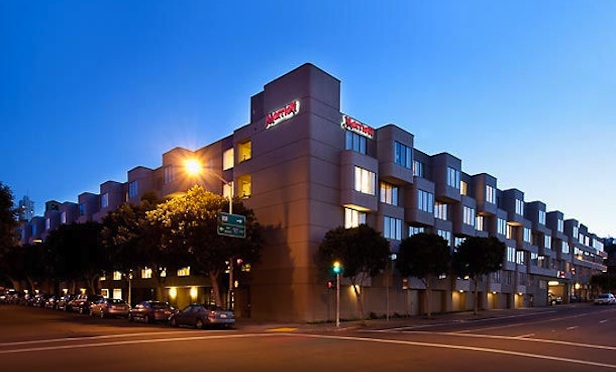
NEW YORK CITY—Investment sales in the hotel sector have been comparatively soft thus far in 2016: a single portfolio sale salvaged what otherwise would have been a 38% year-over-year decline for October, Real Capital Analytics said earlier this month. That being the case, Fitch Ratings on Monday called the sector's fundamentals “marginally positive” for 2017 and gave the broader US lodging and leisure segment a “stable” outlook for the coming year. That's also the case with individual companies rated or followed by Fitch; although just one is on ratings watch with a “negative” outlook, only a handful achieved a “positive” outlook in Fitch's latest report on the hotel/leisure universe.
The ratings agency predicts that US lodging RevPAR will grow by 1% to 2% next year, with solid leisure travel and healthy group demand offsetting weak corporate transient demand. Lodging C-Corps will deliver mid-single-digit cash flow growth, with the help of new supply, while REITs will struggle to hold EBITDA constant, according to Fitch.
Fitch says it expects more M&A “as smaller participants seek scale, potentially weakening credit metrics for buyers and targets. However, Fitch expects issuers to adjust share repurchases to manage balance sheets within stated financial policies.”
Earlier this month, Fitch gave a “positive” outlook to Marriott International following its completion of the $12.2-billion acquisition of Starwood Hotels & Resorts. With 30 brands, “Marriott now has the largest high-quality, internationally recognized brand portfolio in the industry,” according to Fitch. The deal also enhances Marriott's position in advanced emerging markets.
“Lastly, Fitch estimates cost synergies of $250 million, primarily stemming from the elimination of duplicative functions and scale economies,” Fitch said in mid-November. “This suggests that the company will have a permanently lower fixed cost structure and stronger free cash flow margin following the planned sale of approximately $1.5 billion of legacy Starwood-owned hotels.”
Of particular note, Fitch expects cash-flow pressures on the timeshare segment, given its lower margins and higher financing propensity. Even so, the ratings agency predicts that the pace of consolidation will slow next year, on account of “few remaining targets.” For the coming year, Fitch sees timeshare ABS funding remaining “an open and attractively priced capital source for most issuers.”
In the travel services industry, Fitch sees market share gains and solid leisure demand providing tailwinds and helping to drive organic cash flow growth between 5% and 10% for '17. Acquisitions will focus on underpenetrated areas, both by region (Latin America, Asia-Pacific) and segment (corporate travel). The scale and breadth of online travel agencies, such as Expedia and Priceline, will help fend off competitive threats from direct bookings and from new entrants such as Airbnb.
Across the broad swath of leisure-related companies, which range from theme park operators to movie theater chains, Fitch generally is maintaining “stable” outlooks on on individual companies, both those which it rates and those which it follows.
The one exception is AMC Entertainment, which Fitch placed on “negative” watch in July, citing AMC's pending acquisitions of Carmike Cinemas domestically and Odeon & UCI Cinemas Group in Europe. Although Fitch sees the two theater chains as complementary to AMC's existing footprint, it cited uncertainty over the completion of the Carmike deal and operational challenges upon entering the European market as factors in the negative outlook. Throughout the lodging/leisure sector, Fitch sums up, “Upward rating momentum is unlikely absent companies adopting more conservative financial policies.”
The ratings agency predicts that US lodging RevPAR will grow by 1% to 2% next year, with solid leisure travel and healthy group demand offsetting weak corporate transient demand. Lodging C-Corps will deliver mid-single-digit cash flow growth, with the help of new supply, while REITs will struggle to hold EBITDA constant, according to Fitch.
Fitch says it expects more M&A “as smaller participants seek scale, potentially weakening credit metrics for buyers and targets. However, Fitch expects issuers to adjust share repurchases to manage balance sheets within stated financial policies.”
Earlier this month, Fitch gave a “positive” outlook to
“Lastly, Fitch estimates cost synergies of $250 million, primarily stemming from the elimination of duplicative functions and scale economies,” Fitch said in mid-November. “This suggests that the company will have a permanently lower fixed cost structure and stronger free cash flow margin following the planned sale of approximately $1.5 billion of legacy Starwood-owned hotels.”
Of particular note, Fitch expects cash-flow pressures on the timeshare segment, given its lower margins and higher financing propensity. Even so, the ratings agency predicts that the pace of consolidation will slow next year, on account of “few remaining targets.” For the coming year, Fitch sees timeshare ABS funding remaining “an open and attractively priced capital source for most issuers.”
In the travel services industry, Fitch sees market share gains and solid leisure demand providing tailwinds and helping to drive organic cash flow growth between 5% and 10% for '17. Acquisitions will focus on underpenetrated areas, both by region (Latin America, Asia-Pacific) and segment (corporate travel). The scale and breadth of online travel agencies, such as Expedia and Priceline, will help fend off competitive threats from direct bookings and from new entrants such as Airbnb.
Across the broad swath of leisure-related companies, which range from theme park operators to movie theater chains, Fitch generally is maintaining “stable” outlooks on on individual companies, both those which it rates and those which it follows.
The one exception is AMC Entertainment, which Fitch placed on “negative” watch in July, citing AMC's pending acquisitions of Carmike Cinemas domestically and Odeon & UCI Cinemas Group in Europe. Although Fitch sees the two theater chains as complementary to AMC's existing footprint, it cited uncertainty over the completion of the Carmike deal and operational challenges upon entering the European market as factors in the negative outlook. Throughout the lodging/leisure sector, Fitch sums up, “Upward rating momentum is unlikely absent companies adopting more conservative financial policies.”
© Arc, All Rights Reserved. Request academic re-use from www.copyright.com. All other uses, submit a request to TMSalesOperations@arc-network.com. For more information visit Asset & Logo Licensing.