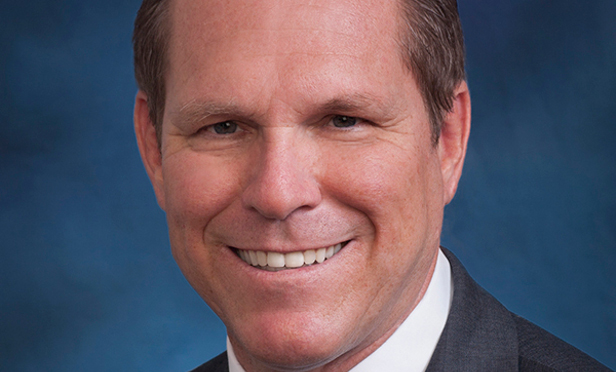
LOS ANGELES—Retailers are having a great holiday season. According to a new report from CBRE, Black Friday sales were up 21.6%; holiday weekend sales were up 14.8%; and Cyber Monday sales were up 10.2%. Online and mobile sales fueled this growth, 40% of the sales were made on mobile devices. Brick-and-mortar retailers with robust online sales platforms had the strongest performance, with the majority of online sales from retailers with both brick-and-mortar and online platforms. To find out more about this year's holiday sales trends and how retailers are increasing sales, we sat down with Jeff Moore, senior managing director and heads retail services for Southern California at CBRE, for an interview.
GlobeSt.com: How do holiday sales this year compare to 2015?
Jeff Moore: We are expecting a very strong holiday season this year. Over the five-day period, from Thanksgiving to Cyber Monday, consumers spent nearly 15 percent more in online sales then the same period last year. Although online sales grew dramatically and in-store sales declined in the early days of this holiday season, the reality is that the majority of these sales are omnichannel-related, with shoppers using multiple channels, online, in-store and mobile devices, to make their purchases. ICSC reported that a higher proportion of U.S. adults shopped in physical stores over the Thanksgiving and Black Friday period this year. Forecasts for total retail sales growth across all channels during this holiday season range from 1.7 percent to 3 percent, with NRF expecting a November and December increase of 3.6 percent.
GlobeSt.com: The biggest trend here seems to be that brick-and-mortar retailers are embracing technology. How are retailers using technology to drive sales?
Moore: A commitment by retailers to embrace omnichannel, and compliment online with brick-and-mortar sales. Many retailers are improving their use of digital channels on the sales floor; for example if a customer's particular style, size or color is not on the floor, it can be ordered from a handheld device and delivered to the customer's store.
GlobeSt.com: How do ecommerce sites used by brick-and-mortar retailers compete with online-only retailers?
Moore: Although online-only retailers have the advantages of diverse inventory, low prices and minimal overhead, they cannot offer the experience that many if not most consumers want to have when shopping, including seeing and feeling the product. Some have assumed that physical stores could become simply showrooms for online shoppers but, in fact, more consumers are likely to treat online stores as their showroom by researching online and then purchasing in the physical store. According to a Harris poll, 69 percent of U.S. consumers have “reversed showroomed,” meaning researched and then bought online, versus 46 percent who have “showroomed” doing the opposite. Brick-and-mortar retailers also make it easy for consumers to pick up and return merchandise purchased online at their stores, creating opportunities for unplanned or impulse sales in the store when returning. The omnichannel approach is becoming more important than ever before to meet the needs of today's demanding consumer.
GlobeSt.com: This is a long holiday season. Do you expect retailers to show strong performances as a result?
Moore: There are two more shopping days in 2016 versus 2015, and December 26th is a holiday for most Americans and a day off from work. This affords retailers to extend their shopping season by taking advantage of the after-holiday sales and spending their gift cards received as presents. NRF found that fewer consumers feel they have finished their holiday shopping thus far and that 23 percent said they have not even begun. Many are waiting for better promotional deals as we get closer to the actual holidays.
GlobeSt.com: What another economic trends are helping to drive retail sales this year?
Moore: America's confidence in the U.S. economy has increased. The stock market is now at an all-time high and people have equity in their homes again. Because of the better housing market, home-improvement sales, appliances and electronics sales have climbed and should continue to.
GlobeSt.com: It is still early in the season with another three weeks of holiday shopping. What is your forecast for holiday spending in 2016?
Moore: I expect to see a much stronger 2016 than 2015 with improved optimism by consumers in the economy and retailers that have better adapted to new consumer buying preferences.
LOS ANGELES—Retailers are having a great holiday season. According to a new report from CBRE, Black Friday sales were up 21.6%; holiday weekend sales were up 14.8%; and Cyber Monday sales were up 10.2%. Online and mobile sales fueled this growth, 40% of the sales were made on mobile devices. Brick-and-mortar retailers with robust online sales platforms had the strongest performance, with the majority of online sales from retailers with both brick-and-mortar and online platforms. To find out more about this year's holiday sales trends and how retailers are increasing sales, we sat down with Jeff Moore, senior managing director and heads retail services for Southern California at CBRE, for an interview.
GlobeSt.com: How do holiday sales this year compare to 2015?
Jeff Moore: We are expecting a very strong holiday season this year. Over the five-day period, from Thanksgiving to Cyber Monday, consumers spent nearly 15 percent more in online sales then the same period last year. Although online sales grew dramatically and in-store sales declined in the early days of this holiday season, the reality is that the majority of these sales are omnichannel-related, with shoppers using multiple channels, online, in-store and mobile devices, to make their purchases. ICSC reported that a higher proportion of U.S. adults shopped in physical stores over the Thanksgiving and Black Friday period this year. Forecasts for total retail sales growth across all channels during this holiday season range from 1.7 percent to 3 percent, with NRF expecting a November and December increase of 3.6 percent.
GlobeSt.com: The biggest trend here seems to be that brick-and-mortar retailers are embracing technology. How are retailers using technology to drive sales?
Moore: A commitment by retailers to embrace omnichannel, and compliment online with brick-and-mortar sales. Many retailers are improving their use of digital channels on the sales floor; for example if a customer's particular style, size or color is not on the floor, it can be ordered from a handheld device and delivered to the customer's store.
GlobeSt.com: How do ecommerce sites used by brick-and-mortar retailers compete with online-only retailers?
Moore: Although online-only retailers have the advantages of diverse inventory, low prices and minimal overhead, they cannot offer the experience that many if not most consumers want to have when shopping, including seeing and feeling the product. Some have assumed that physical stores could become simply showrooms for online shoppers but, in fact, more consumers are likely to treat online stores as their showroom by researching online and then purchasing in the physical store. According to a Harris poll, 69 percent of U.S. consumers have “reversed showroomed,” meaning researched and then bought online, versus 46 percent who have “showroomed” doing the opposite. Brick-and-mortar retailers also make it easy for consumers to pick up and return merchandise purchased online at their stores, creating opportunities for unplanned or impulse sales in the store when returning. The omnichannel approach is becoming more important than ever before to meet the needs of today's demanding consumer.
GlobeSt.com: This is a long holiday season. Do you expect retailers to show strong performances as a result?
Moore: There are two more shopping days in 2016 versus 2015, and December 26th is a holiday for most Americans and a day off from work. This affords retailers to extend their shopping season by taking advantage of the after-holiday sales and spending their gift cards received as presents. NRF found that fewer consumers feel they have finished their holiday shopping thus far and that 23 percent said they have not even begun. Many are waiting for better promotional deals as we get closer to the actual holidays.
GlobeSt.com: What another economic trends are helping to drive retail sales this year?
Moore: America's confidence in the U.S. economy has increased. The stock market is now at an all-time high and people have equity in their homes again. Because of the better housing market, home-improvement sales, appliances and electronics sales have climbed and should continue to.
GlobeSt.com: It is still early in the season with another three weeks of holiday shopping. What is your forecast for holiday spending in 2016?
Moore: I expect to see a much stronger 2016 than 2015 with improved optimism by consumers in the economy and retailers that have better adapted to new consumer buying preferences.
© Arc, All Rights Reserved. Request academic re-use from www.copyright.com. All other uses, submit a request to TMSalesOperations@arc-network.com. For more information visit Asset & Logo Licensing.