CHICAGO—As reported last week in GlobeSt.com, in the aftermath of the election there is now a lot of talk about possibly directing significant funds toward the rebuilding of US infrastructure. If that actually happens, it could have a profound impact on the nation's industrial real estate market. But Walter Kemmsies, managing director, economist and chief strategist for the US ports, airports and global infrastructure group at Chicago-based JLL, tells GlobeSt.com that although the need for new infrastructure is great, everything hinges on what specific projects get funding.
A long-standing problem with the US has been its tendency to direct dollars toward road construction, rather than infrastructure which will strengthen the economy by promoting exports. The reason for that unfortunate tendency is simple, but tough to overcome.
“People vote, and freight doesn't,” Kemmsies says. And all those voters use roads. “Everybody wants a job, but they don't want freight going through their backyard.”
The result has been strategic mistakes of the first order. Although the last few years has seen a lot of money go into remaking portions of the nation's supply chain, including the construction of many new distribution buildings and inland ports such as Logistics Park Kansas City, many bottlenecks remain.
A trainload of goods, for example, can take as long to transit the city of Chicago as it takes to reach the city from one of the coasts. And in California, railroad executives recently wanted state support for an upgraded freight line that would directly connect the Bay Area ports with the East Coast, but the state was more interested in helping facilitate passenger trains. And many goods now moving through the region still have to take a detour around the Sierra Nevada. “It didn't have to be this way,” says Kemmsies.
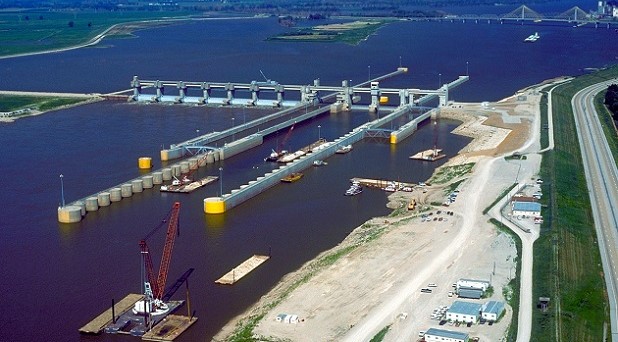
But for much of the Midwest, he adds, the most important project could be a renovation of the locks and dams that allow freight to move down the Mississippi River. A very sizable portion of exports from the Midwest, such as agricultural goods and machinery, moves by barge, he points out. “It's so heavy, water is your best option.” But much of the supporting infrastructure is already 100 years old. “Stuff crumbles; It's next to water and it corrodes.”
In its most recent report on the nation's infrastructure, the American Society of Civil Engineers gave US seaports a C, and its inland waterways a D-minus.
Kemmsies believes reviving the Mississippi trade route, and ensuring that barges are not backing up on the river, will foster job growth far more efficiently than attempts to stop or reverse the migration of US manufacturing to Mexico. “I think that's going to be difficult to stop; Mexico is a wonderful place for global manufacturers.” Operations there have access to all of the important regions, and can export to the US, Europe, Asia and South America. “It's not about getting rid of a few American workers.”
He hopes the US Army Corps of Engineers can get adequate funding to begin this work. As for other export-oriented infrastructure, the potential funding for that also exists. Pension funds and insurance companies, for example, are looking for long-range investments. The stock market has been healthy, but no one expects it to generate 10% annual returns. Meanwhile, the bond market is probably at a peak, and the currency market is risky. “What's left? What's left is real estate.”
Unfortunately, Kemmsies concludes, unlike the US-Mexico trade issue, the problems surrounding the nation's export-oriented infrastructure don't generate sensational headlines. “It's not getting enough attention yet.”
CHICAGO—As reported last week in GlobeSt.com, in the aftermath of the election there is now a lot of talk about possibly directing significant funds toward the rebuilding of US infrastructure. If that actually happens, it could have a profound impact on the nation's industrial real estate market. But Walter Kemmsies, managing director, economist and chief strategist for the US ports, airports and global infrastructure group at Chicago-based JLL, tells GlobeSt.com that although the need for new infrastructure is great, everything hinges on what specific projects get funding.
A long-standing problem with the US has been its tendency to direct dollars toward road construction, rather than infrastructure which will strengthen the economy by promoting exports. The reason for that unfortunate tendency is simple, but tough to overcome.
“People vote, and freight doesn't,” Kemmsies says. And all those voters use roads. “Everybody wants a job, but they don't want freight going through their backyard.”
The result has been strategic mistakes of the first order. Although the last few years has seen a lot of money go into remaking portions of the nation's supply chain, including the construction of many new distribution buildings and inland ports such as Logistics Park Kansas City, many bottlenecks remain.
A trainload of goods, for example, can take as long to transit the city of Chicago as it takes to reach the city from one of the coasts. And in California, railroad executives recently wanted state support for an upgraded freight line that would directly connect the Bay Area ports with the East Coast, but the state was more interested in helping facilitate passenger trains. And many goods now moving through the region still have to take a detour around the Sierra Nevada. “It didn't have to be this way,” says Kemmsies.
But for much of the Midwest, he adds, the most important project could be a renovation of the locks and dams that allow freight to move down the Mississippi River. A very sizable portion of exports from the Midwest, such as agricultural goods and machinery, moves by barge, he points out. “It's so heavy, water is your best option.” But much of the supporting infrastructure is already 100 years old. “Stuff crumbles; It's next to water and it corrodes.”
In its most recent report on the nation's infrastructure, the American Society of Civil Engineers gave US seaports a C, and its inland waterways a D-minus.
Kemmsies believes reviving the Mississippi trade route, and ensuring that barges are not backing up on the river, will foster job growth far more efficiently than attempts to stop or reverse the migration of US manufacturing to Mexico. “I think that's going to be difficult to stop; Mexico is a wonderful place for global manufacturers.” Operations there have access to all of the important regions, and can export to the US, Europe, Asia and South America. “It's not about getting rid of a few American workers.”
He hopes the US Army Corps of Engineers can get adequate funding to begin this work. As for other export-oriented infrastructure, the potential funding for that also exists. Pension funds and insurance companies, for example, are looking for long-range investments. The stock market has been healthy, but no one expects it to generate 10% annual returns. Meanwhile, the bond market is probably at a peak, and the currency market is risky. “What's left? What's left is real estate.”
Unfortunately, Kemmsies concludes, unlike the US-Mexico trade issue, the problems surrounding the nation's export-oriented infrastructure don't generate sensational headlines. “It's not getting enough attention yet.”
© Arc, All Rights Reserved. Request academic re-use from www.copyright.com. All other uses, submit a request to TMSalesOperations@arc-network.com. For more information visit Asset & Logo Licensing.