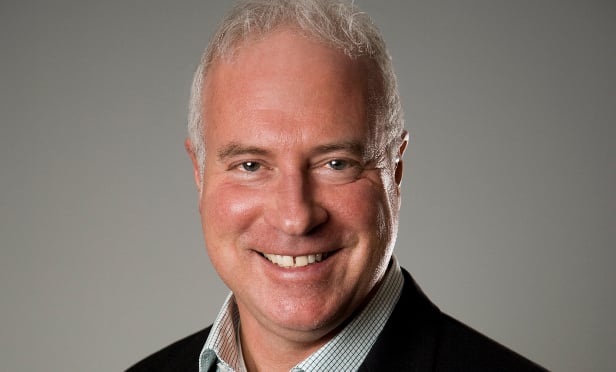
IRVINE, CA—Both the US economy and commercial real estate have been very resilient to global shakeups that have occurred throughout this cycle, although CRE has historically been vulnerable to credit and liquidity conditions, Ten-X's chief economist Peter Muoio tells GlobeSt.com. As we recently reported, according to a capital-trends report from the firm, the capital markets saw a modest increase in Q3 2016, following two consecutive quarters of decline. Overall transaction volume jumped 2.1% from the year's second quarter to $111 billion, driven largely by increases in the hotel and apartment sectors. Volume has now topped $100 billion during each of the last nine quarters, and the market remains relatively healthy in the face of both global and domestic economic uncertainty.
We spoke with Muoio about the resiliency of the US economy and CRE in the face of global shakeups and how it is likely to fare in the face of any future uncertainty.
GlobeSt.com: How would you assess the US commercial real estate's resiliency during domestic and global shakeups like the election and Brexit?
Muoio: Both the US economy and commercial real estate have been very resilient to the series of global shakeups that have occurred throughout this cycle. While deal volume is down this year from last year, it remains at a healthy level, and property prices continue to increase in most segments. While the improvement in fundamentals in some property segments has slowed, we have not seen any major reversal in fortunes from the demand side. We attribute the resiliency primarily to the robust US labor market, which has seen healthy job gains, low unemployment and accelerating wage growth. This has helped to buffer the economy from the shock of low oil, weaker trade and various geopolitical shocks.
GlobeSt.com: How does the sector's history with past macro events serve as a predictor of how we might weather future potential upsets?
Muoio: Commercial real estate has historically been vulnerable to credit and liquidity conditions. That is why at Ten-X Research we keep a very close eye on high frequency indicators of the credit markets and liquidity conditions. While there were some early warning signs in 2016, for the most part conditions remain in place for sustained expansion. Macroeconomic growth is the key to demand, which is why the strength of the labor market is so important. Any slackening there would be a major warning sign for CRE fundamentals. By 2019, the US expansion will be twice the average length in the modern era. That's why we have started modeling the potential impact of a cyclical downturn on each property segment and market.
GlobeSt.com: Which types of macro events are likely to create the most havoc within the CRE industry?
Muoio: I would top the list with anything that restricts credit/liquidity. The problem with those sorts of events is that they are nearly impossible to predict because they could rise out of a political development, a financial-market upset or just some blow to confidence. A collapse in trade could also have serious economic and therefore real estate consequences.
GlobeSt.com: What else should our readers know about your capital-trends report?
Muoio: I believe there is a bit of a disconnect going on between buyers and sellers of US commercial property, and that is why you have this juxtaposition of prices rising while deal volume slows. Buyers are looking at the long cycle, rising interest rates and turbulent global events and asking if the risk-reward ratio is right at current pricing. Sellers are looking at a healthy US economy, potential boost to growth from new policies, good property fundamentals and strong capital flows amid still-low interest rates and seeing high value in US property. Our report is highlighting this, and our other reports also help distinguish some very large market-to-market bifurcation in conditions. Hopefully, this sort of information helps both buyers and sellers discern where value and opportunity stand.
IRVINE, CA—Both the US economy and commercial real estate have been very resilient to global shakeups that have occurred throughout this cycle, although CRE has historically been vulnerable to credit and liquidity conditions, Ten-X's chief economist Peter Muoio tells GlobeSt.com. As we recently reported, according to a capital-trends report from the firm, the capital markets saw a modest increase in Q3 2016, following two consecutive quarters of decline. Overall transaction volume jumped 2.1% from the year's second quarter to $111 billion, driven largely by increases in the hotel and apartment sectors. Volume has now topped $100 billion during each of the last nine quarters, and the market remains relatively healthy in the face of both global and domestic economic uncertainty.
We spoke with Muoio about the resiliency of the US economy and CRE in the face of global shakeups and how it is likely to fare in the face of any future uncertainty.
GlobeSt.com: How would you assess the US commercial real estate's resiliency during domestic and global shakeups like the election and Brexit?
Muoio: Both the US economy and commercial real estate have been very resilient to the series of global shakeups that have occurred throughout this cycle. While deal volume is down this year from last year, it remains at a healthy level, and property prices continue to increase in most segments. While the improvement in fundamentals in some property segments has slowed, we have not seen any major reversal in fortunes from the demand side. We attribute the resiliency primarily to the robust US labor market, which has seen healthy job gains, low unemployment and accelerating wage growth. This has helped to buffer the economy from the shock of low oil, weaker trade and various geopolitical shocks.
GlobeSt.com: How does the sector's history with past macro events serve as a predictor of how we might weather future potential upsets?
Muoio: Commercial real estate has historically been vulnerable to credit and liquidity conditions. That is why at Ten-X Research we keep a very close eye on high frequency indicators of the credit markets and liquidity conditions. While there were some early warning signs in 2016, for the most part conditions remain in place for sustained expansion. Macroeconomic growth is the key to demand, which is why the strength of the labor market is so important. Any slackening there would be a major warning sign for CRE fundamentals. By 2019, the US expansion will be twice the average length in the modern era. That's why we have started modeling the potential impact of a cyclical downturn on each property segment and market.
GlobeSt.com: Which types of macro events are likely to create the most havoc within the CRE industry?
Muoio: I would top the list with anything that restricts credit/liquidity. The problem with those sorts of events is that they are nearly impossible to predict because they could rise out of a political development, a financial-market upset or just some blow to confidence. A collapse in trade could also have serious economic and therefore real estate consequences.
GlobeSt.com: What else should our readers know about your capital-trends report?
Muoio: I believe there is a bit of a disconnect going on between buyers and sellers of US commercial property, and that is why you have this juxtaposition of prices rising while deal volume slows. Buyers are looking at the long cycle, rising interest rates and turbulent global events and asking if the risk-reward ratio is right at current pricing. Sellers are looking at a healthy US economy, potential boost to growth from new policies, good property fundamentals and strong capital flows amid still-low interest rates and seeing high value in US property. Our report is highlighting this, and our other reports also help distinguish some very large market-to-market bifurcation in conditions. Hopefully, this sort of information helps both buyers and sellers discern where value and opportunity stand.
© Arc, All Rights Reserved. Request academic re-use from www.copyright.com. All other uses, submit a request to TMSalesOperations@arc-network.com. For more information visit Asset & Logo Licensing.