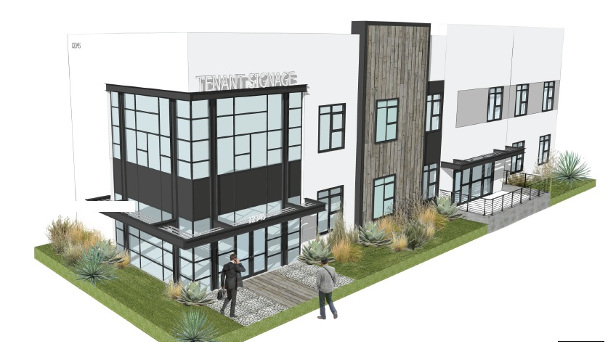
OCEANSIDE, CA—San Diego's industrial users seek space for everything from headquarters to sales to back office, while Riverside and San Bernardino County users demand strictly manufacturing and warehouse facilities, McDonald Property Group's president Bruce McDonald tells GlobeSt.com. The industrial development company headquartered in Newport Beach, CA, has entered into a development agreement with an affiliate of Industrial Property Trust Inc. to develop approximately 25 acres of land in Oceanside's Pacific Coast Business Park into a four-building, 396,220-square-foot industrial park in called Pacific Coast Collection. The Pacific Coast Collection represents the second development in Oceanside for McDonald.
In October, IPT, an industrial REIT that owns and operates distribution warehouses throughout the US, acquired, either directly or through its affiliates, three existing buildings totaling 73,747 square feet and approximately 25 acres of land from BRE Pacific Coast Business Park Owner LLC, an affiliate of Blackstone, for $25.7 million. The project is anticipated to consist of four light-warehouse manufacturing buildings along Rocky Point Dr. that measure approximately 110,190 square feet, 51,360 square feet, 125,310 square feet and 109,360 square feet. The buildings can accommodate up to two users in varying sizes with target tenant sizes in the 50,000-square-foot to 100,000-square-foot range and is anticipated to be delivered in early 2018.
The seller and buyer were represented by Louay Alsadek and Hunter Rowe of CBRE, respectively, while the buyer's leasing of the project will be handled by Greg Lewis and Adam Molnar of CBRE.
We spoke with McDonald about the project and how San Diego industrial-space needs differ from other nearby Southern California markets.
GlobeSt.com: How does the need for industrial space in San Diego compare to the needs of nearby Southern California markets for this space?
McDonald: Our company develops, and has for years, in all counties in Southern California; San Diego is one of our markets, and we're been building industrial there since 2000—we've built 40 buildings in San Diego. San Diego is full of indigenous home-grown businesses. They're from San Diego, and they began their business there, whether in manufacturing or industrial warehousing or the service business, and those businesses have in many ways grown to large, significant operations. Others have taken a step forward and backwards through the recession and now a step forward again.
The San Diego tenant base doesn't have as many corporate-credit companies as other markets. It's not a weakness, but other customers have through the years grown into much better companies and now finally are expanding. They are stable and looking for new product rather than rehabbing older facilities.
San Diego differs from other markets we're in because there is a stronger appetite after maturation to finally lease space and move out of older facilities. Other markets that housed publicly held certified tenants who were moving around during the recession and were either contracting or expanding were consistently transacting during that time, whereas in San Diego during the recession, nothing was happening. Now, there is a flurry of demand. In other markets, there was a modicum of competition building to try to meet that activity. However, in San Diego, until 2015, no new industrial buildings were built. Nobody was calling for new space, and now it's like a tidal wave, an awakening.
We built First Park at Ocean Ranch in Oceanside—the first speculative project we built since the recession—and it was 100% leased at completion. One company that occupied that facility was Suja Juice, a homegrown company, made in San Diego. They moved to North County because that was where more of their employee base lives. They moved their headquarters and their manufacturing and moved in. They grew and moved into new facilities. Brixton Apparel, a surf-apparel company, moved out of 40,000 square feet into a 65,000-square-foot building of ours. The demand was immediate. So, we're now confident in local San Diego companies—not immigrant companies—wanting new and more space, and now we have competition.
There are several projects in Carlsbad planned or under construction that saw our success at First Park. We, however, believe that Oceanside is prime again for handling new inventory to market. We're now seeing all this appetite from companies that stabilized their businesses to capitalize on that and move into better-functioning buildings.
Also, which is more significant, there is a land barrier to enter San Diego to develop new industrial sites. In other counties in which we build, there's an endless supply of available land in a sense that there is no barrier in certain cities (Riverside and San Bernardino counties) to develop more industrial parks that are zoned for that. But in San Diego, there are two factors limiting industrial land: 1) San Diego is endemic with geographic topography challenges. It's very difficult to develop industrial sites with topographic constraints, hillsides, habitats, beautifully configured with a lot of hillsides and street movements that are not typical grid streets on flat lands. So, San Diego has built-in barrier to have large industrial sites opened up for development; 2) The sites capable of being developed are now being diminished so fast. We felt our purchase at PCBP was a commodity. There's very little you can bring to market quickly. Most industrial land could take two to five years to get into the position to be built. In other markets, that can be a massive risk—you could have a lot of projects competing with you. That's the risk in developing on spec. San Diego has had 14 to 15 straight quarters of positive absorption—more space gets leased than goes vacant. There's so little vacant, just functionally obsolete properties. We're building workplaces, not warehouses.
GlobeSt.com: How will this project meet the demand of users?
McDonald: It's going to meet demand in two ways. First, it's flexible, so it can accommodate full manufacturers with a heavy occupant load. There's lots of power capacity, but also really good dock loading yards, and office areas are on opposing areas of the docks. It looks more like office/R&D, and on the backside level there are loading yards with no slope so trucks can move in and out of area with ease. That's what users look for.
For most companies in SD we have to design the buildings to meet the demand of the customers, and that demand differs from Riverside and San Bernardino counties, where they only want warehousing. But in San Diego, the demand is to have it all under one roof, where companies can house their entire operation within the industrial facility rather than splitting it out. It has to be comfortable to sales, engineering and accounting staff and has both a warehousing and manufacturing function. The architecture and landscaping and parking must meet the many needs of tenants to whom we would like to lease.
Also, other industrial sites we develop don't have the amenity of being across the street from the new ground FedEx facility. This is a big, regional facility out of which all e-commerce in San Diego is coming. If you're a manufacturer who sells online e-commerce product, to be right across from the distributor of that product will benefit you greatly.
GlobeSt.com: What future projects does your company have planned in this market?
McDonald: We're looking for more land in San Diego. We've built in Otay Mesa and Vista and Carlsbad, and through the years we've been constantly looking for more land inventory, but it's getting tougher and tougher. We don't have anything else at this time going on in San Diego, but we're excited about getting this bought. It was highly contested, and we were pretty aggressive to make sure we got it.
GlobeSt.com: What else should our readers know about this project?
McDonald: We're building it in two phases. The first building, 125,000 square feet, will finish at the end of 2017, and we will deliver the other three buildings around September 2018. We're building a high-quality project that's flexible to house multiple uses. Outdoor sportswear, health or medical and food are our prime industry candidates.
OCEANSIDE, CA—San Diego's industrial users seek space for everything from headquarters to sales to back office, while Riverside and San Bernardino County users demand strictly manufacturing and warehouse facilities, McDonald Property Group's president Bruce McDonald tells GlobeSt.com. The industrial development company headquartered in Newport Beach, CA, has entered into a development agreement with an affiliate of Industrial Property Trust Inc. to develop approximately 25 acres of land in Oceanside's Pacific Coast Business Park into a four-building, 396,220-square-foot industrial park in called Pacific Coast Collection. The Pacific Coast Collection represents the second development in Oceanside for McDonald.
In October, IPT, an industrial REIT that owns and operates distribution warehouses throughout the US, acquired, either directly or through its affiliates, three existing buildings totaling 73,747 square feet and approximately 25 acres of land from BRE Pacific Coast Business Park Owner LLC, an affiliate of Blackstone, for $25.7 million. The project is anticipated to consist of four light-warehouse manufacturing buildings along Rocky Point Dr. that measure approximately 110,190 square feet, 51,360 square feet, 125,310 square feet and 109,360 square feet. The buildings can accommodate up to two users in varying sizes with target tenant sizes in the 50,000-square-foot to 100,000-square-foot range and is anticipated to be delivered in early 2018.
The seller and buyer were represented by Louay Alsadek and Hunter Rowe of CBRE, respectively, while the buyer's leasing of the project will be handled by Greg
We spoke with McDonald about the project and how San Diego industrial-space needs differ from other nearby Southern California markets.
GlobeSt.com: How does the need for industrial space in San Diego compare to the needs of nearby Southern California markets for this space?
McDonald: Our company develops, and has for years, in all counties in Southern California; San Diego is one of our markets, and we're been building industrial there since 2000—we've built 40 buildings in San Diego. San Diego is full of indigenous home-grown businesses. They're from San Diego, and they began their business there, whether in manufacturing or industrial warehousing or the service business, and those businesses have in many ways grown to large, significant operations. Others have taken a step forward and backwards through the recession and now a step forward again.
The San Diego tenant base doesn't have as many corporate-credit companies as other markets. It's not a weakness, but other customers have through the years grown into much better companies and now finally are expanding. They are stable and looking for new product rather than rehabbing older facilities.
San Diego differs from other markets we're in because there is a stronger appetite after maturation to finally lease space and move out of older facilities. Other markets that housed publicly held certified tenants who were moving around during the recession and were either contracting or expanding were consistently transacting during that time, whereas in San Diego during the recession, nothing was happening. Now, there is a flurry of demand. In other markets, there was a modicum of competition building to try to meet that activity. However, in San Diego, until 2015, no new industrial buildings were built. Nobody was calling for new space, and now it's like a tidal wave, an awakening.
We built First Park at Ocean Ranch in Oceanside—the first speculative project we built since the recession—and it was 100% leased at completion. One company that occupied that facility was Suja Juice, a homegrown company, made in San Diego. They moved to North County because that was where more of their employee base lives. They moved their headquarters and their manufacturing and moved in. They grew and moved into new facilities. Brixton Apparel, a surf-apparel company, moved out of 40,000 square feet into a 65,000-square-foot building of ours. The demand was immediate. So, we're now confident in local San Diego companies—not immigrant companies—wanting new and more space, and now we have competition.
There are several projects in Carlsbad planned or under construction that saw our success at First Park. We, however, believe that Oceanside is prime again for handling new inventory to market. We're now seeing all this appetite from companies that stabilized their businesses to capitalize on that and move into better-functioning buildings.
Also, which is more significant, there is a land barrier to enter San Diego to develop new industrial sites. In other counties in which we build, there's an endless supply of available land in a sense that there is no barrier in certain cities (Riverside and San Bernardino counties) to develop more industrial parks that are zoned for that. But in San Diego, there are two factors limiting industrial land: 1) San Diego is endemic with geographic topography challenges. It's very difficult to develop industrial sites with topographic constraints, hillsides, habitats, beautifully configured with a lot of hillsides and street movements that are not typical grid streets on flat lands. So, San Diego has built-in barrier to have large industrial sites opened up for development; 2) The sites capable of being developed are now being diminished so fast. We felt our purchase at PCBP was a commodity. There's very little you can bring to market quickly. Most industrial land could take two to five years to get into the position to be built. In other markets, that can be a massive risk—you could have a lot of projects competing with you. That's the risk in developing on spec. San Diego has had 14 to 15 straight quarters of positive absorption—more space gets leased than goes vacant. There's so little vacant, just functionally obsolete properties. We're building workplaces, not warehouses.
GlobeSt.com: How will this project meet the demand of users?
McDonald: It's going to meet demand in two ways. First, it's flexible, so it can accommodate full manufacturers with a heavy occupant load. There's lots of power capacity, but also really good dock loading yards, and office areas are on opposing areas of the docks. It looks more like office/R&D, and on the backside level there are loading yards with no slope so trucks can move in and out of area with ease. That's what users look for.
For most companies in SD we have to design the buildings to meet the demand of the customers, and that demand differs from Riverside and San Bernardino counties, where they only want warehousing. But in San Diego, the demand is to have it all under one roof, where companies can house their entire operation within the industrial facility rather than splitting it out. It has to be comfortable to sales, engineering and accounting staff and has both a warehousing and manufacturing function. The architecture and landscaping and parking must meet the many needs of tenants to whom we would like to lease.
Also, other industrial sites we develop don't have the amenity of being across the street from the new ground FedEx facility. This is a big, regional facility out of which all e-commerce in San Diego is coming. If you're a manufacturer who sells online e-commerce product, to be right across from the distributor of that product will benefit you greatly.
GlobeSt.com: What future projects does your company have planned in this market?
McDonald: We're looking for more land in San Diego. We've built in Otay Mesa and Vista and Carlsbad, and through the years we've been constantly looking for more land inventory, but it's getting tougher and tougher. We don't have anything else at this time going on in San Diego, but we're excited about getting this bought. It was highly contested, and we were pretty aggressive to make sure we got it.
GlobeSt.com: What else should our readers know about this project?
McDonald: We're building it in two phases. The first building, 125,000 square feet, will finish at the end of 2017, and we will deliver the other three buildings around September 2018. We're building a high-quality project that's flexible to house multiple uses. Outdoor sportswear, health or medical and food are our prime industry candidates.
© Arc, All Rights Reserved. Request academic re-use from www.copyright.com. All other uses, submit a request to TMSalesOperations@arc-network.com. For more information visit Asset & Logo Licensing.