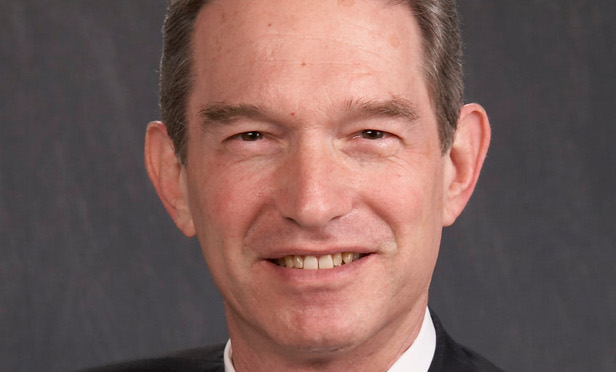
IRVINE, CA—Many believe that with the change of administration there's been an inning reset, but until the legislative outlook is better understood, lenders will continue to proceed with caution, Walker & Dunlop's Mark Strauss and Rob Quarton tell GlobeSt.com. The two executives recently joined the firm's capital-markets group.
Based out of the company's Irvine office, the team will arrange financing for commercial real estate properties by leveraging the firm's relationships with capital providers throughout the country. They join Walker & Dunlop from Cohen Financial, where Strauss was a 15-year veteran and founding member of the firm's equity practice. The pair was responsible for originating, structuring and placing debt and structured finance for a wide variety of asset classes.
Strauss has more than three decades of commercial real estate finance experience, during which he has arranged various forms of debt and equity for more than 23,000 apartment units, 7 million square feet of industrial and office space and more than 3 million square feet of retail space. Quarton's commercial real estate career spans more than 15 years working for top-tier advisors, capital providers and investors. Team has arranged more than $6 billion in financing.
We spoke with Strauss and Quarton about their new roles and their view of the CRE financing landscape for 2017.
GlobeSt.com: What are your goals in your new roles with Walker & Dunlop?
Strauss: Our goals are really to expand the Walker & Dunlop service offering. W&D has primarily focused on and had a great deal of expertise in the multifamily-agency business and has been expanding its capital-markets capabilities. Rob and I bring with us a deeper background in structured finance and equity placement, so we will aim to expand and bring clients to W&D that can take advantage of the broader platform of services as well as fill a void that may have been existing for current clients of the firm.
Quarton: We intend to piggyback off being best in class, bring our capital-markets and structured-finance knowledge to W&D's existing clients and grow some new ones as well.

GlobeSt.com: What's your overall view of the commercial real estate financing landscape for 2017?
Strauss: I think the one word you can use is uncertainty. Many believe that with the change in the administration there has been a reset to the inning we're in the current cycle: are we in the third or the eighth inning? Until there is some certainty or some understanding of the legislative outlook regarding banking or infrastructure regulations, we will continue to find a little bit of uncertainty in the marketplace. We've seen the recent run-up in the 10-Year Treasury, which has increased significantly over the last 90 days. This may put some pressure on the large amount of refinancings that will have to occur in the CMBS marketplace. Many of those who may have been able to refinance those projects a few months ago, will need additional equity or mezzanine financing or will have to get extensions from the servicers. There may be substantial potential in the equity, mezzanine or preferred-equity side of the business to accommodate these needs.
Quarton: It's going to be dynamic or volatile in the market. Borrowers may have been going to a handful of preferred-lender sources, but with this volatility those sources might not be as active, and they will have to go to new types of lenders to get those deals done. This will open the door to new relationships to help them hit their business plans with viability. They will have to work harder to find capital that they would have found easily in the past, and they may have to expand their net.
GlobeSt.com: What are the major challenges lenders are facing next year?
Strauss: One of the challenges is underwriting issues. As the economy changes and we go through the cycle, what are the real opportunities for rent growth and expenses? What is the demand pipeline going to be like? As this changes, underwriting and geography become important and more of a challenge.
Quarton: For banks, we've started to see a concentration risk for some product types, e.g. construction loans in some markets; lenders can't deploy those dollars as they would like to do. Also, Dodd-Frank will curb the ability for banks to issue certain leverage amounts, and there's also an increased sense of competition in the market, with more non-traditional lenders in the market. It's more competitive for borrowers and better for them. Borrowers now have private and public debt funds that will compete with banks and life-insurance companies for loans. The competitive landscape has changed.
GlobeSt.com: What else should our readers know about your firm?
Strauss: One of the things that attracted Rob and me to Walker & Dunlop is the size of the platform, which provides the ability to generate market data and better real-time information with respect to what is in consideration and what is transacting. At any one time, W&D could be underwriting anywhere between $100 million to $400 million a week or 100 loans a week. It's very valuable to have information in real time to bring to our clients. To be able to assess the market and give them that kind of feedback is extremely valuable. W&D has 27 offices across the country—that kind of buying power is extremely valuable to our customers, and we look forward to bringing that advantage to them.
IRVINE, CA—Many believe that with the change of administration there's been an inning reset, but until the legislative outlook is better understood, lenders will continue to proceed with caution, Walker & Dunlop's Mark Strauss and Rob Quarton tell GlobeSt.com. The two executives recently joined the firm's capital-markets group.
Based out of the company's Irvine office, the team will arrange financing for commercial real estate properties by leveraging the firm's relationships with capital providers throughout the country. They join Walker & Dunlop from Cohen Financial, where Strauss was a 15-year veteran and founding member of the firm's equity practice. The pair was responsible for originating, structuring and placing debt and structured finance for a wide variety of asset classes.
Strauss has more than three decades of commercial real estate finance experience, during which he has arranged various forms of debt and equity for more than 23,000 apartment units, 7 million square feet of industrial and office space and more than 3 million square feet of retail space. Quarton's commercial real estate career spans more than 15 years working for top-tier advisors, capital providers and investors. Team has arranged more than $6 billion in financing.
We spoke with Strauss and Quarton about their new roles and their view of the CRE financing landscape for 2017.
GlobeSt.com: What are your goals in your new roles with Walker & Dunlop?
Strauss: Our goals are really to expand the Walker & Dunlop service offering. W&D has primarily focused on and had a great deal of expertise in the multifamily-agency business and has been expanding its capital-markets capabilities. Rob and I bring with us a deeper background in structured finance and equity placement, so we will aim to expand and bring clients to W&D that can take advantage of the broader platform of services as well as fill a void that may have been existing for current clients of the firm.
Quarton: We intend to piggyback off being best in class, bring our capital-markets and structured-finance knowledge to W&D's existing clients and grow some new ones as well.
GlobeSt.com: What's your overall view of the commercial real estate financing landscape for 2017?
Strauss: I think the one word you can use is uncertainty. Many believe that with the change in the administration there has been a reset to the inning we're in the current cycle: are we in the third or the eighth inning? Until there is some certainty or some understanding of the legislative outlook regarding banking or infrastructure regulations, we will continue to find a little bit of uncertainty in the marketplace. We've seen the recent run-up in the 10-Year Treasury, which has increased significantly over the last 90 days. This may put some pressure on the large amount of refinancings that will have to occur in the CMBS marketplace. Many of those who may have been able to refinance those projects a few months ago, will need additional equity or mezzanine financing or will have to get extensions from the servicers. There may be substantial potential in the equity, mezzanine or preferred-equity side of the business to accommodate these needs.
Quarton: It's going to be dynamic or volatile in the market. Borrowers may have been going to a handful of preferred-lender sources, but with this volatility those sources might not be as active, and they will have to go to new types of lenders to get those deals done. This will open the door to new relationships to help them hit their business plans with viability. They will have to work harder to find capital that they would have found easily in the past, and they may have to expand their net.
GlobeSt.com: What are the major challenges lenders are facing next year?
Strauss: One of the challenges is underwriting issues. As the economy changes and we go through the cycle, what are the real opportunities for rent growth and expenses? What is the demand pipeline going to be like? As this changes, underwriting and geography become important and more of a challenge.
Quarton: For banks, we've started to see a concentration risk for some product types, e.g. construction loans in some markets; lenders can't deploy those dollars as they would like to do. Also, Dodd-Frank will curb the ability for banks to issue certain leverage amounts, and there's also an increased sense of competition in the market, with more non-traditional lenders in the market. It's more competitive for borrowers and better for them. Borrowers now have private and public debt funds that will compete with banks and life-insurance companies for loans. The competitive landscape has changed.
GlobeSt.com: What else should our readers know about your firm?
Strauss: One of the things that attracted Rob and me to Walker & Dunlop is the size of the platform, which provides the ability to generate market data and better real-time information with respect to what is in consideration and what is transacting. At any one time, W&D could be underwriting anywhere between $100 million to $400 million a week or 100 loans a week. It's very valuable to have information in real time to bring to our clients. To be able to assess the market and give them that kind of feedback is extremely valuable. W&D has 27 offices across the country—that kind of buying power is extremely valuable to our customers, and we look forward to bringing that advantage to them.
© Arc, All Rights Reserved. Request academic re-use from www.copyright.com. All other uses, submit a request to TMSalesOperations@arc-network.com. For more information visit Asset & Logo Licensing.