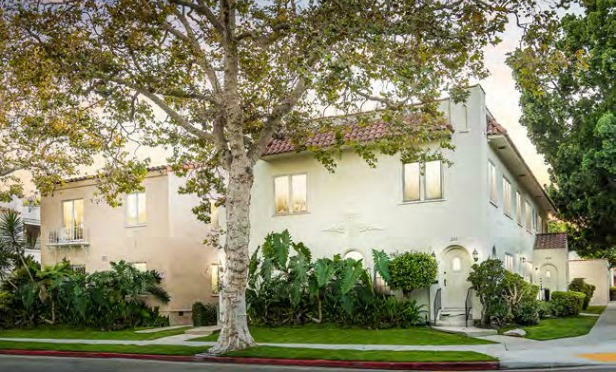
LOS ANGELES—There are plenty of emerging markets in Los Angeles today for investors to target. Downtown Los Angeles, Hollywood, Glendale and Koreatown are all making headlines for their tremendous growth. That growth, however, hasn't deterred attention from traditionally sought-after markets, like Beverly Hills. According to market experts and Keller Williams Commercial brokers Rich Johns and David Weinberger, the Beverly Hills market continues to be on the wish list of investors, that is on the rare occasion that a Beverly Hills property comes to market.
“Beverly Hills is a recession proof market,” Johns, tells GlobeSt.com. “It will never go down in value; it will always go up in value. During the 2008 recession, Beverly Hills didn't get hit and everyone still wanted to own there because the market holds such tremendous value. It is a weird concept, especially in the middle market. That investor pool largely lives on the Westside, and they love to drive by their real estate and show off what they own.”
Johns' partner Weinberger, however, doesn't agree that the demand has only increased. “While the voracious appetite for Multifamily in BH has subsided slightly, the demand is still strong. Investors are continually vying for quality product because the availability is low,” he tells GlobeSt.com, adding that sellers also shouldn't expect top dollar based solely on the zip code. “Beverly Hills sellers in 2017 cannot assume they will get top dollar just because it's a Beverly Hills location. Sellers need to choose agents who will advocate on their behalf and employ strategic marketing in order to garner trophy numbers. As interest rates rise and with the uncertainty of the new presidential administration it will become more difficult and the buyer pool will decrease. There needs to be a story or a reason that a property deserves attention from investors. Beverly Hills cannot solely rely on being Beverly Hills.”
Weinberger and Johns do agree that properties in the Beverly Hills market rarely come to market, and that it is a difficult market for new investors to break into. “Buildings in Beverly Hills rarely trade. Once an investor buys there, they almost never sell the property,” says Johns. “People who buy here will wake up 20 or 30 years from now and say, 'Best thing we ever did.'” The market is filled with 1920s and 1960s construction, according to Johns, and the 20s properties are the most popular for value-add investors because they hold so much character. In this sense, the market is similar to Santa Monica, which has ample vintage product with rental rates well below market, but where properties seldom trade.
Weinberger explains that the pricing in Beverly Hills is still high compared to surrounding markets, and that investors need substantial capital to break in. “It requires a lot of capital to break into the Beverly Hills multifamily market; however, if you can raise the capital a buyer can take advantage of mismanaged properties or rents below market with substandard amenities,” he says. “The opportunity to add value also exists, but requires a lot of work and capital expenditures to acquire the high-end finishes that Beverly Hills tenants have grown accustomed to.”
LOS ANGELES—There are plenty of emerging markets in Los Angeles today for investors to target. Downtown Los Angeles, Hollywood, Glendale and Koreatown are all making headlines for their tremendous growth. That growth, however, hasn't deterred attention from traditionally sought-after markets, like Beverly Hills. According to market experts and Keller Williams Commercial brokers Rich Johns and David Weinberger, the Beverly Hills market continues to be on the wish list of investors, that is on the rare occasion that a Beverly Hills property comes to market.
“Beverly Hills is a recession proof market,” Johns, tells GlobeSt.com. “It will never go down in value; it will always go up in value. During the 2008 recession, Beverly Hills didn't get hit and everyone still wanted to own there because the market holds such tremendous value. It is a weird concept, especially in the middle market. That investor pool largely lives on the Westside, and they love to drive by their real estate and show off what they own.”
Johns' partner Weinberger, however, doesn't agree that the demand has only increased. “While the voracious appetite for Multifamily in BH has subsided slightly, the demand is still strong. Investors are continually vying for quality product because the availability is low,” he tells GlobeSt.com, adding that sellers also shouldn't expect top dollar based solely on the zip code. “Beverly Hills sellers in 2017 cannot assume they will get top dollar just because it's a Beverly Hills location. Sellers need to choose agents who will advocate on their behalf and employ strategic marketing in order to garner trophy numbers. As interest rates rise and with the uncertainty of the new presidential administration it will become more difficult and the buyer pool will decrease. There needs to be a story or a reason that a property deserves attention from investors. Beverly Hills cannot solely rely on being Beverly Hills.”
Weinberger and Johns do agree that properties in the Beverly Hills market rarely come to market, and that it is a difficult market for new investors to break into. “Buildings in Beverly Hills rarely trade. Once an investor buys there, they almost never sell the property,” says Johns. “People who buy here will wake up 20 or 30 years from now and say, 'Best thing we ever did.'” The market is filled with 1920s and 1960s construction, according to Johns, and the 20s properties are the most popular for value-add investors because they hold so much character. In this sense, the market is similar to Santa Monica, which has ample vintage product with rental rates well below market, but where properties seldom trade.
Weinberger explains that the pricing in Beverly Hills is still high compared to surrounding markets, and that investors need substantial capital to break in. “It requires a lot of capital to break into the Beverly Hills multifamily market; however, if you can raise the capital a buyer can take advantage of mismanaged properties or rents below market with substandard amenities,” he says. “The opportunity to add value also exists, but requires a lot of work and capital expenditures to acquire the high-end finishes that Beverly Hills tenants have grown accustomed to.”
© Arc, All Rights Reserved. Request academic re-use from www.copyright.com. All other uses, submit a request to TMSalesOperations@arc-network.com. For more information visit Asset & Logo Licensing.