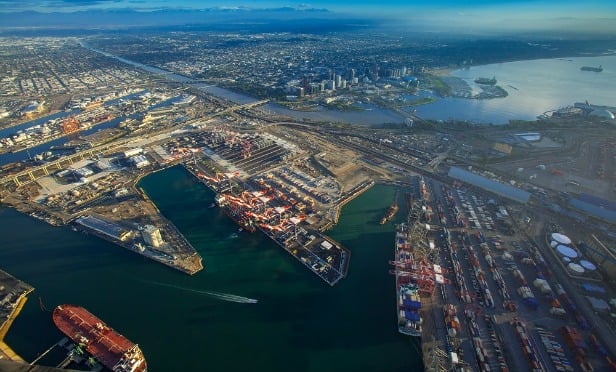
LOS ANGELES—The environmental efforts at the Port of Long Beach are paying off. According to a report on the water and habitat quality of the Long Beach and Los Angeles harbors, plant, wildlife and marine life ecosystems are flourishing as a result of the port's efforts to reduce the environmental impacts related to the movement of goods. The number of species of plants and animals living on rocks and pilings in the harbors has increased 60% since a 2008 and has nearly doubled since 2000. Water conditions have also greatly improved, leading to increased levels of fish and the expansion of kelp beds, which now cover more than 132 acres of outer harbor waters. In 2008, kelp covered 80 acres and in 2000, kelp covered only 27 acres. To find out more about the improvements and the efforts to continue to reduce environment impacts, we sat down with Lee Peterson of the port for a brief interview.
GlobeSt.com: The Port has been working for a long time to improve its environmental impacts. How does it feel to show those efforts have been realized?
Peterson: We definitely enjoy it when we can report back to the community that our environmental programs are succeeding. We don't publicize these just to make ourselves look good, however, we do it because that's part of the commitment of the Green Port Policy, created in 2005. We promised that we would report back on our efforts in cleaning up air, water and sediments. That's the way that the community knows when it needs to hold our feet to the fire, to make sure that we are doing what we said we would do. We're very happy to see the sea lions and sea birds at our Port; it means there are plenty of fish, which means the harbor is a healthy place for all the plants and invertebrates that the fish need to survive.
GlobeSt.com: I know there has been a large program to reduce environmental impacts, but what was done specifically to boost plant and wildlife ecosystems around the port?
Peterson: Efforts to improve the quality of water and sediments (harbor bottom) have been ongoing for some time and have been highly successful in allowing aquatic plants and animals to thrive in the harbor. For air, the two neighboring ports have the “Clean Air Action Plan” or CAAP. For water, the two ports at the Water Resources Action Plan or WRAP, which is focused on instituting best practices for the ports and their tenants, to ensure that they are taking all the necessary steps to eliminate contaminated storm water runoff. That means cleaning docks of any trash, preventing any kinds of oil or chemical spills (even small ones), making sure ships and other watercraft follow the guidelines for discharges and ballast water. It's only through a coordinated, comprehensive program that the progress can be made in restoring wildlife habitat.
GlobeSt.com: What are your future efforts to continue to reduce impacts? Are you focusing on other areas as well?
Peterson: Our water program, like all of our environmental efforts, is ongoing. We're always seeking to reduce environmental impacts and improve environmental quality. For air, we hope to become a zero-emissions port, eliminating air pollution and greenhouse gases. We will be working at that for the next 20 years. For water and wildlife, we must remain vigilant as to the health of the harbor, which is one reason why we do these biological surveys. In general, we invite other ports to find out more about our methods, as a means of spreading environmental sustainability throughout the port industry. We will continue to improve our recycling of building materials, continue to build “green” buildings, and look for technologies that can help us reach all of our goals.
LOS ANGELES—The environmental efforts at the Port of Long Beach are paying off. According to a report on the water and habitat quality of the Long Beach and Los Angeles harbors, plant, wildlife and marine life ecosystems are flourishing as a result of the port's efforts to reduce the environmental impacts related to the movement of goods. The number of species of plants and animals living on rocks and pilings in the harbors has increased 60% since a 2008 and has nearly doubled since 2000. Water conditions have also greatly improved, leading to increased levels of fish and the expansion of kelp beds, which now cover more than 132 acres of outer harbor waters. In 2008, kelp covered 80 acres and in 2000, kelp covered only 27 acres. To find out more about the improvements and the efforts to continue to reduce environment impacts, we sat down with Lee Peterson of the port for a brief interview.
GlobeSt.com: The Port has been working for a long time to improve its environmental impacts. How does it feel to show those efforts have been realized?
Peterson: We definitely enjoy it when we can report back to the community that our environmental programs are succeeding. We don't publicize these just to make ourselves look good, however, we do it because that's part of the commitment of the Green Port Policy, created in 2005. We promised that we would report back on our efforts in cleaning up air, water and sediments. That's the way that the community knows when it needs to hold our feet to the fire, to make sure that we are doing what we said we would do. We're very happy to see the sea lions and sea birds at our Port; it means there are plenty of fish, which means the harbor is a healthy place for all the plants and invertebrates that the fish need to survive.
GlobeSt.com: I know there has been a large program to reduce environmental impacts, but what was done specifically to boost plant and wildlife ecosystems around the port?
Peterson: Efforts to improve the quality of water and sediments (harbor bottom) have been ongoing for some time and have been highly successful in allowing aquatic plants and animals to thrive in the harbor. For air, the two neighboring ports have the “Clean Air Action Plan” or CAAP. For water, the two ports at the Water Resources Action Plan or WRAP, which is focused on instituting best practices for the ports and their tenants, to ensure that they are taking all the necessary steps to eliminate contaminated storm water runoff. That means cleaning docks of any trash, preventing any kinds of oil or chemical spills (even small ones), making sure ships and other watercraft follow the guidelines for discharges and ballast water. It's only through a coordinated, comprehensive program that the progress can be made in restoring wildlife habitat.
GlobeSt.com: What are your future efforts to continue to reduce impacts? Are you focusing on other areas as well?
Peterson: Our water program, like all of our environmental efforts, is ongoing. We're always seeking to reduce environmental impacts and improve environmental quality. For air, we hope to become a zero-emissions port, eliminating air pollution and greenhouse gases. We will be working at that for the next 20 years. For water and wildlife, we must remain vigilant as to the health of the harbor, which is one reason why we do these biological surveys. In general, we invite other ports to find out more about our methods, as a means of spreading environmental sustainability throughout the port industry. We will continue to improve our recycling of building materials, continue to build “green” buildings, and look for technologies that can help us reach all of our goals.
© Arc, All Rights Reserved. Request academic re-use from www.copyright.com. All other uses, submit a request to TMSalesOperations@arc-network.com. For more information visit Asset & Logo Licensing.