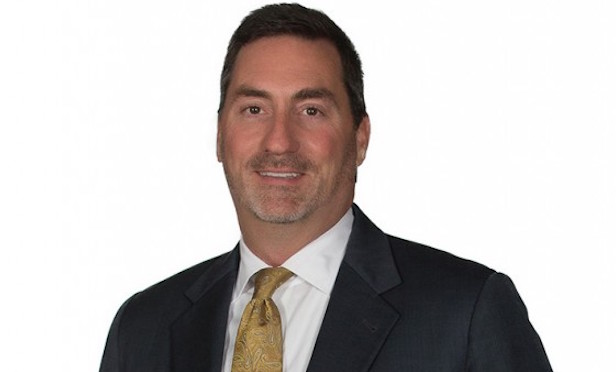
TORONTO—With the imminent inauguration of a new President only one of the changes in store for this year, the commercial real estate industry is not in quite the same environment it was for 2016, even if many of the same conditions prevail. Citing the Chicago Cubs' historic recent World Series win as an analogy, Avison Young chair and CEO Mark E. Rose sees the current cycle as going into overtime, just as the Series finale did.
“The widely held opinion is that real estate is in the seventh inning,” he says. “At Avison Young, we disagree. We see something very different. We might be in the seventh or eighth inning from a pricing perspective, but given the market forces and attributes that currently exist, we could be in the seventh inning of a very long extra-innings game for our industry. Real estate is a legitimate investment alternative and is currently producing higher yields than stocks and bonds.”
Rpse cites the “many variables” of the current socioeconomic climate. “Will we see '16 redux, or changes ahead? Pundits have taken both sides of the interest rate debate, from low rates indefinitely to a gradual return to historical levels.”
Meanwhile, he adds, “virtually all developed countries piled on additional debt, ensuring that no government would lead the charge to raise rates. Economists disagree about how best to proceed, but a majority of business executives understand that we need to normalize rates one day—and sooner rather than later.” In short, he adds, it's hard to conceive a climate with less consensus among the experts.
One area where there is agreement, though, is in the soundness of commercial property as an investment vehicle. Due to the US presidential election and the Brexit referendum in the UK, “Decision-making might have slowed in '16, but the appetite for investment in real estate continues unabated,” says Rose.
“North America has been the preferred destination for global capital, and will continue to be in 2017,” he says. “Additionally, investors in this region are beginning to harvest gains, creating a 'wall of capital' to take advantage of any dislocations in the marketplace.
“This wall is one of the reasons we are predicting that North American global investors will have the UK and, specifically, London in their sights in 2017,” he adds. We believe that well-timed portfolio acquisitions could produce significant returns.”
Within the United States, Earl Webb, president, US operations, notes that CRE fundamentals saw steady gains over the past year. “The year was marked by continued improvement, resulting in numerous markets breaking decades-long pricing and occupancy records,” he says.
“As we forecasted a year ago, the US provided investors with solid rates of risk-adjusted returns, the supply of space kept pace with steadily increasing demand in nearly all asset classes and the influx of foreign capital continued to amplify pricing pressure for the most desired gateway assets.” Looking to the nation's capital, Webb says his company anticipates that “an increase in federal government spending—and a subsequent breakup of the Capitol Hill gridlock—should have a positive impact on economic activity and, thus, real estate fundamentals.”
TORONTO—With the imminent inauguration of a new President only one of the changes in store for this year, the commercial real estate industry is not in quite the same environment it was for 2016, even if many of the same conditions prevail. Citing the Chicago Cubs' historic recent World Series win as an analogy, Avison Young chair and CEO Mark E. Rose sees the current cycle as going into overtime, just as the Series finale did.
“The widely held opinion is that real estate is in the seventh inning,” he says. “At Avison Young, we disagree. We see something very different. We might be in the seventh or eighth inning from a pricing perspective, but given the market forces and attributes that currently exist, we could be in the seventh inning of a very long extra-innings game for our industry. Real estate is a legitimate investment alternative and is currently producing higher yields than stocks and bonds.”
Rpse cites the “many variables” of the current socioeconomic climate. “Will we see '16 redux, or changes ahead? Pundits have taken both sides of the interest rate debate, from low rates indefinitely to a gradual return to historical levels.”
Meanwhile, he adds, “virtually all developed countries piled on additional debt, ensuring that no government would lead the charge to raise rates. Economists disagree about how best to proceed, but a majority of business executives understand that we need to normalize rates one day—and sooner rather than later.” In short, he adds, it's hard to conceive a climate with less consensus among the experts.
One area where there is agreement, though, is in the soundness of commercial property as an investment vehicle. Due to the US presidential election and the Brexit referendum in the UK, “Decision-making might have slowed in '16, but the appetite for investment in real estate continues unabated,” says Rose.
“North America has been the preferred destination for global capital, and will continue to be in 2017,” he says. “Additionally, investors in this region are beginning to harvest gains, creating a 'wall of capital' to take advantage of any dislocations in the marketplace.
“This wall is one of the reasons we are predicting that North American global investors will have the UK and, specifically, London in their sights in 2017,” he adds. We believe that well-timed portfolio acquisitions could produce significant returns.”
Within the United States, Earl Webb, president, US operations, notes that CRE fundamentals saw steady gains over the past year. “The year was marked by continued improvement, resulting in numerous markets breaking decades-long pricing and occupancy records,” he says.
“As we forecasted a year ago, the US provided investors with solid rates of risk-adjusted returns, the supply of space kept pace with steadily increasing demand in nearly all asset classes and the influx of foreign capital continued to amplify pricing pressure for the most desired gateway assets.” Looking to the nation's capital, Webb says his company anticipates that “an increase in federal government spending—and a subsequent breakup of the Capitol Hill gridlock—should have a positive impact on economic activity and, thus, real estate fundamentals.”
© Arc, All Rights Reserved. Request academic re-use from www.copyright.com. All other uses, submit a request to TMSalesOperations@arc-network.com. For more information visit Asset & Logo Licensing.