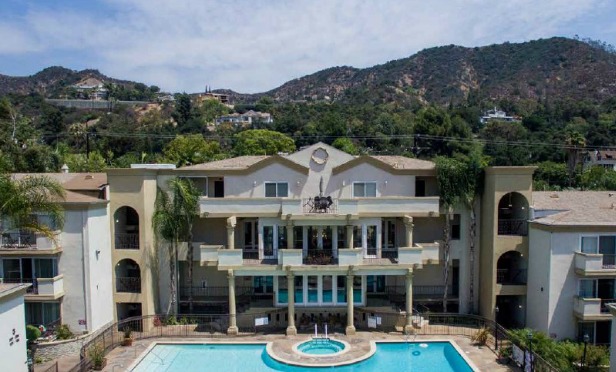
LOS ANGELES—Glendale has grown tremendously in the last couple of years, becoming one of the most sought-after investment and development markets in Los Angeles, but for long-time investors in the market, all that has changed is the competition. Interstate Equities Corp. has been a player in the market for decades, most recently purchasing the 126-unit Towne at Glendale for $54 million, and the market remains on their target investment list because of its strong fundamentals and steady demand. To get a closer look at the firm's strategy in the market and what it means to be such a long-time player, we sat down with Brendan Gibney, an acquisitions professional at IEC, for an exclusive interview. Here, he tells us about their Glendale strategy and why it continues to be such a great market.
GlobeSt.com Why is and does Glendale remain such an attractive market for you?
Gibney: If you go back 10 or 15 years ago in Glendale, the market has primarily been a quiet bedroom community. The arrival of larger corporations and film studios in the late 90s and the delivery of the Americana at Brand helped transform Glendale into one of the premier Southern California cities. As thousands of new apartment units have been delivered at major rents, we found that there is a built in gap between the class-A and class-B product. We saw an opportunity to renovate and improve older product that can fit between those two classes. Glendale fits squarely in our strategy to acquire older value-add assets. This latest acquisition also has a unique unit mix with 52% three bedrooms. While a lot of the new product is delivering product with one and two units, this property is more appealing to a family or a renter that has been in the market for a long time.
GlobeSt.com: You have been a player in this market for decades. How has your strategy changed?
Gibney: Our strategy remains largely the same. In the past, buyers have been all private owners, and now we have institutions coming to the market. That has added competition to the larger deals, but it makes the market more durable at the end of the day. We expect to be able to execute our same strategy, it is just a larger buyer pool now.
GlobeSt.com: As an investor that has been in the market for so long, how are you dealing with the increased competition?
Gibney: We will go after 25-unit deals just as easily as we will go after the large ones. Being active and ever-present in the market has given us a good understanding of where pricing is and where pricing is moving. We underwrite several deals a week, and we are always up to date on what is happening. On the smaller end of the spectrum, we are coming up against families and joint venture groups and on the other end of the spectrum, we are competing with institutions. But all of those players aren't in the market as often as we are, and I think that helps us when we want to move on something that is more expensive and larger. When we see a 25-unit deal, we will put similar effort into underwriting it as when we underwrite a 125-unit deal. All of that information is valuable to us, and it all goes into our database.
GlobeSt.com: Glendale is one of the top development markets in Los Angeles. Do you have any concerns about competition from new developments?
Gibney: That hasn't been a concern. We have seen such a huge gap between the class-A and class-B rents. At this point, it is 40% to 45% on a lot of unit types. So, there is a big enough built-in spread.
GlobeSt.com: Are you typically long-term holders in the market?
Gibney: We look at projects that have renovation upside, and so our strategy is to hold for three-to-five years and really make the improvements to enhance the value. After five years, we typically sell our properties.
GlobeSt.com: Do you have any concerns about economic changes this year as a result of the new administration?
Gibney: Our strategy doesn't change with the administration. We are looking more closely at markets in California and how those markets are acting. Across California, I think the markets are relatively more expensive. In this environment, we have been especially prudent when looking at new acquisitions, and we are still finding assets in areas that we feel are very durable submarkets. Glendale is one of those markets. We believe in it and we have been there for decades, and we will continue to be there. When things get choppy or recessive, we go back to the markets that we know best.
Gibney: That is in comparison to many competitors who choose to go the cash-flow market, and typically with cash flow, you get a little less durability. For that reason, we have decided to take the path that the best locations will be the most durable. If there is any slip in the market, we will recover better than those less durable markets that provide more cash flow and may seem more attractive.
LOS ANGELES—Glendale has grown tremendously in the last couple of years, becoming one of the most sought-after investment and development markets in Los Angeles, but for long-time investors in the market, all that has changed is the competition. Interstate Equities Corp. has been a player in the market for decades, most recently purchasing the 126-unit Towne at Glendale for $54 million, and the market remains on their target investment list because of its strong fundamentals and steady demand. To get a closer look at the firm's strategy in the market and what it means to be such a long-time player, we sat down with Brendan Gibney, an acquisitions professional at IEC, for an exclusive interview. Here, he tells us about their Glendale strategy and why it continues to be such a great market.
GlobeSt.com Why is and does Glendale remain such an attractive market for you?
Gibney: If you go back 10 or 15 years ago in Glendale, the market has primarily been a quiet bedroom community. The arrival of larger corporations and film studios in the late 90s and the delivery of the Americana at Brand helped transform Glendale into one of the premier Southern California cities. As thousands of new apartment units have been delivered at major rents, we found that there is a built in gap between the class-A and class-B product. We saw an opportunity to renovate and improve older product that can fit between those two classes. Glendale fits squarely in our strategy to acquire older value-add assets. This latest acquisition also has a unique unit mix with 52% three bedrooms. While a lot of the new product is delivering product with one and two units, this property is more appealing to a family or a renter that has been in the market for a long time.
GlobeSt.com: You have been a player in this market for decades. How has your strategy changed?
Gibney: Our strategy remains largely the same. In the past, buyers have been all private owners, and now we have institutions coming to the market. That has added competition to the larger deals, but it makes the market more durable at the end of the day. We expect to be able to execute our same strategy, it is just a larger buyer pool now.
GlobeSt.com: As an investor that has been in the market for so long, how are you dealing with the increased competition?
Gibney: We will go after 25-unit deals just as easily as we will go after the large ones. Being active and ever-present in the market has given us a good understanding of where pricing is and where pricing is moving. We underwrite several deals a week, and we are always up to date on what is happening. On the smaller end of the spectrum, we are coming up against families and joint venture groups and on the other end of the spectrum, we are competing with institutions. But all of those players aren't in the market as often as we are, and I think that helps us when we want to move on something that is more expensive and larger. When we see a 25-unit deal, we will put similar effort into underwriting it as when we underwrite a 125-unit deal. All of that information is valuable to us, and it all goes into our database.
GlobeSt.com: Glendale is one of the top development markets in Los Angeles. Do you have any concerns about competition from new developments?
Gibney: That hasn't been a concern. We have seen such a huge gap between the class-A and class-B rents. At this point, it is 40% to 45% on a lot of unit types. So, there is a big enough built-in spread.
GlobeSt.com: Are you typically long-term holders in the market?
Gibney: We look at projects that have renovation upside, and so our strategy is to hold for three-to-five years and really make the improvements to enhance the value. After five years, we typically sell our properties.
GlobeSt.com: Do you have any concerns about economic changes this year as a result of the new administration?
Gibney: Our strategy doesn't change with the administration. We are looking more closely at markets in California and how those markets are acting. Across California, I think the markets are relatively more expensive. In this environment, we have been especially prudent when looking at new acquisitions, and we are still finding assets in areas that we feel are very durable submarkets. Glendale is one of those markets. We believe in it and we have been there for decades, and we will continue to be there. When things get choppy or recessive, we go back to the markets that we know best.
Gibney: That is in comparison to many competitors who choose to go the cash-flow market, and typically with cash flow, you get a little less durability. For that reason, we have decided to take the path that the best locations will be the most durable. If there is any slip in the market, we will recover better than those less durable markets that provide more cash flow and may seem more attractive.
© Arc, All Rights Reserved. Request academic re-use from www.copyright.com. All other uses, submit a request to TMSalesOperations@arc-network.com. For more information visit Asset & Logo Licensing.