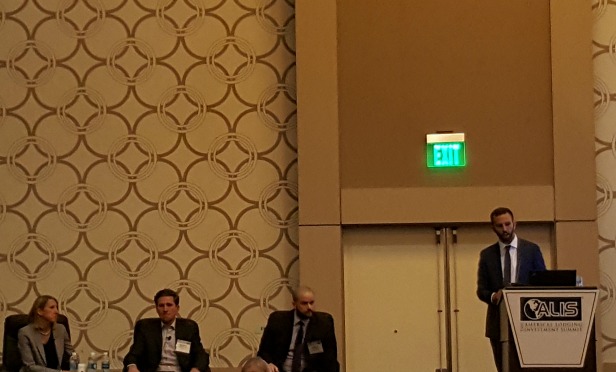
LOS ANGELES—Apartment developers are looking at an Airbnb-style strategy as a way to monetize vacant apartment units during the lease-up and stabilization phase of new developments. At ALIS this week, Jason Fudin, director of strategic projects at Vornado Realty, said that the company is launching Y Hotel to “monetize un-leased apartment rooms during lease up.” Overall, other hoteliers on the panel were not concerned about peer-to-peer stock affecting hotel occupancies.
Vornado Realty has already rolled out the strategy, which they are calling a pop-up hotel, in Washington DC, where the firm is based. The company sees this as an appropriate blending of sectors that marries the inherent parallel between residential and hospitality type properties, especially as apartment buildings include more and more hotel-style amenities. “We are more concerned with what this means across the asset class,” he said at ALIS. “That is interesting.”
and is finding a lot of interest. He says that the rooms compete really well with other properties on peer-to-peer sites because they are brand new and high quality. For that reason, they are able to collect a high nightly rate—although he didn't specify how much they were charging for the rooms.
When asked what type of traveler the hotel is targeting, Fudin said, “It doesn't matter what type of traveler we use because it is found money. It adds an efficiency to the market, and it changes the way that people perceive stay.” Overall, through, he said that they are seeing interest from the same type of traveler as Airbnb, which is a longer-stay and mostly leisure traveler.
Fudin spoke on the Airbnb panel, where his fellow panelists discussed the impact of Airbnb's shadow supply. Most agreed that the impact was minimal.
LOS ANGELES—Apartment developers are looking at an Airbnb-style strategy as a way to monetize vacant apartment units during the lease-up and stabilization phase of new developments. At ALIS this week, Jason Fudin, director of strategic projects at Vornado Realty, said that the company is launching Y Hotel to “monetize un-leased apartment rooms during lease up.” Overall, other hoteliers on the panel were not concerned about peer-to-peer stock affecting hotel occupancies.
Vornado Realty has already rolled out the strategy, which they are calling a pop-up hotel, in Washington DC, where the firm is based. The company sees this as an appropriate blending of sectors that marries the inherent parallel between residential and hospitality type properties, especially as apartment buildings include more and more hotel-style amenities. “We are more concerned with what this means across the asset class,” he said at ALIS. “That is interesting.”
and is finding a lot of interest. He says that the rooms compete really well with other properties on peer-to-peer sites because they are brand new and high quality. For that reason, they are able to collect a high nightly rate—although he didn't specify how much they were charging for the rooms.
When asked what type of traveler the hotel is targeting, Fudin said, “It doesn't matter what type of traveler we use because it is found money. It adds an efficiency to the market, and it changes the way that people perceive stay.” Overall, through, he said that they are seeing interest from the same type of traveler as Airbnb, which is a longer-stay and mostly leisure traveler.
Fudin spoke on the Airbnb panel, where his fellow panelists discussed the impact of Airbnb's shadow supply. Most agreed that the impact was minimal.
© Arc, All Rights Reserved. Request academic re-use from www.copyright.com. All other uses, submit a request to TMSalesOperations@arc-network.com. For more information visit Asset & Logo Licensing.