
LOS ANGELES—The retail market is looking forward to the tax cuts and regulatory cuts proposed by the Trump Administration, which is generally favored by the business community. While there has been some concern about the Administration's onslaught of executive orders in the first months after taking office, the retail market believes the Administration's policies will mean good things for the retail industry, and a benefit to developers, investors and retailers. To find out more about how the retail market is receiving the new administration and if there is any concern or changes in investment strategy as a result, we sat down with Cox, Castle & Nicholson's Gary Glick, Dan Villalpando and Scott Grossfeld for an exclusive interview.
GlobeSt.com: How will policies coming out of the Trump administration affect the retail market?
Gary Glick: The policies being proposed by the Trump Administration are being well received by businesses in general, as well as the retail real estate industry. The possibility of less regulation and tax reductions are viewed very positively by shopping center developers and retailers. If Clinton had become president, the elimination of 1031 exchanges would have been possible along with tax increases and an increase in the capital gains rate. Such policies would have significantly hurt the retail industry. The first jobs report following the Trump inauguration was extremely robust, prompting the Federal Reserve to raise target overnight interest rate by 25 basis points to a range of 0.75% to 1.0%. To the extent that “all boats rise” in a growing economy, more discretionary spending will be available for the purchase of goods and services from retailers, and for consumers to spend more time eating out and viewing movies at theaters. All of this bodes well for shopping centers. A large infrastructure-spending plan by Trump will also create a tremendous number of jobs for middle-class Americans. All signs so far look very good for shopping center developers and retailers.
GlobeSt.com: How have the president's actions and executive orders in the initial weeks of his presidency changed your initial forecast?
Glick: Our forecast specifically made mention of the concern that Trump's erratic behavior could negatively impact the economy. He has not let us down. Despite many proposed policies that will be very good for business, as well as the appointment of all pro-business members to his cabinet, Trump continues to be his own worst enemy. His insistence on building the “wall” is very troubling to many due to the cost and the impact on the deficit. His two immigration orders have been enjoined by the courts. He has falsely accused Obama of wire-tapping his offices in New York. His ties to Russia before his election have proven to be very troubling. In essence, his erratic behavior may prevent him from building the coalitions he needs to promulgate his pro-business agenda; however, despite this behavior, our prediction remains unchanged. We believe his policies will be good for the retail industry and the economy.
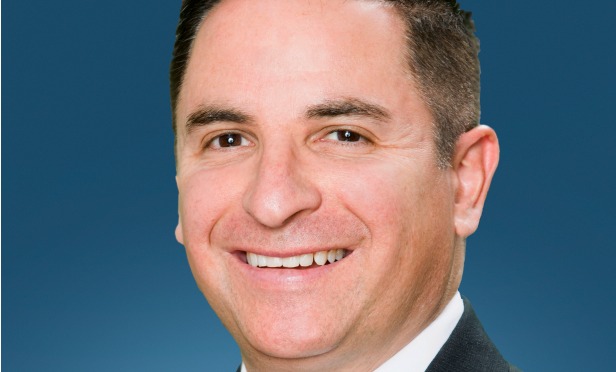
GlobeSt.com: This is an interesting year because it is both the anniversary of the last cycle peak and a new presidential administration. Despite strong fundamentals, should these two corresponding events give investors pause?
Dan Villalpando: The fact that there is a new presidential administration will likely have more of an impact on investor confidence than the fact that it is the anniversary of the last cycle peak. As is the case whenever there is turnover in the White House, investors will take their time to gauge how the new administration is going to deal with commercial markets. Despite the fact that some were disturbed by the results of the election, investor confidence appears to remain at a high level. Many retail developers are looking to invest in finished products, where tenants are in place and are paying rent. For example, grocery-anchored neighborhood centers continue to provide a good return for their owners, with transactions growing in volume since 2009. In those neighborhood centers, one of the larger growth sectors is specialty grocers such as Whole Foods, Trader Joe's and Sprouts, while another is discount grocers like Walmart Neighborhood Market. Those tenants are seen as good credit tenants who would be able to withstand most any downturn if the economy starts to struggle. In short, albeit after only a short period, the fact that President Trump has taken office does not appear to have rattled investors as deals continue to get done.

GlobeSt.com: Many major metropolitan areas and especially Los Angeles have seen a lot of foreign investment. Will the new administration affect this investment? If so, how?
Scott Grossfeld: It is unclear how the policies of the new administration will impact foreign investment in our country and cities; however, in the short term, it appears that foreign money continues to find an interest in U.S. real estate investments, and many commentators believe that this will continue. To the extent the U.S. economy continues to prosper, foreign investors will likely want to come to this country. This involvement can be in various forms: investment through the capital markets, acquisition of real estate, joint ventures and through the establishment or introduction of business enterprises. If the administration places tariffs or taxes in foreign investment, the result may be different.
LOS ANGELES—The retail market is looking forward to the tax cuts and regulatory cuts proposed by the Trump Administration, which is generally favored by the business community. While there has been some concern about the Administration's onslaught of executive orders in the first months after taking office, the retail market believes the Administration's policies will mean good things for the retail industry, and a benefit to developers, investors and retailers. To find out more about how the retail market is receiving the new administration and if there is any concern or changes in investment strategy as a result, we sat down with
GlobeSt.com: How will policies coming out of the Trump administration affect the retail market?
Gary Glick: The policies being proposed by the Trump Administration are being well received by businesses in general, as well as the retail real estate industry. The possibility of less regulation and tax reductions are viewed very positively by shopping center developers and retailers. If Clinton had become president, the elimination of 1031 exchanges would have been possible along with tax increases and an increase in the capital gains rate. Such policies would have significantly hurt the retail industry. The first jobs report following the Trump inauguration was extremely robust, prompting the Federal Reserve to raise target overnight interest rate by 25 basis points to a range of 0.75% to 1.0%. To the extent that “all boats rise” in a growing economy, more discretionary spending will be available for the purchase of goods and services from retailers, and for consumers to spend more time eating out and viewing movies at theaters. All of this bodes well for shopping centers. A large infrastructure-spending plan by Trump will also create a tremendous number of jobs for middle-class Americans. All signs so far look very good for shopping center developers and retailers.
GlobeSt.com: How have the president's actions and executive orders in the initial weeks of his presidency changed your initial forecast?
Glick: Our forecast specifically made mention of the concern that Trump's erratic behavior could negatively impact the economy. He has not let us down. Despite many proposed policies that will be very good for business, as well as the appointment of all pro-business members to his cabinet, Trump continues to be his own worst enemy. His insistence on building the “wall” is very troubling to many due to the cost and the impact on the deficit. His two immigration orders have been enjoined by the courts. He has falsely accused Obama of wire-tapping his offices in
GlobeSt.com: This is an interesting year because it is both the anniversary of the last cycle peak and a new presidential administration. Despite strong fundamentals, should these two corresponding events give investors pause?
Dan Villalpando: The fact that there is a new presidential administration will likely have more of an impact on investor confidence than the fact that it is the anniversary of the last cycle peak. As is the case whenever there is turnover in the White House, investors will take their time to gauge how the new administration is going to deal with commercial markets. Despite the fact that some were disturbed by the results of the election, investor confidence appears to remain at a high level. Many retail developers are looking to invest in finished products, where tenants are in place and are paying rent. For example, grocery-anchored neighborhood centers continue to provide a good return for their owners, with transactions growing in volume since 2009. In those neighborhood centers, one of the larger growth sectors is specialty grocers such as Whole Foods, Trader Joe's and Sprouts, while another is discount grocers like Walmart Neighborhood Market. Those tenants are seen as good credit tenants who would be able to withstand most any downturn if the economy starts to struggle. In short, albeit after only a short period, the fact that President Trump has taken office does not appear to have rattled investors as deals continue to get done.
GlobeSt.com: Many major metropolitan areas and especially Los Angeles have seen a lot of foreign investment. Will the new administration affect this investment? If so, how?
Scott Grossfeld: It is unclear how the policies of the new administration will impact foreign investment in our country and cities; however, in the short term, it appears that foreign money continues to find an interest in U.S. real estate investments, and many commentators believe that this will continue. To the extent the U.S. economy continues to prosper, foreign investors will likely want to come to this country. This involvement can be in various forms: investment through the capital markets, acquisition of real estate, joint ventures and through the establishment or introduction of business enterprises. If the administration places tariffs or taxes in foreign investment, the result may be different.
© Arc, All Rights Reserved. Request academic re-use from www.copyright.com. All other uses, submit a request to TMSalesOperations@arc-network.com. For more information visit Asset & Logo Licensing.