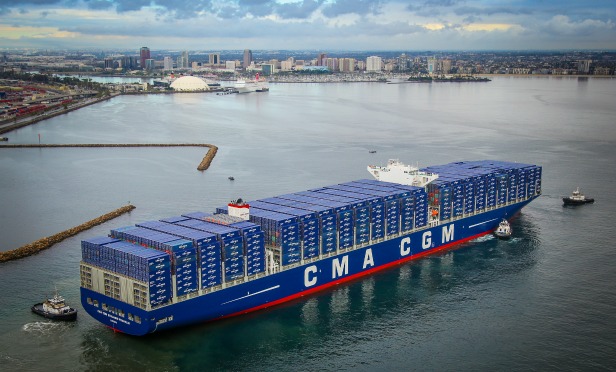
LOS ANGELES—Slow US economic growth negatively impacted cargo numbers in the Asia to US trade last year, according to Mario O. Moreno, senior economist at IHS Maritime and Trade. Last year, the Port of Long Beach and Los Angeles, the two largest receivers in the Asia to US trade, saw anemic cargo growth, driven partially by the Hanjin Bankruptcy. In total, US containerized imports from China increase 1.4% last year.
“That is positive growth, but modest. There are a few factors that explain modest growth,” said Moreno. “Number one: the US economy did not perform as expected. In early 2016, we were expecting economic growth of 2.3%, but at the end of the year, the US economy only expanded 1.6%. Demand for auto parts also weakened last year. Autoparts is very important because it is the second largest import category in the Asia to US trade.”
China is the main driver of growth in the Asia to US trade. “Despite rising production costs, they continued to be the king in the Eastbound transpacific lane,” said Moreno. “China is expected to lead the gains again this year.” For this reason, a China-US trade war could mean big impacts for both countries.
This year, Moreno expects stronger growth in the Asia to US trade route, but like last year, growth will depend on US economic growth. “I am anticipating growth of about 7% for the Asia to US trade for a total TEU count of 16 million,” he said. “This is on the assumption that the US economy will pick up the pace this year and grow 2.3%. Growth in import prices should stay subdued, helped by the strong dollar, and existing home sales, which in my view is a main driver of growth in the Asia to US trade, should post further gains this year.”
LOS ANGELES—Slow US economic growth negatively impacted cargo numbers in the Asia to US trade last year, according to Mario O. Moreno, senior economist at IHS Maritime and Trade. Last year, the Port of Long Beach and Los Angeles, the two largest receivers in the Asia to US trade, saw anemic cargo growth, driven partially by the Hanjin Bankruptcy. In total, US containerized imports from China increase 1.4% last year.
“That is positive growth, but modest. There are a few factors that explain modest growth,” said Moreno. “Number one: the US economy did not perform as expected. In early 2016, we were expecting economic growth of 2.3%, but at the end of the year, the US economy only expanded 1.6%. Demand for auto parts also weakened last year. Autoparts is very important because it is the second largest import category in the Asia to US trade.”
China is the main driver of growth in the Asia to US trade. “Despite rising production costs, they continued to be the king in the Eastbound transpacific lane,” said Moreno. “China is expected to lead the gains again this year.” For this reason, a China-US trade war could mean big impacts for both countries.
This year, Moreno expects stronger growth in the Asia to US trade route, but like last year, growth will depend on US economic growth. “I am anticipating growth of about 7% for the Asia to US trade for a total TEU count of 16 million,” he said. “This is on the assumption that the US economy will pick up the pace this year and grow 2.3%. Growth in import prices should stay subdued, helped by the strong dollar, and existing home sales, which in my view is a main driver of growth in the Asia to US trade, should post further gains this year.”
© Arc, All Rights Reserved. Request academic re-use from www.copyright.com. All other uses, submit a request to TMSalesOperations@arc-network.com. For more information visit Asset & Logo Licensing.