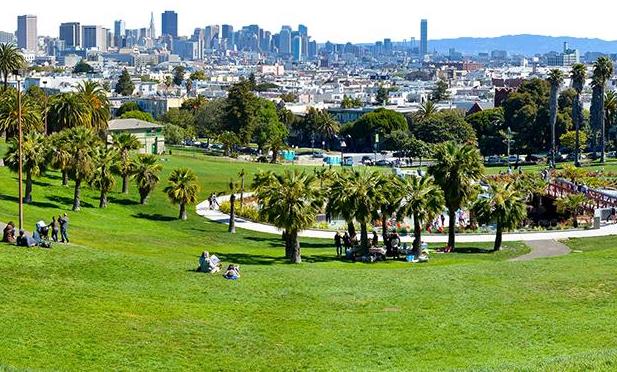
SAN JOSE—Realtor.com placed San Francisco and San Jose in the top 10 as millennial magnet cities. The survey found that 26- to 34-year-olds are interested in short commutes, parks, cultural centers and restaurants, all of which are right in San Jose's wheelhouse.
“There are some very specific things you see millennials looking for in a community right now,” says Jason Dorsey, chief strategy officer for the Center for Generational Kinetics, a marketing firm in Austin, TX. “On the list of must-haves is some really fun stuff to do on a Thursday night. That's because many of these 25- to 34-year-olds are delaying marriage and even a serious career, and want to enjoy the single life.”
The Realtor.com economic data team analyzed the 60 largest US cities and how much millennials were checking out listings in those areas, compared with the national average, from August 2016 to February 2017, GlobeSt.com learns.
San Francisco came in at number nine with an unemployment rate of 3.7%. While the saying used to be “San Francisco is a place where young people come to retire,” it's less true today, given that the cost of living is precipitously high—median rent for a one-bedroom is $3,270 and the median price of a home is $849,000.
Instead, the city is filling up with ambitious young tech folks who aren't retiring anytime soon. The young vibe is found in the offices of Airbnb, Pinterest and lesser-known startups. It's also present at company IPO parties or in meetups in the warehouse-turned-event spaces of the Folsom Street Foundry.
San Jose came in at number 10, also with an unemployment rate of 3.7% and a median home price of $950,000. With this type of median price, a down payment in the San Jose metro market could buy an entire house in much of the United States.
Perhaps the generous paychecks of Valley tech companies provide some justification. Year after year, ambitious young engineers come to work for companies such as Apple, Cisco and Netflix, and claim enviable perks such as taking their pets to work and free chef-prepared lunches. San Jose was recently ranked the happiest city in which work by Forbes and tech entrepreneurs have good prospects here.
“Silicon Valley is the new Wall Street,” says Manu Changotra, realtor with MaxReal. “Young people come here to do cutting-edge work that's not available anywhere in the country.”
The labor pool and growth are indeed draws to San Jose, according to a study by The Brookings Institution. Brookings ranked San Jose the most productive metropolitan area in the nation, with labor productivity growth at 2.7% between 1978 and 2015, GlobeSt.com learns.
The report noted that the city is the ultimate example of cluster effects and as such, has astronomical productivity readings and very high density of critical high-R&D, STEM-intensive advanced industries. The productive industries comprise more than 30% of all employment compared to an average of 9% in the largest 100 metros, the report indicates. During the period between 2004 and 2015, the researchers saw that even the most productive areas of the country couldn't escape the productivity slowdown, unless the area was the site of the energy or tech boom, as is the case for San Jose.
In another study looking at the world's best cities for young people, Nestpick has produced the millennial cities ranking of 100 shortlisted cities and 16 factors. In order for a city to rank highly, it must have a thriving business ecostructure, allow affordable access to the essentials that young people need to survive, have a sense of openness and tolerance that is increasingly prevalent in the 21st century, and lastly, offer social and leisure-time choices.
Overall, San Francisco was ranked number two and Denver was number three by Nestpick. Globally, San Francisco ranked first for startups, second for transportation and third for LGBT friendliness.
A thriving business ecosystem supports a growing millennial community. One of the characteristics of the age group is that it tends to gravitate towards cities with higher start-up funding and the possibility of gainful employment.
The number of millennials who use cars is decreasing, yet they still need to be able to get around a city easily to commute to work and to meet friends at a reasonable cost. The transportation score factored in the length of the metro network, the number of metro stops, the length of the transit network and the number of transit lines per capita. It also considered the availability of UBER and the existence of a bike-sharing system.
Health, affordable housing, food choices, Internet speed ranking, immigration tolerance and night scene ranking were also factors in the list of cities chosen. Interestingly enough, two other indicators were present on the survey: the Apple Store score, calculated based on the number of Apple Stores per capita and the beer score, ranked based upon the affordability of 500ml domestic beer in each city.
SAN JOSE—Realtor.com placed San Francisco and San Jose in the top 10 as millennial magnet cities. The survey found that 26- to 34-year-olds are interested in short commutes, parks, cultural centers and restaurants, all of which are right in San Jose's wheelhouse.
“There are some very specific things you see millennials looking for in a community right now,” says Jason Dorsey, chief strategy officer for the Center for Generational Kinetics, a marketing firm in Austin, TX. “On the list of must-haves is some really fun stuff to do on a Thursday night. That's because many of these 25- to 34-year-olds are delaying marriage and even a serious career, and want to enjoy the single life.”
The Realtor.com economic data team analyzed the 60 largest US cities and how much millennials were checking out listings in those areas, compared with the national average, from August 2016 to February 2017, GlobeSt.com learns.
San Francisco came in at number nine with an unemployment rate of 3.7%. While the saying used to be “San Francisco is a place where young people come to retire,” it's less true today, given that the cost of living is precipitously high—median rent for a one-bedroom is $3,270 and the median price of a home is $849,000.
Instead, the city is filling up with ambitious young tech folks who aren't retiring anytime soon. The young vibe is found in the offices of Airbnb, Pinterest and lesser-known startups. It's also present at company IPO parties or in meetups in the warehouse-turned-event spaces of the Folsom Street Foundry.
San Jose came in at number 10, also with an unemployment rate of 3.7% and a median home price of $950,000. With this type of median price, a down payment in the San Jose metro market could buy an entire house in much of the United States.
Perhaps the generous paychecks of Valley tech companies provide some justification. Year after year, ambitious young engineers come to work for companies such as
“Silicon Valley is the new Wall Street,” says Manu Changotra, realtor with MaxReal. “Young people come here to do cutting-edge work that's not available anywhere in the country.”
The labor pool and growth are indeed draws to San Jose, according to a study by The Brookings Institution. Brookings ranked San Jose the most productive metropolitan area in the nation, with labor productivity growth at 2.7% between 1978 and 2015, GlobeSt.com learns.
The report noted that the city is the ultimate example of cluster effects and as such, has astronomical productivity readings and very high density of critical high-R&D, STEM-intensive advanced industries. The productive industries comprise more than 30% of all employment compared to an average of 9% in the largest 100 metros, the report indicates. During the period between 2004 and 2015, the researchers saw that even the most productive areas of the country couldn't escape the productivity slowdown, unless the area was the site of the energy or tech boom, as is the case for San Jose.
In another study looking at the world's best cities for young people, Nestpick has produced the millennial cities ranking of 100 shortlisted cities and 16 factors. In order for a city to rank highly, it must have a thriving business ecostructure, allow affordable access to the essentials that young people need to survive, have a sense of openness and tolerance that is increasingly prevalent in the 21st century, and lastly, offer social and leisure-time choices.
Overall, San Francisco was ranked number two and Denver was number three by Nestpick. Globally, San Francisco ranked first for startups, second for transportation and third for LGBT friendliness.
A thriving business ecosystem supports a growing millennial community. One of the characteristics of the age group is that it tends to gravitate towards cities with higher start-up funding and the possibility of gainful employment.
The number of millennials who use cars is decreasing, yet they still need to be able to get around a city easily to commute to work and to meet friends at a reasonable cost. The transportation score factored in the length of the metro network, the number of metro stops, the length of the transit network and the number of transit lines per capita. It also considered the availability of UBER and the existence of a bike-sharing system.
Health, affordable housing, food choices, Internet speed ranking, immigration tolerance and night scene ranking were also factors in the list of cities chosen. Interestingly enough, two other indicators were present on the survey: the
© Arc, All Rights Reserved. Request academic re-use from www.copyright.com. All other uses, submit a request to TMSalesOperations@arc-network.com. For more information visit Asset & Logo Licensing.