
IRVINE, CA—From startups to tech booms to creative space up and down the coast, the age of innovation is forcing landlords and developers in markets from Silicon Valley to San Diego to meet the demands of a brave, new world, JLL executives tell GlobeSt.com. We spoke with four JLL executives—Jeff Ingham, senior managing director in Orange County; Blake Searles, EVP in Los Angeles; Damon Melda, SVP in San Diego; and Steffen Kammerer, SVP in Silicon Valley—for their perspectives on how their particular region is embracing and adapting to innovative companies.
GlobeSt.com: How is your market embracing and adapting to innovative companies?
Ingham: We are seeing different cities throughout Orange County propose and implement focus groups, boards and initiatives to encourage technology growth. One example is the Irvine Tech Advisory Council. It would be beneficial if cities spent more time and energy working to attract technology companies that will do more in the future, so the region isn't so reliant on its weather and labor to attract and retain firms.
Melda: The City realizes there is a shortage in local venture-capital funding, and to adapt, they, along with the efforts of San Diego Venture Group—a non-profit business association with a mission to support and promote the venture capital and start-up company eco-system in the San Diego region—have provided a landing pad in the Bay Area. Now San Diego startup founders have a place to post up while they meet with Silicon Valley investors to bring capital to their companies. There has been an overwhelming amount of support from the City and local business because they see the long-term advantage of this.
Searles: Each city within the L.A. Basin is approaching the demands of growing innovative companies a little differently—some with infrastructure upgrades, others with tax credits and many with thoughtful urban planning that promotes live/work/play lifestyle. There have also been a number of professional organizations formed organically to help people collaborate with young professionals, entrepreneurs, local universities and capital sources.
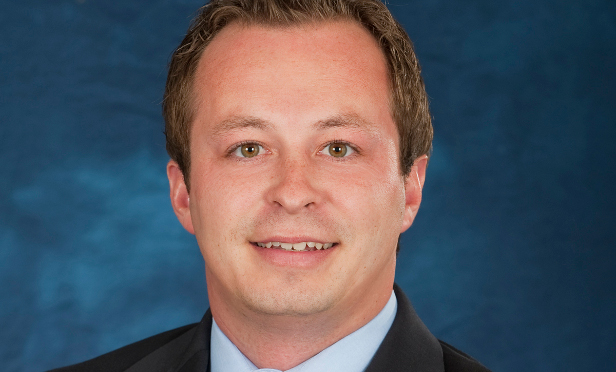
Kammerer: Technology-focused companies tend to target amenity-rich submarkets. Often, the infrastructure in those areas is underdeveloped for the rapidly expanding, high-density tech users, and such cities are having to come up with creative solutions to make up for shortfalls. With downtown markets seeing the bulk of the interest for growing companies, city municipalities are looking to incentivize users to attract potential users outside those tier-one locations. Simple initiatives like bike sharing or public-transit shuttles are often considered, but as cities dive deeper into the complications of bringing high-growth users to more suburban areas, many are being forced to look at accommodating the need for amenities via new development. Cities are pushing the boundaries of what can be built today by promoting green space and retail, given how critical those adjacencies are for technology companies.
GlobeSt.com: How is innovation impacting your region's commercial real estate market?
Ingham: With innovation comes change. Orange County continues to see entrepreneurial and small firms attract venture-capital money, providing resources for expansion and offsetting some of the construction that has occurred from mergers and acquisitions. Technology and changes in the way companies use space are also creating some reductions in the demand for space.
Melda: Groups like DeskHub, WeWork and Downtown Works are expanding into our market to provide the collaborative “hipster”-type space. I think the natural progression when these techies outgrow co-working spaces/incubators is that they will want to piggyback off those amenities. This can be as simple as more collaboration hang-out space or roll-up doors to incorporate outdoor patios. I am seeing more and more landlords trying to adapt to this downtown and in the suburban markets.
Searles: The Los Angeles startup landscape is no longer one-dimensional since there is great diversification across business types that is driving job growth in multiple disciplines. The labor pool is spread out, giving companies the freedom to move or locate across submarkets. Innovative companies are using space at higher densities than ever before, and basic services like parking, retail amenities and traffic are being taxed. Los Angeles is making efforts to connect the city via public transportation and needed now more than ever are transit-oriented developments like those coming to Santa Monica, Culver City and Downtown.
Kammerer: Technological innovation continues to promote growth by way of attracting young talent from across the world. The Millennial generation and its focus on today's technology being fully mobile has changed how the workplace is viewed. Much of the recently completed or under-construction development has been focused around live/work/play, creating a more “at-home” type of campus. This typically includes open areas, an abundance of natural light, informal collaboration areas and, more importantly, nearby retail amenities. As Millennials have changed the nature of the workspace, the demand for high-quality office product near local transit and retail has been a common theme among young tech startups and fast-growing companies. With today's workforce focusing on mobility, having the ability to work from anywhere outside the office has eliminated the need for traditional assigned desks and replaced with flexible collaboration areas. As a result, many companies are densifying on an employee-per square-foot basis, which in turn is creating demand for next-generation office built to accommodate current trends.

GlobeSt.com: What is the future of innovation growth in your city?
Ingham: As the bigger firms are evolving, some executives from those firms are launching new companies, providing demand for co-working space, executive suites and the absorption of traditional office space. This has spawned a new breed of technology firms looking to take advantage of the labor pool, venture capital and an Orange County work/life balance.
Melda: It will only go in one direction: up. I am already seeing the local homegrown companies that I have represented doubling or sometimes tripling in size in a short period of time, along with new talent coming in from all over. San Diego Venture Group also has an initiative to market to Silicon Valley's engineers on why they should move to San Diego for tech jobs by posting a digital billboard on the I-101 Freeway up there.
Searles: The future is bright for innovative companies in Los Angeles. The momentum of successful entrepreneurs has attracted top-quality young talent also as companies growing and evolving there often allow an exit and re-start for entrepreneurs. Jobs is the key driver, and as companies continue to hire, more graduates of local universities will want to stay, in addition to people relocating here. Los Angeles is uniquely cultural, artistic and creative in addition to having a rich and sophisticated labor pool, which makes it a very attractive place to grow a business.
Kammerer: The Valley will continue to be the center of innovation in the tech ecosystem despite heavy competition from up-and-coming tech hubs such as Seattle, Austin, Chicago, Los Angeles and Boston. The region is still home to some of the foremost established companies that continue to push the limits of how far current innovation can go. Additionally, with technology's influence spreading into more traditional sectors (retail, manufacturing, automotive, life science, finance, etc.), the Valley is the perfect testing ground for future ideas, given its access to the venture-capital community, outbound talent from reputable universities, well-established incubator programs and a strong connection to well-established corporate technology companies. As young startups fuel innovation with new ideas, established companies look to invest and nurture them, creating a symbiotic relationship that promotes growth in the tech ecosystem. For example, every major automotive company now has a presence in the Valley in the race for self-driving technology, resulting in growth in tertiary tech sectors that are related to it (LIDAR, advanced sensors, GPS, IoT connectivity) and corporate investments and partnerships (Ford and Uber). As technology grows and branches out, the Valley will continue be the center of it and the driving force behind the next generation of innovation.
IRVINE, CA—From startups to tech booms to creative space up and down the coast, the age of innovation is forcing landlords and developers in markets from Silicon Valley to San Diego to meet the demands of a brave, new world, JLL executives tell GlobeSt.com. We spoke with four JLL executives—Jeff Ingham, senior managing director in Orange County; Blake Searles, EVP in Los Angeles; Damon Melda, SVP in San Diego; and Steffen Kammerer, SVP in Silicon Valley—for their perspectives on how their particular region is embracing and adapting to innovative companies.
GlobeSt.com: How is your market embracing and adapting to innovative companies?
Ingham: We are seeing different cities throughout Orange County propose and implement focus groups, boards and initiatives to encourage technology growth. One example is the Irvine Tech Advisory Council. It would be beneficial if cities spent more time and energy working to attract technology companies that will do more in the future, so the region isn't so reliant on its weather and labor to attract and retain firms.
Melda: The City realizes there is a shortage in local venture-capital funding, and to adapt, they, along with the efforts of San Diego Venture Group—a non-profit business association with a mission to support and promote the venture capital and start-up company eco-system in the San Diego region—have provided a landing pad in the Bay Area. Now San Diego startup founders have a place to post up while they meet with Silicon Valley investors to bring capital to their companies. There has been an overwhelming amount of support from the City and local business because they see the long-term advantage of this.
Searles: Each city within the L.A. Basin is approaching the demands of growing innovative companies a little differently—some with infrastructure upgrades, others with tax credits and many with thoughtful urban planning that promotes live/work/play lifestyle. There have also been a number of professional organizations formed organically to help people collaborate with young professionals, entrepreneurs, local universities and capital sources.
Kammerer: Technology-focused companies tend to target amenity-rich submarkets. Often, the infrastructure in those areas is underdeveloped for the rapidly expanding, high-density tech users, and such cities are having to come up with creative solutions to make up for shortfalls. With downtown markets seeing the bulk of the interest for growing companies, city municipalities are looking to incentivize users to attract potential users outside those tier-one locations. Simple initiatives like bike sharing or public-transit shuttles are often considered, but as cities dive deeper into the complications of bringing high-growth users to more suburban areas, many are being forced to look at accommodating the need for amenities via new development. Cities are pushing the boundaries of what can be built today by promoting green space and retail, given how critical those adjacencies are for technology companies.
GlobeSt.com: How is innovation impacting your region's commercial real estate market?
Ingham: With innovation comes change. Orange County continues to see entrepreneurial and small firms attract venture-capital money, providing resources for expansion and offsetting some of the construction that has occurred from mergers and acquisitions. Technology and changes in the way companies use space are also creating some reductions in the demand for space.
Melda: Groups like DeskHub, WeWork and Downtown Works are expanding into our market to provide the collaborative “hipster”-type space. I think the natural progression when these techies outgrow co-working spaces/incubators is that they will want to piggyback off those amenities. This can be as simple as more collaboration hang-out space or roll-up doors to incorporate outdoor patios. I am seeing more and more landlords trying to adapt to this downtown and in the suburban markets.
Searles: The Los Angeles startup landscape is no longer one-dimensional since there is great diversification across business types that is driving job growth in multiple disciplines. The labor pool is spread out, giving companies the freedom to move or locate across submarkets. Innovative companies are using space at higher densities than ever before, and basic services like parking, retail amenities and traffic are being taxed. Los Angeles is making efforts to connect the city via public transportation and needed now more than ever are transit-oriented developments like those coming to Santa Monica, Culver City and Downtown.
Kammerer: Technological innovation continues to promote growth by way of attracting young talent from across the world. The Millennial generation and its focus on today's technology being fully mobile has changed how the workplace is viewed. Much of the recently completed or under-construction development has been focused around live/work/play, creating a more “at-home” type of campus. This typically includes open areas, an abundance of natural light, informal collaboration areas and, more importantly, nearby retail amenities. As Millennials have changed the nature of the workspace, the demand for high-quality office product near local transit and retail has been a common theme among young tech startups and fast-growing companies. With today's workforce focusing on mobility, having the ability to work from anywhere outside the office has eliminated the need for traditional assigned desks and replaced with flexible collaboration areas. As a result, many companies are densifying on an employee-per square-foot basis, which in turn is creating demand for next-generation office built to accommodate current trends.
GlobeSt.com: What is the future of innovation growth in your city?
Ingham: As the bigger firms are evolving, some executives from those firms are launching new companies, providing demand for co-working space, executive suites and the absorption of traditional office space. This has spawned a new breed of technology firms looking to take advantage of the labor pool, venture capital and an Orange County work/life balance.
Melda: It will only go in one direction: up. I am already seeing the local homegrown companies that I have represented doubling or sometimes tripling in size in a short period of time, along with new talent coming in from all over. San Diego Venture Group also has an initiative to market to Silicon Valley's engineers on why they should move to San Diego for tech jobs by posting a digital billboard on the I-101 Freeway up there.
Searles: The future is bright for innovative companies in Los Angeles. The momentum of successful entrepreneurs has attracted top-quality young talent also as companies growing and evolving there often allow an exit and re-start for entrepreneurs. Jobs is the key driver, and as companies continue to hire, more graduates of local universities will want to stay, in addition to people relocating here. Los Angeles is uniquely cultural, artistic and creative in addition to having a rich and sophisticated labor pool, which makes it a very attractive place to grow a business.
Kammerer: The Valley will continue to be the center of innovation in the tech ecosystem despite heavy competition from up-and-coming tech hubs such as Seattle, Austin, Chicago, Los Angeles and Boston. The region is still home to some of the foremost established companies that continue to push the limits of how far current innovation can go. Additionally, with technology's influence spreading into more traditional sectors (retail, manufacturing, automotive, life science, finance, etc.), the Valley is the perfect testing ground for future ideas, given its access to the venture-capital community, outbound talent from reputable universities, well-established incubator programs and a strong connection to well-established corporate technology companies. As young startups fuel innovation with new ideas, established companies look to invest and nurture them, creating a symbiotic relationship that promotes growth in the tech ecosystem. For example, every major automotive company now has a presence in the Valley in the race for self-driving technology, resulting in growth in tertiary tech sectors that are related to it (LIDAR, advanced sensors, GPS, IoT connectivity) and corporate investments and partnerships (Ford and Uber). As technology grows and branches out, the Valley will continue be the center of it and the driving force behind the next generation of innovation.
© Arc, All Rights Reserved. Request academic re-use from www.copyright.com. All other uses, submit a request to TMSalesOperations@arc-network.com. For more information visit Asset & Logo Licensing.