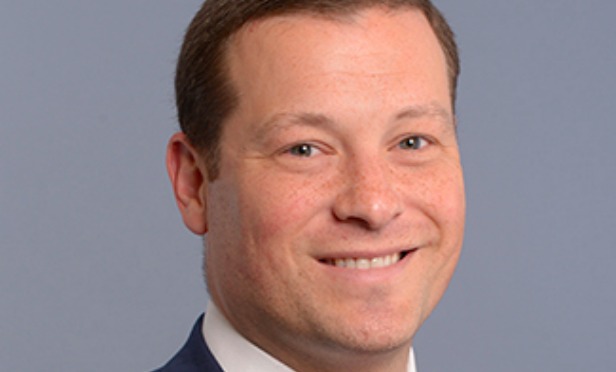
Transaction volume is slowing, compared to the activity we have seen for the last several years. Alex Kozakov, SVP at CBRE and investment brokerage expert, says that deal flow has slowed about 20% compared to the last couple of years, and offers per listing has dropped by half. Today, he sees four to five offers per deal when last year, he saw an average of eight to 10. It isn't all bad news, however. Kozakov says that the slowdown in deal volume is actually healthy for the market, and the activity is still stronger than it was at the prior peak. To find out about the slowdown in transaction volume, what this means for the market and why Kozakov isn't concerned, we sat down with him for an exclusive interview.
GlobeSt.com: Why has deal volume started to slow?
Alex Kozakov: Transaction volume year-over is down around 20% nationally, and in Los Angeles, it is down around 10%. Our team's deal volume is actually up 5% to 10%. As a whole, activity has slowed down for a few reasons. We are probably very late innings of the cycle, and so people are a lot more cautious about how they are underwriting assets. They are being more particular as to what they are going after, and there are a lot more trade buyers. There is also a lot of uncertainty with different tax laws, like the potential elimination of 1031 exchanges. It has been a combination of a number of different things. This is a natural slowdown. You are not always going to have continue to grow velocity wise, and we have had a good and long run. That isn't to say that the run is over, but I think that this is a healthy slowdown from what we have seen over the last couple of years.
GlobeSt.com: You mentioned that deal volume for your team hasn't seen the same decrease as the city or nation. Why is that?
Kozakov: With respect to our activity being a little bit higher, I think a lot of it has to do with our focus in Los Angeles and the urban markets surrounding Los Angeles. That is really where majority of the capital and equity want to be today. They feel that it is the most risk adverse. They feel that it is a combination of that sentiment and the position in the cycle. Our clients want to make sure that they are getting top pricing for their assets.
GlobeSt.com: Deal volume has slowed compared to the last few years. How does deal volume today compare to the prior peak?
Kozakov: You have to remember that deal volume is down but it is still very good. Compared to the last peak of the market, deal volume is still higher. It is just lower than it was for the last couple of years. It may be down 10% to 20%, but we just went through several years of huge activity. This is a healthy slowdown, and it should be expected. This is natural in a market.
GlobeSt.com: Have you shifted your marketing strategy as a result?
Kozakov: There hasn't been a shift in marketing strategy. We continue to market on a local, national and global level, and that hasn't changed. From a marketing standpoint, we always want to make sure we get as much coverage as we can. The difference is that is there is going to be less activity per deal, and that is something that brokers and owners have to be aware of. Everything is deal specific, but for us because we are always trying to stretch value, it takes longer to find the right buyer and line up the right capital. On average, deals are taking longer to sell marketing wise.
GlobeSt.com: How has the decrease in activity affected underwriting?
Kozakov: We have always been diligent about early underwriting, but today we are being even more diligent about completing accurate underwriting early on and really scrubbing operating statements. Buyers are really digging in and doing their homework now on the financials now more so than they were a few years ago when there was such a frenzy to get deals. The reason that we are doing more underwriting and trying to be as accurate as possible is so that once we find buyers, we can avoid renegotiations or buyers pulling our of deals because financials weren't reflected accurately. We are seeing deals that are getting re-traded, re-negotiated and price reductions because they weren't underwritten accurately on the front end.
GlobeSt.com: Is this a product of decreasing deal volume or high pricing?
Kozakov: It is a product of buyers becoming more cautious. It is late in the cycle and they want to make sure the assets are underwritten correctly because the margin for error is so much slimmer today than just a few years ago.
GlobeSt.com: What is your outlook for the remainder of the year?
Kozakov: Looking at last year, with deal volume picking up in the second half of the year, I do think that we will have an increase in deal volume, and I think the summer has been a little bit better than last summer. I think that we have a longer runway than was anticipated a year or two ago. Fundamentals are still really healthy and investor sentiment is pretty bullish on more real estate. Aside from a major geopolitical event, the rest of the indicators look pretty good.
Transaction volume is slowing, compared to the activity we have seen for the last several years. Alex Kozakov, SVP at CBRE and investment brokerage expert, says that deal flow has slowed about 20% compared to the last couple of years, and offers per listing has dropped by half. Today, he sees four to five offers per deal when last year, he saw an average of eight to 10. It isn't all bad news, however. Kozakov says that the slowdown in deal volume is actually healthy for the market, and the activity is still stronger than it was at the prior peak. To find out about the slowdown in transaction volume, what this means for the market and why Kozakov isn't concerned, we sat down with him for an exclusive interview.
GlobeSt.com: Why has deal volume started to slow?
Alex Kozakov: Transaction volume year-over is down around 20% nationally, and in Los Angeles, it is down around 10%. Our team's deal volume is actually up 5% to 10%. As a whole, activity has slowed down for a few reasons. We are probably very late innings of the cycle, and so people are a lot more cautious about how they are underwriting assets. They are being more particular as to what they are going after, and there are a lot more trade buyers. There is also a lot of uncertainty with different tax laws, like the potential elimination of 1031 exchanges. It has been a combination of a number of different things. This is a natural slowdown. You are not always going to have continue to grow velocity wise, and we have had a good and long run. That isn't to say that the run is over, but I think that this is a healthy slowdown from what we have seen over the last couple of years.
GlobeSt.com: You mentioned that deal volume for your team hasn't seen the same decrease as the city or nation. Why is that?
Kozakov: With respect to our activity being a little bit higher, I think a lot of it has to do with our focus in Los Angeles and the urban markets surrounding Los Angeles. That is really where majority of the capital and equity want to be today. They feel that it is the most risk adverse. They feel that it is a combination of that sentiment and the position in the cycle. Our clients want to make sure that they are getting top pricing for their assets.
GlobeSt.com: Deal volume has slowed compared to the last few years. How does deal volume today compare to the prior peak?
Kozakov: You have to remember that deal volume is down but it is still very good. Compared to the last peak of the market, deal volume is still higher. It is just lower than it was for the last couple of years. It may be down 10% to 20%, but we just went through several years of huge activity. This is a healthy slowdown, and it should be expected. This is natural in a market.
GlobeSt.com: Have you shifted your marketing strategy as a result?
Kozakov: There hasn't been a shift in marketing strategy. We continue to market on a local, national and global level, and that hasn't changed. From a marketing standpoint, we always want to make sure we get as much coverage as we can. The difference is that is there is going to be less activity per deal, and that is something that brokers and owners have to be aware of. Everything is deal specific, but for us because we are always trying to stretch value, it takes longer to find the right buyer and line up the right capital. On average, deals are taking longer to sell marketing wise.
GlobeSt.com: How has the decrease in activity affected underwriting?
Kozakov: We have always been diligent about early underwriting, but today we are being even more diligent about completing accurate underwriting early on and really scrubbing operating statements. Buyers are really digging in and doing their homework now on the financials now more so than they were a few years ago when there was such a frenzy to get deals. The reason that we are doing more underwriting and trying to be as accurate as possible is so that once we find buyers, we can avoid renegotiations or buyers pulling our of deals because financials weren't reflected accurately. We are seeing deals that are getting re-traded, re-negotiated and price reductions because they weren't underwritten accurately on the front end.
GlobeSt.com: Is this a product of decreasing deal volume or high pricing?
Kozakov: It is a product of buyers becoming more cautious. It is late in the cycle and they want to make sure the assets are underwritten correctly because the margin for error is so much slimmer today than just a few years ago.
GlobeSt.com: What is your outlook for the remainder of the year?
Kozakov: Looking at last year, with deal volume picking up in the second half of the year, I do think that we will have an increase in deal volume, and I think the summer has been a little bit better than last summer. I think that we have a longer runway than was anticipated a year or two ago. Fundamentals are still really healthy and investor sentiment is pretty bullish on more real estate. Aside from a major geopolitical event, the rest of the indicators look pretty good.
© Arc, All Rights Reserved. Request academic re-use from www.copyright.com. All other uses, submit a request to TMSalesOperations@arc-network.com. For more information visit Asset & Logo Licensing.