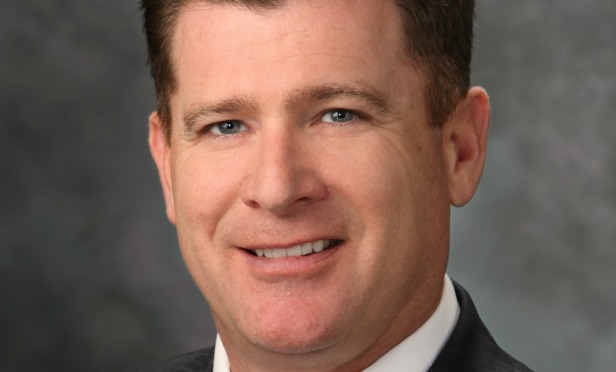
Foreign investment isn't slowing down in Los Angeles. Last year, Asian capital—mainly from Korea and China—dominated foreign investment in Los Angeles, and while Asian investors are still active, new players from Germany and Canada are increasing activity in the market. An Asian investor recently bought a development site at 1135 W. 7th Street in Downtown Los Angeles that is entitled for a 24-story, 241-unit condominium project, plus retail. The property traded hands for $795 per square foot or a total of $26.5 million. CBRE's Phillip Sample, along with Michael Shustak, Chris Caras and Brandon Bank, represented the seller in the deal, and marketed the property internationally. We sat down with Sample for an exclusive interview to talk about the foreign buyer pool and what demand is like today.
GlobeSt.com: We have seen a lot of foreign investment in Los Angeles in the last few years. Has demand from foreign investors continued to grow?
Phillip Sample: Foreign buyers continue to actively invest in Los Angeles real estate. According to our CBRE research, overseas buyers in this region represented 14.6% of total acquisitions in 2016, while nationally that figure remained at around 13%. This overall trend has continued this year, and I don't foresee a dramatic change. LA is a safe core metro area that still offers some great value opportunities as opposed to some of the other major markets in the U.S. and globally.
GlobeSt.com: Where is the majority of foreign capital coming from, and what is driving it here? Are there new foreign players this year?
Sample: A few years ago the focus would have mainly been from Asia, particularly Korea and China. However, in the more recent past we have been getting much more attention from such countries as Canada and Germany as well. The motivation across the board is the same: to invest money in good product at a reasonable price to provide for safe and attractive returns.
GlobeSt.com: What types of properties are in the highest demand among foreign investors?
Sample: In the past, foreign money has preferred mixed-use properties. Generally speaking, the Asian buyer pool has tended to prefer condo projects to then sell back in their countries. However, in this cycle we are seeing much more diversified demand with interest across all product types. Today investors are much more focused on being in stable and safe core markets than on any one particular product category.
GlobeSt.com: What is your outlook for foreign investment for the next year?
Sample: Compared to other national markets such as Manhattan, Chicago, San Francisco and Seattle and local markets like Culver City, Santa Monica and Beverly Hills, pricing in Downtown Los Angeles is still an incredible steal. We believe Downtown is still substantially undervalued as compared with competing national and local markets while offering many more amenities. We don't foresee a slowdown from foreign investment, unless there is a fundamental change in the market cycle.
Foreign investment isn't slowing down in Los Angeles. Last year, Asian capital—mainly from Korea and China—dominated foreign investment in Los Angeles, and while Asian investors are still active, new players from Germany and Canada are increasing activity in the market. An Asian investor recently bought a development site at 1135 W. 7th Street in Downtown Los Angeles that is entitled for a 24-story, 241-unit condominium project, plus retail. The property traded hands for $795 per square foot or a total of $26.5 million. CBRE's Phillip Sample, along with Michael Shustak, Chris Caras and Brandon Bank, represented the seller in the deal, and marketed the property internationally. We sat down with Sample for an exclusive interview to talk about the foreign buyer pool and what demand is like today.
GlobeSt.com: We have seen a lot of foreign investment in Los Angeles in the last few years. Has demand from foreign investors continued to grow?
Phillip Sample: Foreign buyers continue to actively invest in Los Angeles real estate. According to our CBRE research, overseas buyers in this region represented 14.6% of total acquisitions in 2016, while nationally that figure remained at around 13%. This overall trend has continued this year, and I don't foresee a dramatic change. LA is a safe core metro area that still offers some great value opportunities as opposed to some of the other major markets in the U.S. and globally.
GlobeSt.com: Where is the majority of foreign capital coming from, and what is driving it here? Are there new foreign players this year?
Sample: A few years ago the focus would have mainly been from Asia, particularly Korea and China. However, in the more recent past we have been getting much more attention from such countries as Canada and Germany as well. The motivation across the board is the same: to invest money in good product at a reasonable price to provide for safe and attractive returns.
GlobeSt.com: What types of properties are in the highest demand among foreign investors?
Sample: In the past, foreign money has preferred mixed-use properties. Generally speaking, the Asian buyer pool has tended to prefer condo projects to then sell back in their countries. However, in this cycle we are seeing much more diversified demand with interest across all product types. Today investors are much more focused on being in stable and safe core markets than on any one particular product category.
GlobeSt.com: What is your outlook for foreign investment for the next year?
Sample: Compared to other national markets such as Manhattan, Chicago, San Francisco and Seattle and local markets like Culver City, Santa Monica and Beverly Hills, pricing in Downtown Los Angeles is still an incredible steal. We believe Downtown is still substantially undervalued as compared with competing national and local markets while offering many more amenities. We don't foresee a slowdown from foreign investment, unless there is a fundamental change in the market cycle.
© Arc, All Rights Reserved. Request academic re-use from www.copyright.com. All other uses, submit a request to TMSalesOperations@arc-network.com. For more information visit Asset & Logo Licensing.