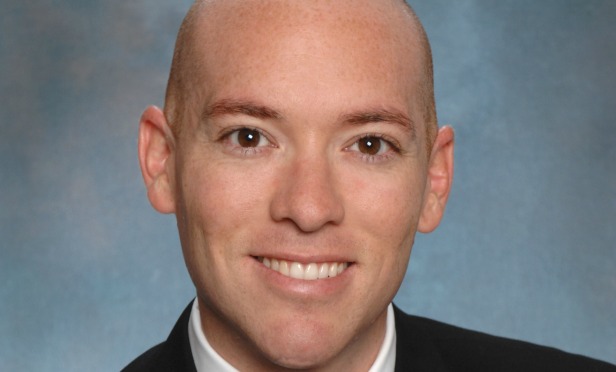
The most commonly asked question in commercial real estate these days is undoubtedly some variation of “When will the cycle end?” For Los Angeles industrial investors, the answer may be irrelevant. With two major ports fueling tremendous demand in the Los Angeles market—causing a sub 1% vacancy in some areas and soaring high rents and pricing—industrial investors feel sheltered from a potential correction, according to Brandon Carrillo, a principal at Lee & Associates.
“This is one of the most resilient industrial markets in the world,” Carrillo tells GlobeSt.com. “We have strong demand, high density of people, a large differential of businesses that operate here and we have two of the best performing ports in the world in our backyard. Those qualities really shelter us from severe corrections in the marketplace.”
Using the 2008 downturn—the worst in recent history—as a guide, he says that the market wasn't as strongly impacted as other asset classes or geographies. This is especially true for class-A industrial product. “The 2008 credit crisis is really a sign of that,” says Carrillo. “When we started to look at lease rates and sale prices, class B and class C product was really hit the worst. Generally speaking, we saw a 20% drop off in pricing for those product classes. Class-A, on the other hand, was relatively sheltered. It had a drop off in price, but it wasn't as significant as B and C product. I always use that as our worse case scenario. When I talk to clients, I often use that as an example to show that even at the worst we have ever seen, this was the drop off in pricing.”
While industrial is sheltered from the depths of an economic correction, that doesn't necessarily mean that one is looming. Carrillo actually expects the make to hold strong through 2018; however, the new administration has created some uncertainty. “We are hoping that we would make it to the end of 2018 before we see a correction,” explains Carrillo. “Some of the rhetoric coming from the Trump presidency may change that. Hopefully something that he says or does could create a catalyst where there is a downward spiral for companies or a correction globally.”
While industrial investors aren't as concerned about economic cycles, there are still challenges in the market. Local government changes could have an affect on the port activity and surrounding businesses. “The truck drivers trying to unionize and the legislative decisions coming down from California have a lot of business owners in flux,” explains Carrillo. “It is favoring larger operations, and these decisions are going to force out smaller operators.”
The most commonly asked question in commercial real estate these days is undoubtedly some variation of “When will the cycle end?” For Los Angeles industrial investors, the answer may be irrelevant. With two major ports fueling tremendous demand in the Los Angeles market—causing a sub 1% vacancy in some areas and soaring high rents and pricing—industrial investors feel sheltered from a potential correction, according to Brandon Carrillo, a principal at Lee & Associates.
“This is one of the most resilient industrial markets in the world,” Carrillo tells GlobeSt.com. “We have strong demand, high density of people, a large differential of businesses that operate here and we have two of the best performing ports in the world in our backyard. Those qualities really shelter us from severe corrections in the marketplace.”
Using the 2008 downturn—the worst in recent history—as a guide, he says that the market wasn't as strongly impacted as other asset classes or geographies. This is especially true for class-A industrial product. “The 2008 credit crisis is really a sign of that,” says Carrillo. “When we started to look at lease rates and sale prices, class B and class C product was really hit the worst. Generally speaking, we saw a 20% drop off in pricing for those product classes. Class-A, on the other hand, was relatively sheltered. It had a drop off in price, but it wasn't as significant as B and C product. I always use that as our worse case scenario. When I talk to clients, I often use that as an example to show that even at the worst we have ever seen, this was the drop off in pricing.”
While industrial is sheltered from the depths of an economic correction, that doesn't necessarily mean that one is looming. Carrillo actually expects the make to hold strong through 2018; however, the new administration has created some uncertainty. “We are hoping that we would make it to the end of 2018 before we see a correction,” explains Carrillo. “Some of the rhetoric coming from the Trump presidency may change that. Hopefully something that he says or does could create a catalyst where there is a downward spiral for companies or a correction globally.”
While industrial investors aren't as concerned about economic cycles, there are still challenges in the market. Local government changes could have an affect on the port activity and surrounding businesses. “The truck drivers trying to unionize and the legislative decisions coming down from California have a lot of business owners in flux,” explains Carrillo. “It is favoring larger operations, and these decisions are going to force out smaller operators.”
© Arc, All Rights Reserved. Request academic re-use from www.copyright.com. All other uses, submit a request to TMSalesOperations@arc-network.com. For more information visit Asset & Logo Licensing.