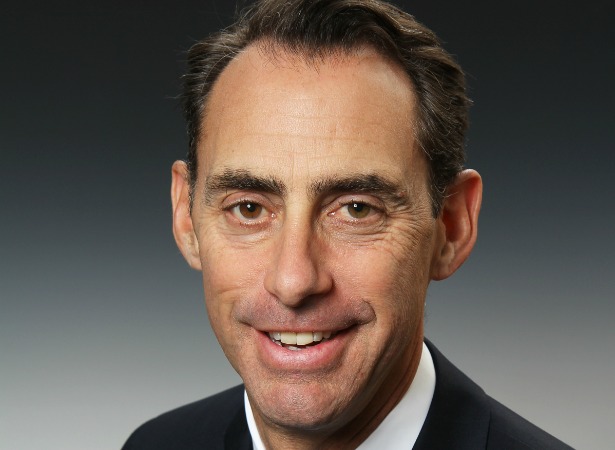
The national office market is flat. According to the 2Q17 report from Lee & Associates, the national office market has remained flat for the last three quarters. The vacancy rate is only 10 basis points lower that is was the same time last year, at 9.6%, and the vacancy rate for class-A space has increased 30 basis points. Major markets are driving the rise in vacancy. New York, Los Angeles and San Francisco has posted negative absorptions rates through the midyear. Putting further pressure on the market, the sublease inventory is also increasing nationally. To find out more about the office market, why growth has stagnated and where things are heading, we sat down with Lee & Associates CEO Jeff Rinkov for an exclusive interview.
GlobeSt.com: Why do you think that office has entered this flat period for the last several quarters?
Jeff Rinkov: If you take a look at the gross numbers, we are at an all-time low in unemployment. I think it is symptomatic of where we see employment going in general, and how we see the value of telecommuting and home office. Our economy continues to be consumer and service driven, and people are working on the road. That is the overarching theme. In general, the office market is getting by. It is doing just enough on the value-creation side and just enough on the construction side to look healthy, but it isn't really that exciting. However, values remain strong, especially in large markets. In markets like Seattle, however, Amazon is building enough office product to house 40,000 employees that they plan of adding over the next three-to-five years.
GlobeSt.com: Nationally, the market is flat, but some major markets, like New York, Los Angeles and San Francisco, have seen negative absorption. What does it say about the national market that these major cities and job centers are struggling?
Rinkov: I think some of that is related to the amount of construction that has gone on, and the timetable that is needed to gain absorption there. You are looking at a period of time where we are seven years into a growth cycle. We are starting to deliver a high volume of office space, and we are seeing some large transactions that are starting to show that in the next 12 to 18 months. We see that absorption is turning around. Some markets are going to show some exciting growth, and I think that we will find that rates will even be higher than they have historically been for class-A space for new construction.
GlobeSt.com: The sublease market is also increasing. Is there concern that the sublease market could put more downward pressure on rent?
Rinkov: The availability of sublease space causes an erosion in top-tier rates Sublease space in B and C quality space is not really having that effect. We are not really seeing the volume of class-A space become eroded by the sublease market. I think it is a risk, but I also think that sublease space is going to be absorbed by start-up businesses. When you are transitioning out of some home office space, a sublease is a great way to narrow your commitment, and you might be able to take on a lower market rate.
GlobeSt.com: The flexible leasing market has also gained popularity. Is this market contributing to the negative impact in the office market?
Rinkov: From a brokerage standpoint, we look at all of the flexible leasing type of spaces as twofold. On the agency side, we look at them as being great potential for a direct lease opportunities in the future. We also see that as a great feeding ground of people that are graduating from that kind of space into a more traditional space. We think that those are great opportunities for building owners. We are seeing strong demand for this space come from media firms, small service firms and technology firms.
GlobeSt.com: What is your outlook for the remainder of the year?
Rinkov: The office market is healthy enough that people won't think the growth is anemic. It is strong enough to escape some of those monikers. The second half of the year will be more of the same, unless there is some other economic driver.
The national office market is flat. According to the 2Q17 report from Lee & Associates, the national office market has remained flat for the last three quarters. The vacancy rate is only 10 basis points lower that is was the same time last year, at 9.6%, and the vacancy rate for class-A space has increased 30 basis points. Major markets are driving the rise in vacancy.
GlobeSt.com: Why do you think that office has entered this flat period for the last several quarters?
Jeff Rinkov: If you take a look at the gross numbers, we are at an all-time low in unemployment. I think it is symptomatic of where we see employment going in general, and how we see the value of telecommuting and home office. Our economy continues to be consumer and service driven, and people are working on the road. That is the overarching theme. In general, the office market is getting by. It is doing just enough on the value-creation side and just enough on the construction side to look healthy, but it isn't really that exciting. However, values remain strong, especially in large markets. In markets like Seattle, however, Amazon is building enough office product to house 40,000 employees that they plan of adding over the next three-to-five years.
GlobeSt.com: Nationally, the market is flat, but some major markets, like
Rinkov: I think some of that is related to the amount of construction that has gone on, and the timetable that is needed to gain absorption there. You are looking at a period of time where we are seven years into a growth cycle. We are starting to deliver a high volume of office space, and we are seeing some large transactions that are starting to show that in the next 12 to 18 months. We see that absorption is turning around. Some markets are going to show some exciting growth, and I think that we will find that rates will even be higher than they have historically been for class-A space for new construction.
GlobeSt.com: The sublease market is also increasing. Is there concern that the sublease market could put more downward pressure on rent?
Rinkov: The availability of sublease space causes an erosion in top-tier rates Sublease space in B and C quality space is not really having that effect. We are not really seeing the volume of class-A space become eroded by the sublease market. I think it is a risk, but I also think that sublease space is going to be absorbed by start-up businesses. When you are transitioning out of some home office space, a sublease is a great way to narrow your commitment, and you might be able to take on a lower market rate.
GlobeSt.com: The flexible leasing market has also gained popularity. Is this market contributing to the negative impact in the office market?
Rinkov: From a brokerage standpoint, we look at all of the flexible leasing type of spaces as twofold. On the agency side, we look at them as being great potential for a direct lease opportunities in the future. We also see that as a great feeding ground of people that are graduating from that kind of space into a more traditional space. We think that those are great opportunities for building owners. We are seeing strong demand for this space come from media firms, small service firms and technology firms.
GlobeSt.com: What is your outlook for the remainder of the year?
Rinkov: The office market is healthy enough that people won't think the growth is anemic. It is strong enough to escape some of those monikers. The second half of the year will be more of the same, unless there is some other economic driver.
© Arc, All Rights Reserved. Request academic re-use from www.copyright.com. All other uses, submit a request to TMSalesOperations@arc-network.com. For more information visit Asset & Logo Licensing.