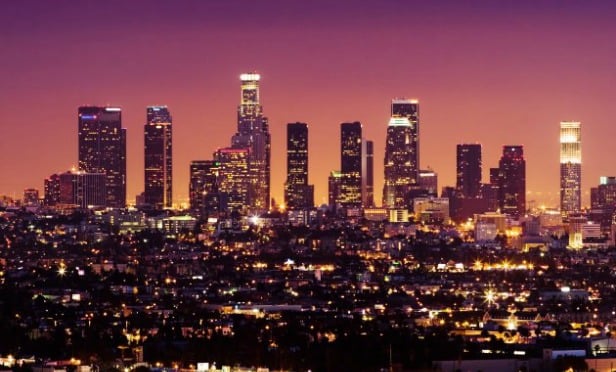
Hollywood and Downtown L.A. are two houses, both alike in dignity, in fair Los Angeles, where we lay our scene—but are they really enemies, competing for investor and developer attention? The two submarkets are nearly neighbors and both are going through a significant renaissance, with substantial redevelopment—here, we'll give Downtown Los Angeles the win—and a dramatic resurgence of retail and office tenants—here, we'll give it to Hollywood. We hear a lot about why Downtown L.A. makes sense for investors and developers, so we asked one developer why Hollywood was the more attractive option. For him, it came down to accessibility and culture.
“For us, it makes more sense from and urban and pedestrian landscape,” Ron Barnes, a principal at Vine Street Advisors, tells GlobeSt.com. “Downtown Los Angeles has larger, longer blocks and they aren't has full with amenities. In Hollywood, there are gems in every corner of Hollywood. There are little hole-in-the-wall places alongside major players, and there is a great mix of institutional a well as entrepreneurial investment in the soft programming. It is all in a comprehensive package with things to do every 20 feet. In Downtown Los Angeles, once you at one place, you have to really walk a good distance to get to your next destination.”
While Hollywood has more density, it also makes it a more difficult place to develop. Barnes got involved in the W Hollywood residences, a 133-unit project, before the crash and is delivering them now. While there is certainly a dearth of residential supply in the market, he says that regulations and limited land make it a difficult place to develop, unlike Downtown Los Angeles. “Downtown Los Angeles has larger city blocks, so it is easier to take down a large parcel and build up,” he adds.
Like Downtown Los Angeles, transit and walkability are key to the market's success. Barnes believes that the Hollywood metro station catalyzed the development activity. “It started with the Hollywood metro station before the crash. The pieces of land were really primed for development and redevelopment, and the station was a big component,” he explains. “It really increased the accessibility to the area. Then the crash came and it has taken time to rebuild. At the crash, there was Katsuya, Redbury and W Hollywood. Those were the powerhouses of place, and they really hung in there.”
Although the development activity in Los Angeles has been centered in Los Angeles, tenant migration to the Hollywood market has been robust, and the more top-tier tenants, like Netflix and Viacom, that move to the market, the more investors pay attention. “Hollywood has also become a creative center, and it has really grown organically in that way,” says Barnes. “You have Netflix coming in and really validating the institutional creativity, but the phenomena of Hollywood has always been there.”
Hollywood and Downtown L.A. are two houses, both alike in dignity, in fair Los Angeles, where we lay our scene—but are they really enemies, competing for investor and developer attention? The two submarkets are nearly neighbors and both are going through a significant renaissance, with substantial redevelopment—here, we'll give Downtown Los Angeles the win—and a dramatic resurgence of retail and office tenants—here, we'll give it to Hollywood. We hear a lot about why Downtown L.A. makes sense for investors and developers, so we asked one developer why Hollywood was the more attractive option. For him, it came down to accessibility and culture.
“For us, it makes more sense from and urban and pedestrian landscape,” Ron Barnes, a principal at Vine Street Advisors, tells GlobeSt.com. “Downtown Los Angeles has larger, longer blocks and they aren't has full with amenities. In Hollywood, there are gems in every corner of Hollywood. There are little hole-in-the-wall places alongside major players, and there is a great mix of institutional a well as entrepreneurial investment in the soft programming. It is all in a comprehensive package with things to do every 20 feet. In Downtown Los Angeles, once you at one place, you have to really walk a good distance to get to your next destination.”
While Hollywood has more density, it also makes it a more difficult place to develop. Barnes got involved in the W Hollywood residences, a 133-unit project, before the crash and is delivering them now. While there is certainly a dearth of residential supply in the market, he says that regulations and limited land make it a difficult place to develop, unlike Downtown Los Angeles. “Downtown Los Angeles has larger city blocks, so it is easier to take down a large parcel and build up,” he adds.
Like Downtown Los Angeles, transit and walkability are key to the market's success. Barnes believes that the Hollywood metro station catalyzed the development activity. “It started with the Hollywood metro station before the crash. The pieces of land were really primed for development and redevelopment, and the station was a big component,” he explains. “It really increased the accessibility to the area. Then the crash came and it has taken time to rebuild. At the crash, there was Katsuya, Redbury and W Hollywood. Those were the powerhouses of place, and they really hung in there.”
Although the development activity in Los Angeles has been centered in Los Angeles, tenant migration to the Hollywood market has been robust, and the more top-tier tenants, like Netflix and Viacom, that move to the market, the more investors pay attention. “Hollywood has also become a creative center, and it has really grown organically in that way,” says Barnes. “You have Netflix coming in and really validating the institutional creativity, but the phenomena of Hollywood has always been there.”
© Arc, All Rights Reserved. Request academic re-use from www.copyright.com. All other uses, submit a request to TMSalesOperations@arc-network.com. For more information visit Asset & Logo Licensing.