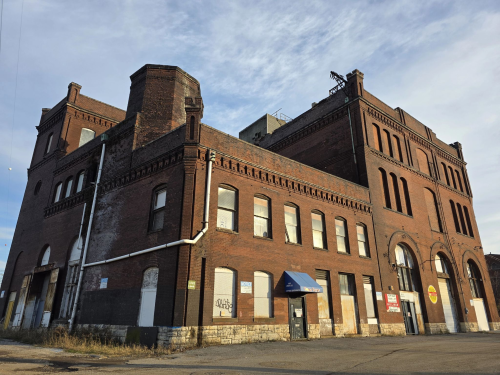
When I first learned about the North Riverfront Industrial Portfolio in St. Louis, the vision was clear: transform a collection of long-abandoned industrial buildings into a vibrant, mixed-use destination along the Mississippi River.
Unlike many redevelopment opportunities in historic industrial corridors, however, the[SF1] real question was not what the buildings could become. It was whether the risks behind redevelopments could be understood, managed and financed.
Historic Tax Credits Can Help Bridge the Feasibility Gap
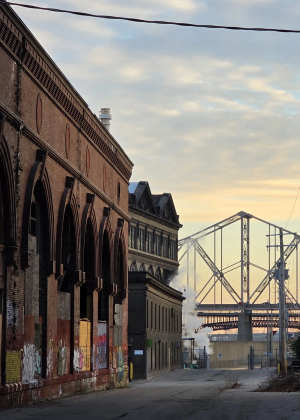
Across seven early 20th-century properties, originally constructed between 1900 and 1909, the development team identified potential for residential, commercial and creative space. Many of the buildings are eligible for federal and state historic tax credits, offering a meaningful incentive to support redevelopment. In some cases, those credits can offset up to 45% of qualifying rehabilitation costs, helping close the funding gap.
This type of adaptive reuse is part of a longstanding trend playing out across the country as developers revisit previously overlooked industrial corridors and reposition them for modern uses. While the upside can be compelling, however, the path forward is rarely straightforward.
In St. Louis, the challenges were immediately apparent.
Deferred Maintenance and Environmental Risks Complicated Redevelopment
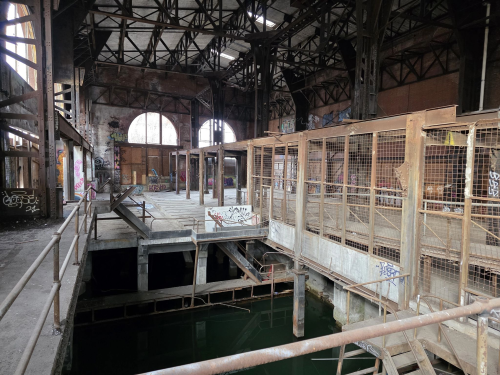
Many of the buildings were vacant for decades. Some were condemned, partially exposed to the elements or intermittently occupied. Roof systems had failed. Windows and downspouts had been removed. Rainwater had been cascading down masonry walls for years, accelerating freeze-thaw damage and structural deterioration. In one building alone, more than a million gallons of groundwater had accumulated in the basement.
Environmental risks added another layer of complexity. Historical records pointed to prior uses ranging from power generation and cold storage to coatings manufacturing and industrial fabrication. One site had previously undergone an EPA-supervised cleanup tied to paint and coatings operations. Another former power station presented PCB-related concerns associated with historic transformer equipment and prolonged water intrusion.
At that stage, the challenge was not simply identifying issues. It included helping the development team understand what those risks meant in real terms: scope, cost, timing and potential impact on the deal.
Translating Complex Risks into Actionable Insights
That is where my team and I focused our efforts.
We were brought in through Partner's Historic Architecture Solutions practice to evaluate the full range of physical risks across the portfolio, from structural integrity and building systems to environmental conditions, zoning constraints and entitlement considerations. More importantly, we worked to translate those findings into actionable insights that could support acquisition and redevelopment decisions.
In evaluating structural conditions, for example, we performed visual assessments and developed order-of-magnitude repair cost opinions to help the team understand where major capital investments would be required. On the environmental side, we moved beyond baseline assessments to help frame remediation pathways and associated costs, especially in areas impacted by historical industrial use and groundwater intrusion.
That process helped take what initially felt like unknowns and turn those into defined variables the development and investor teams could underwrite.
Why Underwriting Confidence Is Critical in Adaptive Reuse
For investors, that distinction is critical. Adaptive reuse projects depend on confidence, not only in the vision but also in the numbers behind it. Understanding how structural repairs, environmental remediation, deferred maintenance and code compliance will affect costs and timelines often determines whether a project can secure capital.
Historic buildings introduce their own set of complexities.
Many of these structures were designed for manufacturing and storage, not modern occupancy. Floor loading, vertical circulation, accessibility, life-safety systems and mechanical infrastructure frequently require substantial upgrades.
Historic Industrial Assets Still Offer Long-Term Value
At the same time, these assets retain characteristics that are difficult to replicate. Durable masonry construction, expansive floor plates, tall ceiling heights and prominent locations are difficult to reproduce in new development. In St. Louis, several buildings retained strong underlying structural systems despite decades of neglect, reinforcing the viability of redevelopment when paired with the right capital strategy.
As the analysis came together, the combination of quantified risk, defined scope and availability of historic tax credits allowed the development team to move forward with greater clarity and confidence.
Today, the project is advancing toward redevelopment, backed by a clearer understanding of the physical and financial realities of the portfolio. While projects like this are complex, they also demonstrate what becomes possible when risk is properly evaluated and aligned with opportunity.
Historic Redevelopment Continues to Present Opportunity
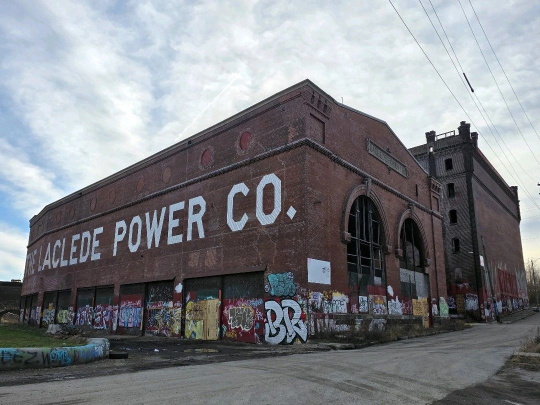
In cities across the country, historic industrial assets continue to present challenges and untapped potential. For developers willing to navigate the complexity – and for advisors equipped to translate that complexity into actionable insight – these properties can become catalysts for long-term urban reinvestment.
© Arc, All Rights Reserved. Request academic re-use from www.copyright.com. All other uses, submit a request to TMSalesOperations@arc-network.com. For more information visit Asset & Logo Licensing.