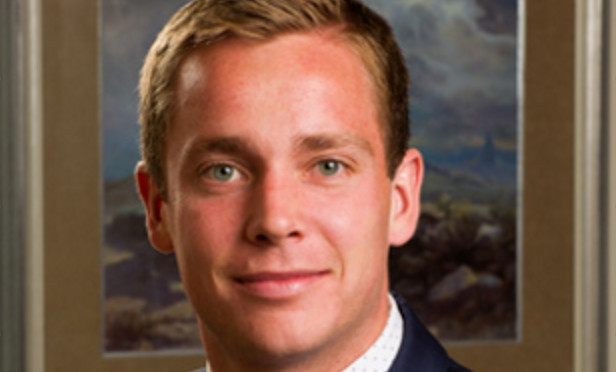
SAN DIEGO—Physicians partnering with real estate firms for value-add transactions in medical-office buildings creates a mutually beneficial relationship in the Affordable Care Act era, Pacific Southwest Realty Services' commercial real estate finance expert David Hamilton tells GlobeSt.com. The Southern California-based commercial-mortgage banking firm recently arranged a $24.5-million loan on behalf of owner/borrower Medicus Property Group secured by three Southern California medical-office buildings. The funds are for the refinance of the owner's existing San Diego and Encinitas properties as well as the acquisition of the Jefferson Medical Center located in Temecula, CA.
The borrowers include two doctors and a real estate finance professional. We spoke exclusively with Hamilton about the trend of physicians partnering with real estate firms for value-add transactions.
GlobeSt.com: Do you see physicians partnering with real estate firms for value-add transactions as a growing trend?
Hamilton: It is getting increasingly difficult for doctor groups to purchase large medical-office buildings on their own dime and in the absence of outside capital. Though many medical groups certainly have very profitable operations, low interest rates and a hot economy have resulted in compressed capitalization rates (mid-5% range). At $500 per square foot to $600 per square foot for medical office in prime Southern California markets, doctor groups find it increasingly difficult to justify owning rather than renting.
The reality is that doctors should not be buying these buildings alone. The priority of a physician is simple—to operate a profitable practice. When doctor groups become owners of real estate on their own, there is a large opportunity cost when they have to deal with the management and financing of the assets. We have found it is more advantageous for doctors to be passive investors in the real estate rather than active. By partnering with them, there is a mutually beneficial relationship. Doctors can take advantage of our expertise to grow their investment, while firms like us can opportunistically purchase mismanaged buildings with above-market vacancy. After the purchase, we can occupy the vacant space with the various practices in our network to improve NOI and create equity.
GlobeSt.com: How do you view the San Diego market for these types of transactions?
Hamilton: The Southern California market is hot right now. There is not a lot of supply, and there is a significant amount of demand. San Diego's population continues to grow, but there is a scarce amount of developable land available. Also, development in San Diego is notoriously difficult; it is time intensive and expensive, and medical office specifically carries its own challenges, which include substantial parking requirements. San Diego is a growing city, and there is a need for more medical-office buildings—or at least an update to some of the dated facilities that are currently in the market. We will continue to look for growth in value-added opportunities here in San Diego, but we are also focused on looking in other markets for diversification as well.
GlobeSt.com: Which submarkets here are hot, and where is there room for growth in medical office?
Hamilton: Our focus has mainly been in North County, but there are starting to be opportunities cropping up in San Diego proper and Chula Vista.
We also saw Temecula as a really big opportunity. Temecula has essentially become “Greater San Diego” since the cost of living in San Diego proper has grown much faster than wages. It is becoming increasingly common for the middle class to live in Temecula and commute to the central business districts of San Diego. There has been significant residential development in Temecula, but delivery of new medical-office buildings has been limited. We see huge tenant demand for our Temecula medical-office building going forward as population growth continues to surge in excess of 6% per year.
In order to meet the needs and demands of the changing healthcare industry, real estate professionals need to adapt their strategies to new circumstances. Join us at RealShare Healthcare Real Estate on Dec. 7 and 8 for insights on succeeding in both the right markets and product types as well as navigating and finding opportunities in the more challenging ones. Learn more.
SAN DIEGO—Physicians partnering with real estate firms for value-add transactions in medical-office buildings creates a mutually beneficial relationship in the Affordable Care Act era, Pacific Southwest Realty Services' commercial real estate finance expert David Hamilton tells GlobeSt.com. The Southern California-based commercial-mortgage banking firm recently arranged a $24.5-million loan on behalf of owner/borrower Medicus Property Group secured by three Southern California medical-office buildings. The funds are for the refinance of the owner's existing San Diego and Encinitas properties as well as the acquisition of the Jefferson Medical Center located in Temecula, CA.
The borrowers include two doctors and a real estate finance professional. We spoke exclusively with Hamilton about the trend of physicians partnering with real estate firms for value-add transactions.
GlobeSt.com: Do you see physicians partnering with real estate firms for value-add transactions as a growing trend?
Hamilton: It is getting increasingly difficult for doctor groups to purchase large medical-office buildings on their own dime and in the absence of outside capital. Though many medical groups certainly have very profitable operations, low interest rates and a hot economy have resulted in compressed capitalization rates (mid-5% range). At $500 per square foot to $600 per square foot for medical office in prime Southern California markets, doctor groups find it increasingly difficult to justify owning rather than renting.
The reality is that doctors should not be buying these buildings alone. The priority of a physician is simple—to operate a profitable practice. When doctor groups become owners of real estate on their own, there is a large opportunity cost when they have to deal with the management and financing of the assets. We have found it is more advantageous for doctors to be passive investors in the real estate rather than active. By partnering with them, there is a mutually beneficial relationship. Doctors can take advantage of our expertise to grow their investment, while firms like us can opportunistically purchase mismanaged buildings with above-market vacancy. After the purchase, we can occupy the vacant space with the various practices in our network to improve NOI and create equity.
GlobeSt.com: How do you view the San Diego market for these types of transactions?
Hamilton: The Southern California market is hot right now. There is not a lot of supply, and there is a significant amount of demand. San Diego's population continues to grow, but there is a scarce amount of developable land available. Also, development in San Diego is notoriously difficult; it is time intensive and expensive, and medical office specifically carries its own challenges, which include substantial parking requirements. San Diego is a growing city, and there is a need for more medical-office buildings—or at least an update to some of the dated facilities that are currently in the market. We will continue to look for growth in value-added opportunities here in San Diego, but we are also focused on looking in other markets for diversification as well.
GlobeSt.com: Which submarkets here are hot, and where is there room for growth in medical office?
Hamilton: Our focus has mainly been in North County, but there are starting to be opportunities cropping up in San Diego proper and Chula Vista.
We also saw Temecula as a really big opportunity. Temecula has essentially become “Greater San Diego” since the cost of living in San Diego proper has grown much faster than wages. It is becoming increasingly common for the middle class to live in Temecula and commute to the central business districts of San Diego. There has been significant residential development in Temecula, but delivery of new medical-office buildings has been limited. We see huge tenant demand for our Temecula medical-office building going forward as population growth continues to surge in excess of 6% per year.
In order to meet the needs and demands of the changing healthcare industry, real estate professionals need to adapt their strategies to new circumstances. Join us at RealShare Healthcare Real Estate on Dec. 7 and 8 for insights on succeeding in both the right markets and product types as well as navigating and finding opportunities in the more challenging ones. Learn more.
© Arc, All Rights Reserved. Request academic re-use from www.copyright.com. All other uses, submit a request to TMSalesOperations@arc-network.com. For more information visit Asset & Logo Licensing.