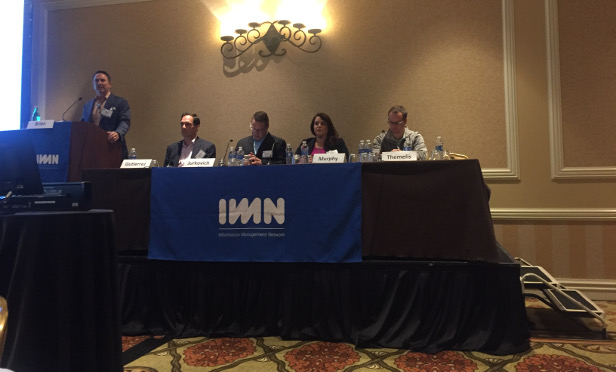
HUNTINGTON BEACH, CA—In our highly mobile society, the best tenants prefer to interact with apartment owners and managers digitally, and they will use social media to share their satisfaction level with others, said panelists at the IMN Multifamily Forum here last Thursday. Speakers at the session “Marketing Units & Social Media for Multifamily Owner/Operators … Out of the Box Thinking” discussed new ways to approach marketing in our social-media-conscious era.
Moderator Doug Brien, co-CEO and co-founder of Mynd, asked the panelists what was in their marketing playbook. Miguel Gutierrez, COO of CAPREIT Inc., said, “Our playbook has moved more and more to digital. Everything is done digitally today in marketing units—we're pushing things out constantly, and there are different tools we're making available to our managers. Pictures are important, but video is significant now.”
Brien agreed that professional photos make a big difference in marketing units. He asked if Gutierrez takes a different approach among product types, and Gutierrez said, “For some properties, not a lot of marketing efforts are needed because some properties have budgetary constraints. But if a low-budget community is not doing well, we will push the budget” to allow for a better marketing strategy.
Brandon Jurkovich, VP and national sales manager for Openproperty, said you need a solid Facebook strategy, and Marie Murphy, founder and managing partner of MJD Capital Partners LLC, said, “We're highly mobile; 70% of our business is in supportive housing in C markets, so there's no marketing for them. But for market-rate housing, on video tours, the ROI is great.” Brien added that 3D tours in the form of virtual reality are great for attracting better tenants who like the mobile experience.
Demetri Themelis, co-founder of Knock Rentals, said it's important to understand what's working and what's not in terms of communication about available units. “What channels are most effective? There's a huge operational advantage to this.” Gutierrez added, “We're able to see from our ad sources which ones will fill up units quickly, and we put direct ad dollars there.”
Brien summed up, “Marketing is a series of experiments.” He spoke about digital alternatives to setting up appointments for potential tenants to tour an empty unit, such as Smart Lock and Code Box, which allow self-showings. “This technology will change the renting-process dynamic; it's a much better experience than trying to coordinate schedules.”
Next, Brien said, is customizing the journey of the tenant that leads to leasing an apartment, and he asked the panelists what they are doing to facilitate this. Gutierrez cited online and mobile applications and good customer service. “We start working on renewal the day they move in,” with surveys and resident activities designed to please tenants. Jurkovich said automation is key, including online lease execution and anything that will make the transaction easier, particularly for potential renters who don't live in the area.
Murphy said it's a matter of becoming more efficient through things like self-showings and spending upfront time with potential tenants to avoid future problems. “We set a two-hour appointment, and we may not reach two hours, but the investment upfront is huge for retention.”
Themelis said, “Effective communication is important between the renter and the manager, so streamlining that” is key. Brien pointed out that move-in is a great time to set expectations, and this streamlines the operations process.
Jurkovich spoke about dealing with negative reviews on social media, saying that there are services that can help you do that, but you also want to get proactive in your customer service to capture as many possible ratings as possible. There will inevitably be the occasional poor review, he said. “Ninety-nine percent of the time, you will have a good transaction, but you need a proactive approach to dilute negative ratings. You need to create a sense of trust and transparency” for future tenants.
Murphy said handling negative experiences with rewards like a $5 Starbucks card helps prevent poor reviews, and Brien emphasized the importance of looking for ways to make lemonade out of lemons to turn a negative experience into a positive one. Themelis said, “We all expect answers on demand,” and tenants are no different.
Gutierrez said he uses survey cards to encourage positive reviews, and he said there's a “critical two-hour window to respond to a negative review online—don't wait too long. You're trying to promote positive reviews and turn native reviews around.”
Brien asked the panelists how they address tenant screenings, keeping fair housing in mind. Murphy said, “When you look someone in the eye and shake their hand, you get a feeling of how they will perform as a tenant.” Gutierrez said, because of fair housing, you may not be able to simply reject a potential tenant on a gut feeling without potential legal consequences. “You're limited. If they check all the boxes, but you just don't like them,” you're stuck. The answer, he said, is to “try to bring the right people in the door by marketing the unit properly” to the right audience.
Brien said electronic leasing platforms actually attract better renters. He also said FICO scores matter more in some markets than in others and are not always an accurate predictor of a stable renter. For example, FICO scores in Southern California did not do as good a job at predicting a good tenant as one might imagine.
One way to increase efficiency in marketing units and retaining good tenants is to measure everything in order to improve it, Brien added. He asked the panelists if they embrace data, and Gutierrez said his firm has implemented dashboards that put relevant data in front of the people who need it. “This has been a game changer for us to make use of our data in significant ways.” Themelis said centralizing communication in order to have important data handy is critical.
HUNTINGTON BEACH, CA—In our highly mobile society, the best tenants prefer to interact with apartment owners and managers digitally, and they will use social media to share their satisfaction level with others, said panelists at the IMN Multifamily Forum here last Thursday. Speakers at the session “Marketing Units & Social Media for Multifamily Owner/Operators … Out of the Box Thinking” discussed new ways to approach marketing in our social-media-conscious era.
Moderator Doug Brien, co-CEO and co-founder of Mynd, asked the panelists what was in their marketing playbook. Miguel Gutierrez, COO of CAPREIT Inc., said, “Our playbook has moved more and more to digital. Everything is done digitally today in marketing units—we're pushing things out constantly, and there are different tools we're making available to our managers. Pictures are important, but video is significant now.”
Brien agreed that professional photos make a big difference in marketing units. He asked if Gutierrez takes a different approach among product types, and Gutierrez said, “For some properties, not a lot of marketing efforts are needed because some properties have budgetary constraints. But if a low-budget community is not doing well, we will push the budget” to allow for a better marketing strategy.
Brandon Jurkovich, VP and national sales manager for Openproperty, said you need a solid Facebook strategy, and Marie Murphy, founder and managing partner of MJD Capital Partners LLC, said, “We're highly mobile; 70% of our business is in supportive housing in C markets, so there's no marketing for them. But for market-rate housing, on video tours, the ROI is great.” Brien added that 3D tours in the form of virtual reality are great for attracting better tenants who like the mobile experience.
Demetri Themelis, co-founder of Knock Rentals, said it's important to understand what's working and what's not in terms of communication about available units. “What channels are most effective? There's a huge operational advantage to this.” Gutierrez added, “We're able to see from our ad sources which ones will fill up units quickly, and we put direct ad dollars there.”
Brien summed up, “Marketing is a series of experiments.” He spoke about digital alternatives to setting up appointments for potential tenants to tour an empty unit, such as Smart Lock and Code Box, which allow self-showings. “This technology will change the renting-process dynamic; it's a much better experience than trying to coordinate schedules.”
Next, Brien said, is customizing the journey of the tenant that leads to leasing an apartment, and he asked the panelists what they are doing to facilitate this. Gutierrez cited online and mobile applications and good customer service. “We start working on renewal the day they move in,” with surveys and resident activities designed to please tenants. Jurkovich said automation is key, including online lease execution and anything that will make the transaction easier, particularly for potential renters who don't live in the area.
Murphy said it's a matter of becoming more efficient through things like self-showings and spending upfront time with potential tenants to avoid future problems. “We set a two-hour appointment, and we may not reach two hours, but the investment upfront is huge for retention.”
Themelis said, “Effective communication is important between the renter and the manager, so streamlining that” is key. Brien pointed out that move-in is a great time to set expectations, and this streamlines the operations process.
Jurkovich spoke about dealing with negative reviews on social media, saying that there are services that can help you do that, but you also want to get proactive in your customer service to capture as many possible ratings as possible. There will inevitably be the occasional poor review, he said. “Ninety-nine percent of the time, you will have a good transaction, but you need a proactive approach to dilute negative ratings. You need to create a sense of trust and transparency” for future tenants.
Murphy said handling negative experiences with rewards like a $5 Starbucks card helps prevent poor reviews, and Brien emphasized the importance of looking for ways to make lemonade out of lemons to turn a negative experience into a positive one. Themelis said, “We all expect answers on demand,” and tenants are no different.
Gutierrez said he uses survey cards to encourage positive reviews, and he said there's a “critical two-hour window to respond to a negative review online—don't wait too long. You're trying to promote positive reviews and turn native reviews around.”
Brien asked the panelists how they address tenant screenings, keeping fair housing in mind. Murphy said, “When you look someone in the eye and shake their hand, you get a feeling of how they will perform as a tenant.” Gutierrez said, because of fair housing, you may not be able to simply reject a potential tenant on a gut feeling without potential legal consequences. “You're limited. If they check all the boxes, but you just don't like them,” you're stuck. The answer, he said, is to “try to bring the right people in the door by marketing the unit properly” to the right audience.
Brien said electronic leasing platforms actually attract better renters. He also said FICO scores matter more in some markets than in others and are not always an accurate predictor of a stable renter. For example, FICO scores in Southern California did not do as good a job at predicting a good tenant as one might imagine.
One way to increase efficiency in marketing units and retaining good tenants is to measure everything in order to improve it, Brien added. He asked the panelists if they embrace data, and Gutierrez said his firm has implemented dashboards that put relevant data in front of the people who need it. “This has been a game changer for us to make use of our data in significant ways.” Themelis said centralizing communication in order to have important data handy is critical.
© Arc, All Rights Reserved. Request academic re-use from www.copyright.com. All other uses, submit a request to TMSalesOperations@arc-network.com. For more information visit Asset & Logo Licensing.